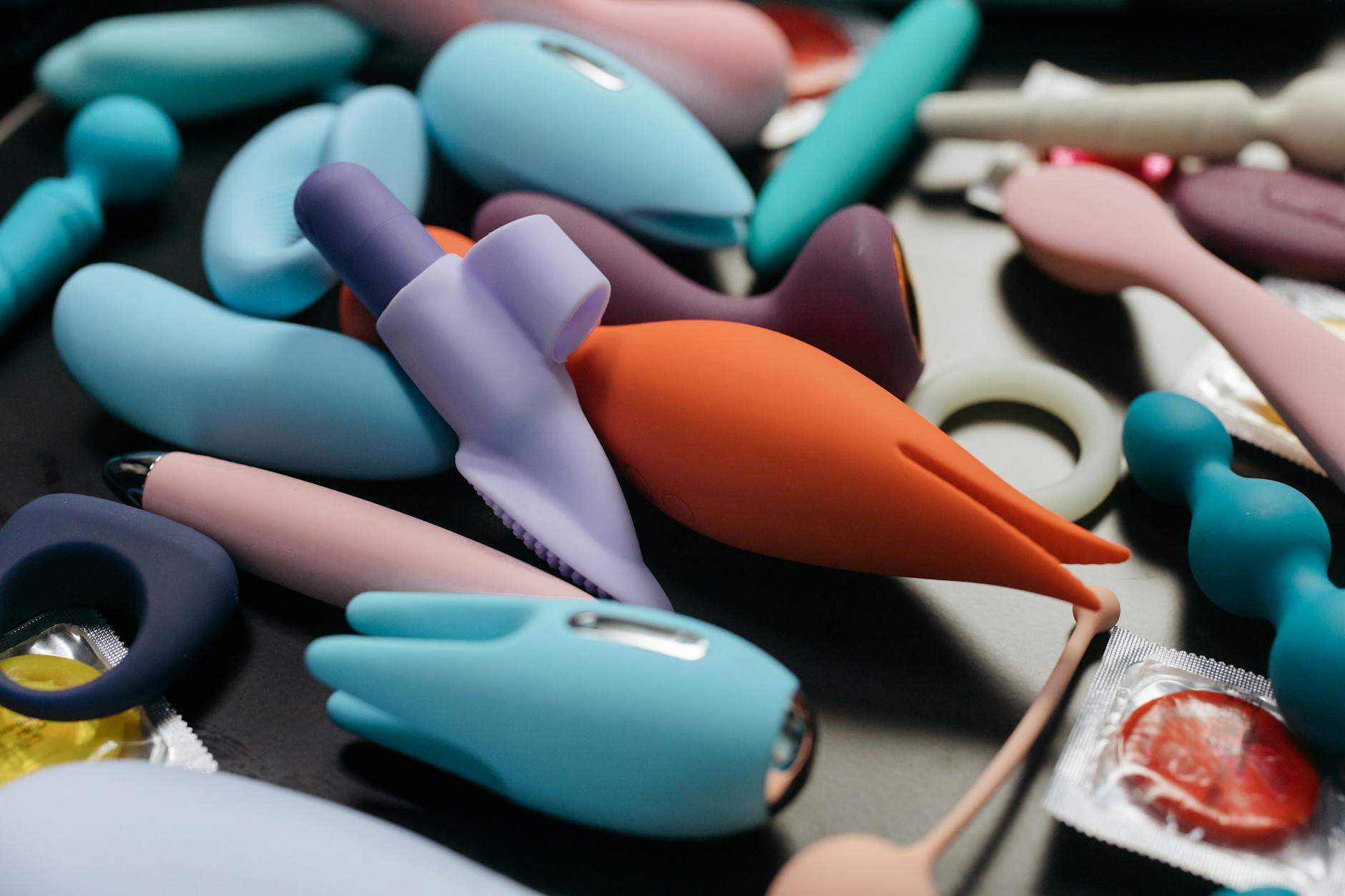
Here's the core difference
A wand vibrator uses broad, oscillating vibrations across a flat head. A lemon clitoral vibrator uses focused suction and pulsation on a smaller surface. One spreads. One concentrates. That distinction changes what your body feels, how quickly you respond, and whether you're able to reach orgasm in the first place.
If you've ever tried a wand and felt like something was missing, or switched to a lemon vibrator and suddenly understood what the fuss was about, you're not imagining it. The mechanism is different. The sensation is different. The outcomes are different.
Why wand vibrators can feel overwhelming
Wand vibrators were originally designed for massage. The head is large, usually two to three inches across, and the vibration pattern covers the entire surface at once. That design makes sense for neck tension. It makes less sense for the clitoris.
Here's why. The clitoris has around 8,000 nerve endings concentrated in an incredibly small area. Most of them cluster in the head and the visible shaft. When a wand vibrates across that entire region, you're stimulating not just the most sensitive part but also the surrounding tissue, the mons pubis, and sometimes parts of the vulva that don't want that kind of attention.
For some people, that broad stimulation is perfect. For most, it's too much, too fast, or in slightly the wrong place. You end up chasing the sensation, repositioning constantly, or feeling numb because the stimulation is everywhere and nowhere at once.
The result: longer time to orgasm, or no orgasm at all. Many people give up and assume they're not wand people. They're actually just not broad-stimulation people.
How lemon suction works differently
A lemon clitoral vibrator uses a completely different mechanism. Instead of vibration alone, it creates a gentle seal around the clitoris and delivers rhythmic suction, sometimes combined with subtle vibration patterns. The suction draws blood into the tissue, which makes the area more sensitive and responsive.
Because the suction is concentrated on a smaller area, you're targeting the exact nerve clusters that generate pleasure. There's no guessing about positioning. The sensation builds more gradually, which gives your nervous system time to register each sensation clearly.
Many people report that orgasms from suction-based stimulation feel different than from traditional vibration. They often describe them as deeper, more full-body, or arriving in waves rather than as a single peak. That's because suction activates a different set of nerve pathways.
Precision versus coverage
Think of wand vibrators as floodlights and lemon vibrators as spotlights. A floodlight illuminates the whole room but doesn't let you focus on a single object. A spotlight concentrates all its power on one thing.
For pleasure, precision matters more than coverage. Your clitoris doesn't need stimulation across three square inches. It needs the right stimulation in the right spot at the right intensity.
That's why people often find they need a lower intensity setting on a lemon vibrator than they'd expect. Because the suction is concentrated, even a medium setting on a lemon vibrator can feel as intense as a high setting on a wand. You're not spreading the energy across a wide area. You're putting all of it exactly where your nerve endings can use it.
The sensitivity factor
One more thing wand vibrators don't account for: sensitivity variations within the clitoris itself. The visible head is more sensitive than the shaft. The left side might be more responsive than the right. The intensity you need at the beginning of arousal is completely different from what you need as you approach orgasm.
Because wand vibrators vibrate the entire head at once, you can't adjust for these micro-variations. You're locked into a single pattern across the whole area. If one part is too sensitive, you're struggling. If another part isn't stimulated enough, you're out of luck.
A lemon clitoral vibrator, with its smaller head and focused contact point, lets you angle and adjust much more easily. You can position it to target the most sensitive area. You can shift slightly as sensation changes. You get feedback and control that a wand simply doesn't offer.
When wand vibrators actually win
This isn't a wand versus lemon debate where lemon always wins. Wand vibrators are genuinely better for some situations.
If you're someone who prefers broad, vigorous stimulation, a wand is perfect. If you like to use the vibrator on your body in multiple ways, a wand is more versatile. If you have reduced clitoral sensitivity from medication or nerve-related conditions, the broader stimulation might actually help you feel something.
Some people also enjoy using both. A wand for general arousal and warm-up, then switching to a lemon vibrator for the focused stimulation that takes you over the edge. Many people find that combination gives them the best of both approaches.
The tissue damage question
One worry people sometimes have is whether wands are too intense. Some early research suggested that prolonged wand use could reduce clitoral sensitivity over time. More recent studies haven't confirmed this as a widespread issue, but the mechanism makes sense: repetitive, broad-based vibration over time might reduce nerve sensitivity the way a loud noise eventually stops being noticeable.
With a lemon clitoral vibrator, you're using lower intensity for shorter periods because the stimulation is more efficient. You're also changing the type of stimulation, which means you're not fatiguing the same nerve pathways in the same way. For long-term pleasure and continued sensitivity, that's probably healthier.
How to choose between them
Start with your preference. If you like the idea of focused, intense sensation that builds quickly, try a lemon vibrator. If you like warmth and broad stimulation, try a wand.
Also consider your clitoral anatomy. If your clitoris is particularly sensitive, lemon suction is often better because you can use lower intensity settings. If your clitoris is less sensitive or if you respond better to vigorous stimulation, a wand might be the right starting point.
If you're torn, many people find that trying a lemon clitoral vibrator first works better. It's easier to add intensity later than to recover from overwhelming sensation. And if you prefer something different, you can always try a wand afterward.
The partner dynamic
If you're using these tools with a partner, the differences matter too. A wand is easier to hold and use from different angles, which can be helpful for shared exploration. A lemon vibrator, with its smaller size and precise suction, might feel more intimate because positioning is less awkward.
The real advantage of discussing this beforehand: you're not guessing in the moment. You're already aligned on what kind of stimulation you both want to explore. That conversation, honestly, matters more than which tool you choose.
The bottom line
Lemon vibrators aren't better than wands because they're more advanced or expensive. They're better for most people because they target sensation precisely where it matters most. The suction mechanism concentrates stimulation, builds arousal more gradually, and gives you feedback and control.
Wands are great tools. They're just designed for a different job. Now that you know the difference, you can choose the right one for what your body actually needs. And if you're curious about the difference yourself, that's what exploration is for.
Frequently asked questions
How does the suction in a lemon vibrator actually work?
A lemon clitoral vibrator creates a gentle seal around the clitoral head and delivers rhythmic pulsations that draw blood into the tissue. This increases sensitivity and generates a sensation that's distinct from traditional vibration. The suction pulls on nerve endings rather than vibrating across them, which many people find more pleasurable and intense. You control how tight the seal is by how firmly you position the toy, so you adjust the intensity partly through your own positioning.
Can I use a lemon vibrator and a wand together in one session?
Absolutely. Many people start with a wand or manual stimulation for general arousal, then switch to a lemon vibrator for more focused stimulation as they get closer to orgasm. The combination gives you the warm-up benefit of broad stimulation and the efficiency of targeted suction. Some people even alternate back and forth to extend the experience or create different sensations. There's no rule here. Do what feels good.
Will a lemon vibrator replace the sensation of a wand if I currently use one?
Not necessarily. If you genuinely love your wand and get consistent orgasms from it, there's no reason to abandon it. Different bodies respond to different tools. That said, many people who think they're "wand people" discover that they actually prefer a lemon vibrator once they try one, because the targeted stimulation is more efficient. The only way to know is to experiment.
Are lemon clitoral vibrators safe if I have sensitive tissue?
Yes. In fact, a lemon vibrator is often better for sensitive tissue because you can use lower intensity settings and still get strong results. Suction-based stimulation activates nerve endings differently than vibration alone, so sensitivity is less of a barrier. If you have extreme sensitivity, start with the lowest setting and the gentlest seal. You can always increase intensity. You can't undo overstimulation in the moment.
How is a lemon sucker different from other air-suction toys?
All suction-based clitoral toys work on the same basic principle, but they vary in head size, intensity range, and pulsation patterns. Some brands (including Hello Nancy's lemon vibrator) are designed specifically for precision and ease of use. The key differences are in the seal quality, the motor power, and how intuitive the controls are. Try one and see how it compares to others. What matters most is whether the stimulation feels good to your body, not which brand you choose.
Can I hurt myself using a lemon vibrator if I use it too much?
Unlike wands, which can potentially reduce sensitivity with heavy long-term use, lemon vibrators are generally gentler on tissue because they work at lower intensities. That said, anything used excessively can cause temporary irritation. If you're using your toy multiple times daily, take breaks. If you notice any soreness or numbness, step back for a day or two. Your body will tell you if you're overdoing it.
What to explore next
Now that you understand why lemon vibrators work differently, you might be curious about how to find the right intensity setting for your body. Check out our guide on lemon vibrator intensity settings to learn how to start low and build up. If you're new to this type of toy altogether, our beginner's post on lemon clitoral vibrators for beginners walks through what to expect on your first try.
Your pleasure deserves tools that work for your body, not against it. That's the whole point.