
How to Choose a Clitoral Vibrator If You Have Sensitive Tissue
Let's be real: not all clitoral vibrators are created equal, and sensitive tissue deserves better than a generic bullet that feels like a dental drill. If your vulva is tender, prone to irritation, or easily overwhelmed by intensity, most standard vibrators will feel awful. The good news is that understanding what makes tissue sensitive and which vibrator features actually work changes everything.
What sensitive tissue actually means
Sensitivity comes in three flavors. First, there's physiological sensitivity. Your nerve density in the clitoral area is just naturally higher than average. Second, there's situational sensitivity. Hormonal fluctuations, stress, certain fabrics, or friction from daily life can temporarily make tissue more reactive. Third, there's pain-based sensitivity where direct stimulation causes genuine discomfort, often from conditions like vulvodynia or provoked vestibulodynia.
The approach changes depending on which type you're dealing with. Physiological sensitivity usually means you need lighter touch and gentler patterns. Situational sensitivity might just need better lube and timing. Pain-based sensitivity requires a completely different tool strategy, which I'll get to in a moment.
The mistake most people make is assuming all vibrators feel the same, just at different speeds. They don't. The shape, material, vibration type, and intensity curve matter wildly.
Why standard vibration doesn't work for sensitive tissue
Most clitoral vibrators use rotational or linear vibration. Picture a tiny motor shaking back and forth or spinning in circles. For sensitive tissue, this creates two problems.
First, direct mechanical vibration can feel sharp or abrasive. It's like the difference between someone gently pressing your arm and someone tapping it repeatedly. The tapping gets irritating fast. Second, intensity jumps on standard vibrators are usually huge. You get level 1, level 2, level 3, and suddenly you're at level 5 which feels like someone's trying to vibrate your clitoris into another dimension.
For sensitive tissue, you need something that feels more like pressure or subtle pulsing rather than aggressive buzzing.
Air-suction vibrators are a game changer
This is where lemon clitoral vibrators and other air-suction devices enter the chat. Instead of vibrating directly against tissue, they use gentle air pulses to create a suction sensation. It feels completely different.
Think of it this way: a standard vibrator is like someone pressing a vibrating finger directly on you. An air-suction vibrator is like someone gently holding your clitoris in their mouth and varying the pressure. The stimulation is indirect, which means sensitive tissue gets activated without the harsh mechanical buzz.
The Lem vibrator from Hello Nancy, for instance, uses air-pulse technology that many people with sensitive tissue find infinitely more comfortable than traditional vibrators. The sensation builds gradually, and because it's not direct contact, irritation is way less likely.
What to look for in a sensitive-tissue vibrator
If you're shopping for a clitoral vibrator and know your tissue is reactive, here's your checklist.
Material matters most. Medical-grade silicone is soft, non-porous, and doesn't harbor bacteria. Avoid glass or metal if direct contact bothers you. Soft silicone feels gentler than firm. Vibration type is second. Suction or air-pulse devices beat traditional vibration for sensitive bodies. If you do want traditional vibration, look for patterns rather than just intensity levels. A pulsing or wave pattern often feels better than constant vibration. Intensity curve. Check if the vibrator has a gentle ramp-up or if it jumps from 0 to 60. Brands that offer smooth intensity curves and multiple gentle lower settings are your friends. Quiet motors. Quieter motors usually mean better-engineered, less aggressive vibration. Loud buzzing often correlates with harsh intensity. Size and shape. Smaller heads and rounded designs distribute pressure more evenly. Pointed tips concentrate stimulation in a way that can feel overwhelming on sensitive tissue.
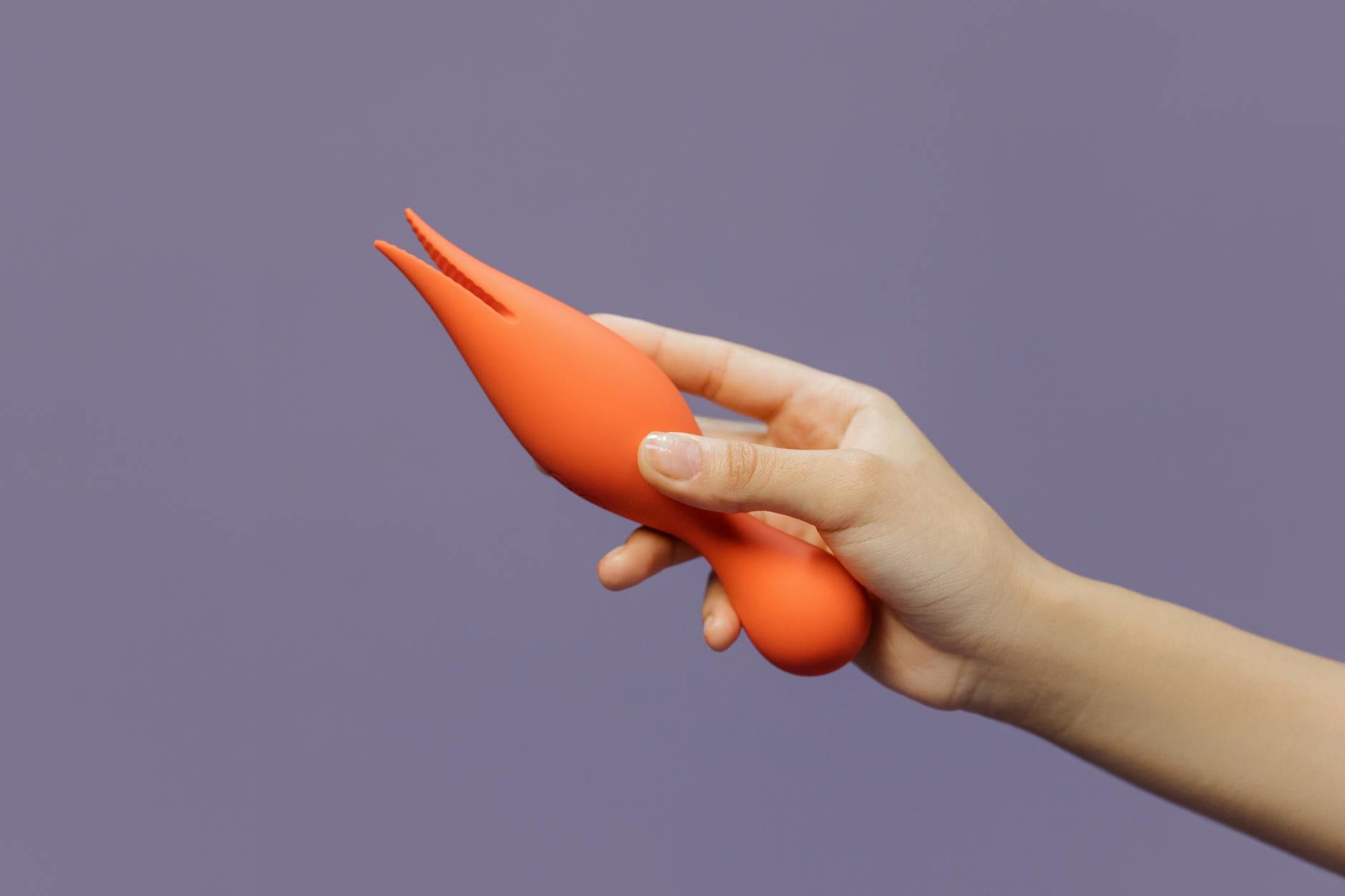
Photo by cottonbro studio on Pexels
The role of lube and environment
Your vibrator choice matters, but so does everything around it. Sensitive tissue needs lubrication, full stop. Water-based lube is your baseline. Some people find silicone-based lube feels richer and lasts longer, though you can't use it with silicone toys. Always test a new lube on your inner arm first to check for reactions.
The environment also shifts sensitivity. Stress, dehydration, caffeine, and lack of sleep all make tissue more reactive. You might be fine with a certain vibrator on a relaxed Sunday morning but find it overwhelming on a high-stress Tuesday. That's not a sign the vibrator is wrong. It's a sign you need to adjust timing or approach.
Warmth and relaxation genuinely help. Some people find that a few minutes of gentle external massage or even a warm shower beforehand makes stimulation feel way better. Your pelvic floor tension directly affects sensitivity too. If you're holding tension throughout your day, tissues get irritable. Breathing and a few seconds of intentional relaxation before you start makes a real difference.
How to introduce a new vibrator safely
If you've been hurt or frustrated by vibrators before, starting over requires patience. Don't jump straight to using it at full intensity during solo or partnered play. Instead, spend a session or two just getting comfortable with the sensation.
Turn it on at the lowest setting and hold it near (not on) your clitoris. Notice what the air or vibration feels like from a distance. Move it closer gradually. There's no rush. Some people find that using it over their underwear for the first few times helps desensitize and familiarize.
If you're partnered, have your partner hold it while you guide the pressure and placement. That way, you're in control and can communicate in real time. This is also a great way to learn what patterns and intensities actually work for you before trying solo.
Pay attention to how your tissue feels after. A little warmth and sensitivity is normal. Actual pain, burning, or irritation that lasts hours isn't. If that happens, you've either got the wrong tool for your tissue or you need to adjust your approach (more lube, less intensity, shorter sessions).
Why Lem and similar suction devices work so well
Speaking specifically to lemon sexual toys and air-suction vibrators like the Lem: they sidestep the whole direct-vibration problem. Because the stimulation is coming from gentle air pulses instead of mechanical shaking, sensitive tissue responds differently.
Many people report that they can feel more sensation with less pain. The suction creates a gathering feeling that builds gradually instead of jolting. You also get finer control over intensity because the ramp is smoother. You're not jumping from gentle to aggressive. You're moving through a spectrum.
The other advantage is that <a href="/blog/why-clitoral-vibrators-feel-different-than-manual-stimulation">clitoral vibrators feel different than manual stimulation</a> partly because of pressure distribution, and air-suction devices distribute pressure incredibly evenly.
Adjusting expectations and trying multiple approaches
Here's something I want you to know: if you haven't found a vibrator that works for you yet, it doesn't mean your tissue is broken. It means you haven't found the right tool. Some people need multiple devices for different moods and contexts. You might use one for solo play and another with a partner. You might have a favorite for quick sessions and a different one for longer exploration.
You might also discover that what you thought was a sensitivity issue was actually just a mismatch between your body and whatever you were trying. Once you switch to the right approach, everything changes.
Take your time. Your pleasure matters, and sensitive tissue is not a limitation. It's just different.
Frequently asked questions
What's the difference between a lemon vibrator and other clitoral vibrators?
Lemon sexual toys like the Lem typically use air-pulse or suction technology instead of traditional vibration. This means they stimulate through gentle pressure waves rather than direct mechanical buzzing. For sensitive tissue, this feels less abrasive. The suction sensation also tends to feel more indirect and pressurized, which many people find more pleasurable than buzzing.
Can I use a regular vibrator if I have sensitive tissue?
Yes, but you'll probably need to adjust how you use it. Keep it on the lowest settings, use plenty of lube, and stimulate around the clitoris rather than directly on it. You might also find that covering it with a thin washcloth softens the sensation. That said, if direct vibration consistently bothers you, an air-suction device will likely feel better.
How do I know if my sensitivity is normal or a sign I need to see a doctor?
All sensitivity is normal in the sense that every body is different. But if you experience pain, burning, swelling, or irritation that lasts longer than an hour or two after stimulation, that's worth mentioning to a gynecologist. Conditions like vulvodynia or genitourinary syndrome can affect sensation and deserve professional support.
Is lube necessary if I'm using an air-suction vibrator?
Not always, but it often helps. Air-suction devices create their own seal, so they don't strictly require lube the way direct-contact vibrators do. That said, many people find that a tiny bit of lube makes the sensation feel smoother and less intense, which can be great for sensitive tissue.
What intensity level should I start with if I have sensitive tissue?
Always start at the absolute lowest setting and work up slowly over multiple sessions. You might spend a whole session on level 1 before trying level 2. There's no achievement in rushing to higher intensities. Lower intensity for longer often feels better anyway, especially as you learn what your tissue actually likes.
Can hormonal changes make my tissue more sensitive to vibrators?
Absolutely. Right before and during your period, tissue tends to be more sensitive. Ovulation can shift sensitivity too. Same with stress, sleep, and hydration. If a vibrator feels fine one week and overwhelming the next, check what else is going on before assuming the device is the problem.
Sensitive tissue isn't a reason to give up on vibrators. It's just a reason to be thoughtful about which ones you choose and how you use them. The right lemon clitoral vibrator, combined with patience and the right environment, can completely transform your experience. Your pleasure deserves that kind of care.