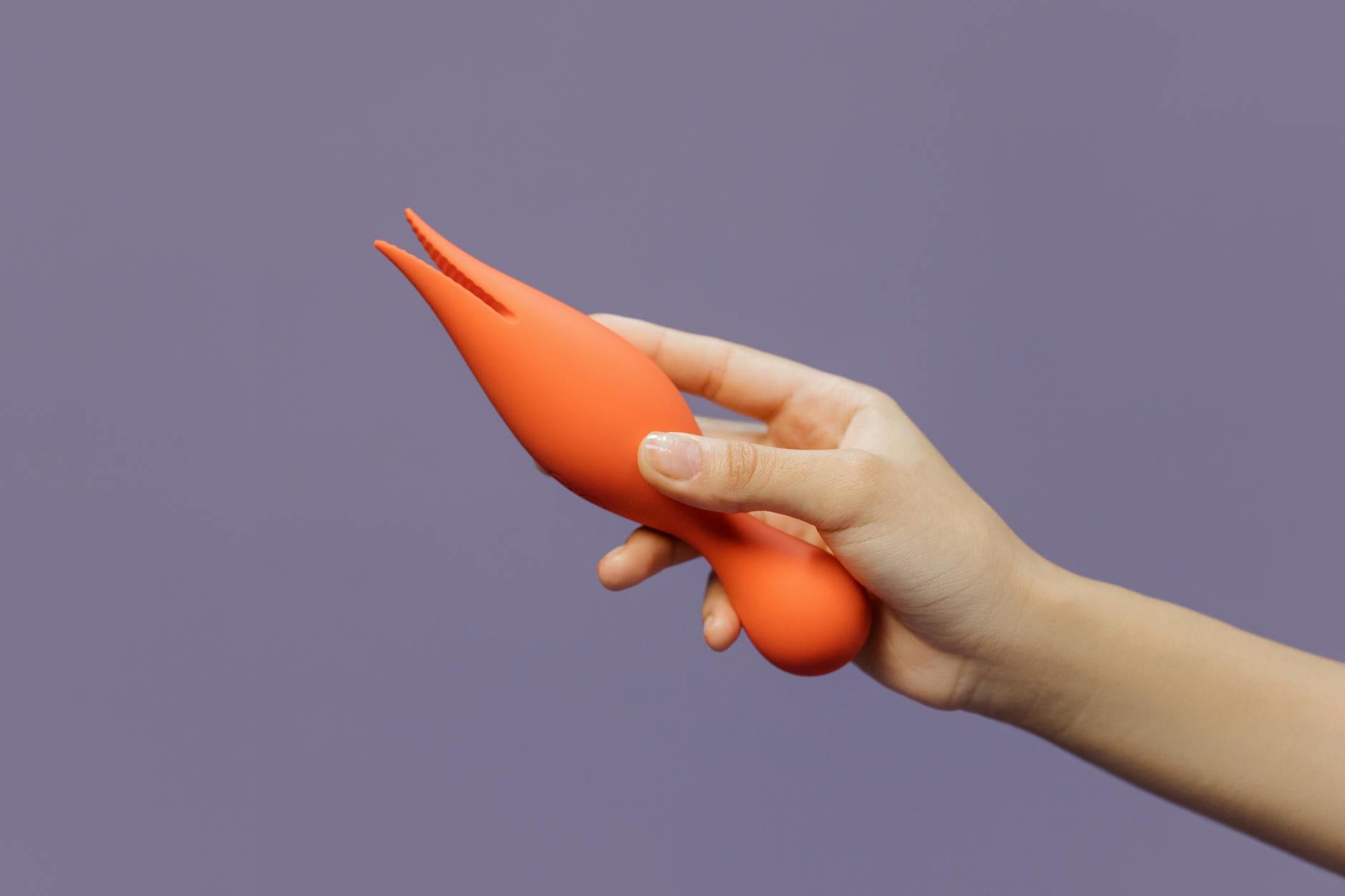
How to Use a Lemon Vibrator With Your Partner During Sex
Honestly? Bringing a toy into partnered sex is less about the toy and more about what it signals. You're saying: I want more pleasure. I want us to explore together. I trust you enough to try something new. Those conversations are bigger than any lemon vibrator, and they're also the gateway to actually enjoying it.
The conversation that has to happen first
This is not a seduction. This is not a surprise. This is a talk.
Here's what works: pick a moment that's not in the bedroom and not when you're already aroused. Maybe over coffee, maybe in the car. Say something like: "I've been curious about using a toy with you. I think it could feel really good for both of us, and I'd love to try it together. What do you think?"
That's it. No elaborate buildup. No making it weird by overselling it.
Common responses and how to handle them:
"Do you not enjoy what we're doing?" This is anxiety talking, not logic. Separate the two things: "Using a toy isn't about replacing anything. It's about adding something. I still want everything we do now. This is just... more." Then actually show them why. Use why lemon vibrators work better for stronger orgasms together or a review that makes sense to both of you.
"That feels too intimate, too fast." Fine. No pressure. Ask: "What would make it feel less rushed?" Maybe you introduce the toy first solo and report back. Maybe you use it on them first so it feels collaborative instead of one-sided.
"Let's try it." Great. Move to positioning and timing.
The worst response is silence followed by reluctant agreement. Call that out gently: "I want to make sure you're actually interested, not just doing this for me. We can skip it if it's not your thing." People often say yes when they mean maybe, and resentment builds quietly.
Timing: when in the cycle does the toy enter
There are three moments to consider, and each changes the vibe completely.
Before main event. Use the lemon clitoral vibrator during foreplay, before penetration (if that's part of your sex). This builds arousal without it feeling like an afterthought or a "we're doing this because you can't come otherwise" move. It's integrated into the whole experience.
During. This is trickier because positioning matters more. Most partners appreciate when the vibrator is being used on the receiving partner's clitoris during penetration. Angle matters. It can't be pointed directly at the penetrating partner. And communication mid-sex gets harder, so knowing your partner's tells matters.
After. Some people prefer to use the toy once the main event is wrapping up, as an add-on to finishing. This can feel less invasive if your partner is nervous, but it can also feel like "oh, now we need the vibrator" which isn't the vibe you want.
Start with before. It's cleaner psychologically and logistically.
Positioning that actually works
Let's get practical. A lemon vibrator like the Lem works best when there's access. Here are the positions where introducing it feels natural:
Missionary or face-to-face. The receiving partner can hold the vibrator themselves or their partner can. Eye contact stays intact. Communication is easier because your faces are close. The penetrating partner can see what's happening and adjust rhythm accordingly. This is the easiest entry point.
Spooning (side by side, rear entry). The receiving partner or penetrating partner can reach around and use the vibrator on the clitoris. The angle is usually good. And there's something about the closeness that feels less clinical. People often prefer this because it's intimate without being fully "on display."
Receiving partner on top. More control for the person with the clitoris. They can use the vibrator themselves while their partner's hands are free to hold them or adjust depth. This flips the dynamic so it feels collaborative instead of something being done to you.
Positions that don't work well: most standing positions, most rear-entry positions where the receiving partner can't easily reach, anything that requires three hands.
Test positioning outside of sex first. Try it during foreplay. See where the vibrator actually fits and doesn't.
The first time using a clitoral vibrator together
Lower expectations. This is not a performance. No one needs to orgasm. The goal is "this was interesting and felt good and we learned something."
Start with the lowest intensity setting. If you're using a lemon vibrator, begin on pattern one. The receiving partner should communicate what feels good. "Higher, lower, a bit to the left." This is map-reading, not judgment.
The penetrating partner's job is to adjust their movement based on what the vibrator is doing. If the vibrator is providing the primary stimulation to the clitoris, the penetrating partner might slow down or hold steady instead of thrusting hard. You're working with each other, not in separate modes.
If it doesn't feel amazing the first time, that's normal. The clitoris is sensitive. Too much, too fast, too direct, wrong angle. All fixable. You're experimenting.
Check in after. "What felt good? What felt weird? Want to try that again or adjust something?" This isn't a postmortem. It's data collection for next time.
Common problems and actual solutions
The vibrator makes it hard for the penetrating partner to concentrate. That's okay. They can take a passive role during the toy phase. Not all partnered sex is about synchronized motion. Sometimes one partner is doing the work while the other receives. That's still connected.
The receiving partner feels self-conscious. Dim the lights. Play music. Ask what would help them feel less exposed. And honestly, doing this a second time makes it weirder in your head and easier in reality.
The vibrator loses battery mid-session. Invest in a rechargeable option. One charge lasts 60-90 minutes on most lemon vibrators, which is plenty. Keep it topped up.
One partner is way more enthusiastic than the other. That's information. The less enthusiastic person might warm up with time and familiarity, or they might not. Don't push. And definitely don't use the toy as a compromise if someone wants to skip sex. That creates weird associations.
Why couples often like this more than they expected
Three things happen when you introduce a toy together:
First, you break a barrier around vulnerability. You're literally saying "I want pleasure and I trust you to be part of that." That lands differently than anything else you could say.
Second, you often get better orgasms. A lemon clitoral vibrator provides consistent, targeted stimulation. That's not something human hands can do. And better orgasms make everything feel more connected.
Third, you shift the dynamic from one person performing pleasure for another to both people collaborating on pleasure. That's relationship gold. You're literally on the same team instead of occupying separate roles.
If you're nervous about this, that's information. Sit with it. Talk about it. And know that thousands of couples have had this exact awkward-to-intimate trajectory, and it usually works out better than expected.
FAQ
What if my partner is worried the vibrator is "better" than they are?
A vibrator isn't better. It's different. Your hand can't vibrate at 10,000 Hz and also hold you and also make eye contact. The toy does one thing. Your partner does everything else. They're not competing. Reframe it: "I want you to see what I enjoy and know how to give that to me." That's partnership, not replacement.
Can I use a regular vibrator or does it have to be a lemon vibrator?
Any quality clitoral vibrator works. A lemon clitoral vibrator like the Lem has a smaller head, which some people prefer during partnered sex because it takes up less space and feels less bulky. But if you already have a vibrator you like, start there. The conversation matters more than the specific toy.
How do I know which intensity setting to use with a partner?
Start at the lowest. Your partner can always ask for higher. Starting too intense is uncomfortable and makes people gun-shy about trying again. Lemon vibrator intensity settings can be adjusted in real-time, so communicate as you go.
What if we try it once and hate it?
Then you don't use it again. You've learned something about yourselves and what you both want. That's useful information. No obligation to keep trying something that doesn't work. Move on without shame.
Does using a toy mean the receiving partner will need it every time now?
No. Some people enjoy varying their experience. Once-in-a-while sex with a toy, sometimes without. The receiving partner's body doesn't become dependent on vibration. And if they do prefer it? That's also fine. You can add it or not based on what feels right that day.
How do I introduce this if we've been together a long time and never talked about toys?
The longer you've been together, the easier this actually is. You know each other. You can say: "I've been thinking about trying something new together. Not because anything's wrong. Just because I'm curious and I want to explore with you." Longer relationships have permission built in. Use that.
The thing underneath all this
Adding a lemon vibrator or any clitoral vibrator to partnered sex is less about the toy and more about permission. Permission to ask for what you want. Permission to explore. Permission to say your pleasure matters. The toy is just the vehicle.
If this resonates and you want to dig deeper into how couples build intimacy through vulnerability and communication, that's my sweet spot. Reach out to contact us if you want to talk through how to approach this conversation with your specific situation. You don't have to figure this out alone.