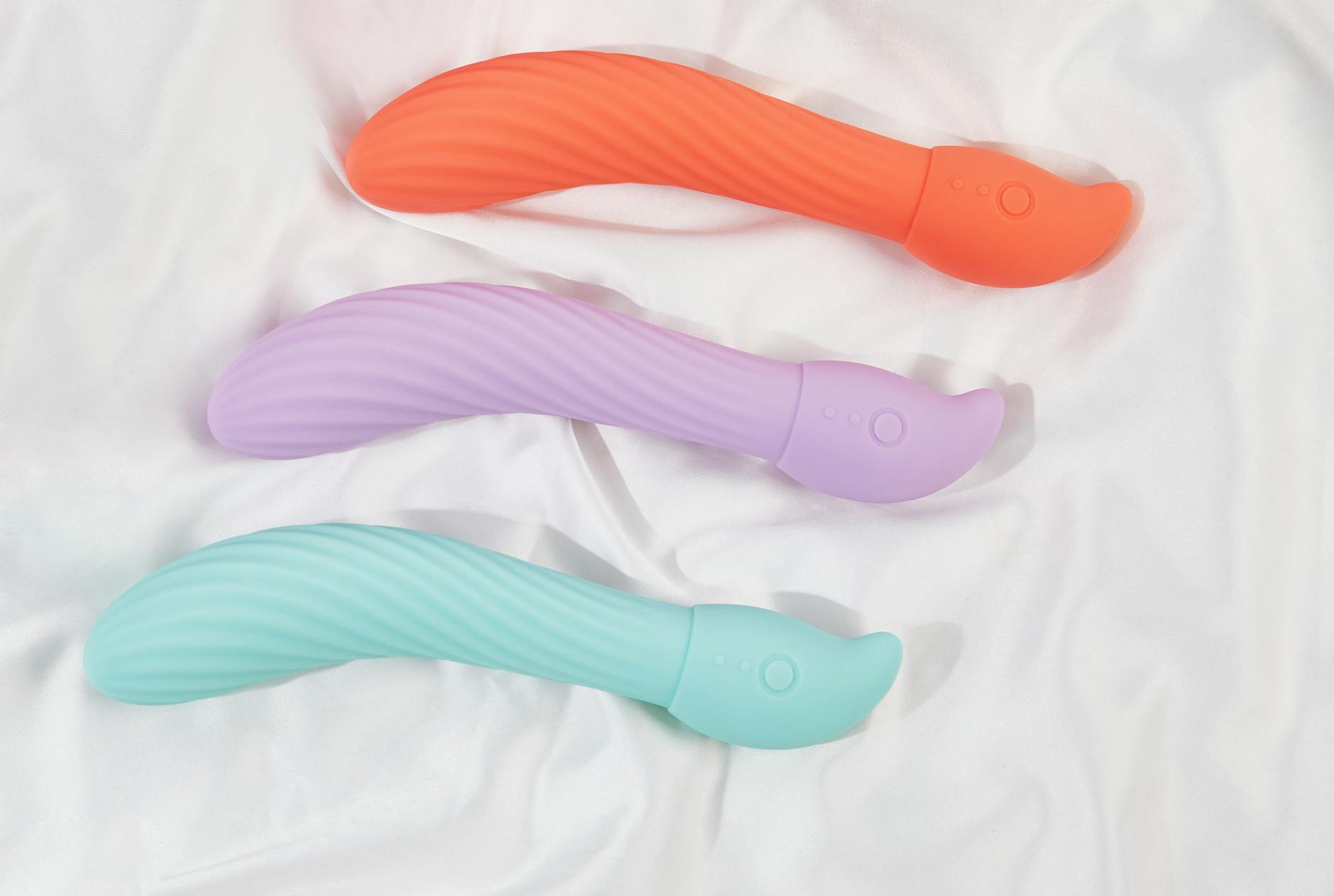
Let's talk about why air-suction actually changes everything
If you've been using traditional vibrators and wondering why people rave about lemon vibrators, here's the honest answer: they're stimulating different nerve pathways entirely. This isn't marketing. It's neurology.
When a lemon sucker or air-suction vibrator pulses against your clitoris, it's not the same physical sensation as vibration. One moves side to side at high speed. The other creates rhythmic suction and release. Your body registers these as completely different stimuli, and that difference is why people report stronger, longer-lasting orgasms.
How air suction actually works on your body
Your clitoris has roughly 8,000 nerve endings concentrated in the head, glans, and shaft. These nerves don't all respond the same way to the same input. Some are most sensitive to sustained pressure. Others light up in response to rhythmic pulsing. Still others respond to suction.
Traditional vibrators activate the nerves that respond to vibration. They're fast, they're direct, and they can absolutely get the job done. But they activate one primary sensation pathway.
A lemon clitoral vibrator, by contrast, engages multiple pathways at once. The suction pulls blood into the tissue, increasing sensitivity. The pulsing rhythm creates a wave-like sensation instead of a buzz. The intermittent release gives your nervous system a moment to register each stroke before the next one hits.
The result: your body has more to process, more sensations to layer, and more ways for the arousal to build. Orgasms that happen this way tend to be fuller. More of your pelvic floor contracts. The sensations radiate outward instead of staying localized.
Why the intensity feels different
There's a reason people use the word "pulling" to describe what a lem vibrator does. It's not just marketing language. The suction literally creates a different pressure dynamic than vibration.
When you use a traditional vibrator, the motor creates oscillation. This is fast and stimulating, but it's also constant. Your nerve endings adapt quickly to constant input, which is why you might need to increase intensity or switch patterns to keep building toward orgasm.
With air-suction vibrators, the cycle of suction and release prevents that adaptation. Each pulse is a complete stimulation event. Your clitoris experiences a moment of intense sensation, then a release, then intensity again. This rhythm mirrors the natural pattern of arousal and keeps your nervous system engaged without desensitizing.
Plus, the suction creates more friction against the tissue without requiring your hand to move or your toy to vibrate at skin-shredding speeds. For people with sensitive skin, this is a game-changer. You get more intense sensation without the irritation.
The science of stronger, longer-lasting orgasms
When researchers compare orgasms triggered by different stimulation types, they measure a few key variables: duration of contractions, intensity of each contraction, and how many muscle groups are involved.
Orgasms from air-suction stimulation tend to score higher on all three. Why? Because the type of stimulation engages not just the clitoral nerves but also the deeper pelvic floor muscles and the vaginal tissue. It's a more systemic response.
Here's what happens physiologically: as arousal builds through air suction, your pelvic floor muscles begin to contract involuntarily in response to the rhythm. These contractions deepen the stimulation, which triggers stronger contractions, which increases blood flow to the area, which deepens the sensation further. It's a feedback loop that traditional vibration doesn't create as efficiently.
When you reach orgasm this way, the contractions tend to be longer and involve more of your pelvic floor. Some people report feeling orgasms last 8-12 seconds instead of 4-6. Others describe the sensations as spreading across their whole body instead of staying localized.
This isn't happening in your head. The stimulation pattern is literally engaging more of your nervous system.
How to use a lemon vibrator for maximum sensation
Not all air-suction vibrators are the same, and technique matters. Here's what actually works.
Start with the lowest suction setting. This is the biggest mistake people make. They jump to medium or high and wonder why it feels uncomfortable. Low suction at the right rhythm feels incredible. High suction before you're fully aroused just feels numb.
Wait until you're genuinely turned on before you start using it. This means 10-15 minutes of foreplay or fantasy, not just bringing the toy to bed. The clitoris needs to be engorged and sensitive before air suction really works. Think of it like the difference between pressing on your arm when it's cold and pressing on it when you're warm. Same pressure. Completely different sensation.
Position it centered directly on the clitoral head. Not off to the side. Not hovering. The rim of the opening should create a seal around the tissue. If there's air leaking out, you're not getting the suction pattern. If there's pain, you're either at too high a setting or not aroused enough yet.
Start with the pattern, not the intensity. Most air-suction vibrators have rhythm variations before they have power levels. Try the different patterns at low power and see which one makes your nervous system sit up and pay attention. Your body will tell you when you find the right one.
Once you find your rhythm, stay with it for a few minutes. Let the arousal build. This is not about chasing sensation. It's about letting the rhythm work on your nervous system. You'll feel when something shifts. That's when you can adjust intensity or try a different pattern.
Why they work better after traditional vibration
One study that got a lot of attention looked at what happens when people switch from a standard vibrator to an air-suction vibrator. The finding was straightforward: the air-suction vibrators created stronger orgasms, but only if people had already used the standard vibrator.
Why? Because the initial vibration wakes up your nerve endings and gets blood flowing to the tissue. Then the air suction comes in with a completely different stimulus pattern, which your already-sensitized nervous system registers as even more novel and intense.
This is also why lemon vibrators feel better after using manual stimulation. Your hand gets your clitoris engaged and partially aroused. Then the toy takes over with a sensation pattern your hand can't create.
You can use this intentionally. Some people do a few minutes of manual stimulation or traditional vibration, then switch to a lemon clitoral vibrator for the final push to orgasm. Others reverse it. The key is that layering different stimulation types keeps your nervous system from adapting.
The difference between sensation and comfort
A stronger orgasm is only good if it doesn't come with discomfort. This is where people often struggle with air-suction vibrators.
If you find air suction uncomfortable, it's usually one of three things: you're not aroused enough, the suction is too strong, or you have sensitive tissue that needs a gentler approach.
If arousal is the issue, just give yourself more time. Scroll through something that turns you on. Let your mind do the work before the toy does.
If the suction is too strong, look for a vibrator with lower minimum settings. Some air-suction vibrators have a minimum that's still pretty intense. Others start much softer. The Hello Nancy Lemon Vibrator is designed with lower baseline suction, which makes it better for people building up to stronger sensations.
If you have tissue sensitivity, water-based lubricant actually helps a lot. It creates a smoother seal and reduces the sharpness of the suction sensation, making it feel more like pressure and less like pulling.
How partners fit into this
If you're using a lemon sucker with a partner, the dynamic changes. You're no longer just sharing pleasure. You're building arousal together in a new way.
Some people find that their partner can use lower suction than they'd use alone, because the presence of their partner and the other forms of touch keep arousal high. Others find they actually need more suction because they're less focused on the sensation.
The best move is to treat it as an experiment. Start low. Check in. Adjust based on what feels good in the moment. If you're using it together for the first time, make it about communication and curiosity, not about hitting a specific outcome.
The bottom line
Lemon vibrators work better for stronger orgasms because they engage your nervous system in a fundamentally different way than traditional vibration. The suction creates pressure waves instead of oscillation. The rhythm prevents nerve adaptation. The sensations layer and compound instead of staying isolated.
You don't need a lemon sucker to have great orgasms. But if you're looking for something that changes the physical sensation completely, this is it. Start low, go slow, and let the rhythm do the work. Your body will tell you pretty quickly if this is the right tool for you.
People also ask
How does air suction feel compared to regular vibration?
Air suction creates a pulling, rhythmic sensation that builds in waves. Regular vibration is a fast side-to-side buzz. Air suction engages more nerve pathways and prevents your body from adapting to a constant stimulus. Most people describe suction as more intense and longer-lasting, though the actual sensation is completely different so it takes a few tries to know if you prefer it.
Can air-suction vibrators hurt or irritate sensitive tissue?
Not if you use them correctly. The most common issue is starting at too high a suction level when you're not fully aroused. Low suction on aroused tissue feels smooth and pleasurable. High suction on unaroused tissue can feel sharp or uncomfortable. Start at the absolute lowest setting, make sure you're genuinely turned on, and use water-based lubricant to smooth out the sensation. If you have diagnosed tissue sensitivity or pain disorders, check with your doctor before using any new toy.
Why do orgasms from lemon vibrators last longer?
Because the stimulation pattern engages more of your pelvic floor muscles and involves them in the feedback loop. Traditional vibration tends to stay localized at the clitoris. Air suction creates pressure that pulls blood into the entire external genital area and engages your pelvic floor more deeply. When orgasm happens, you get longer and stronger contractions because more muscle tissue is involved. The actual physiology is different, not just the sensation.
Is there a learning curve with air-suction vibrators?
Yes, a small one. Your body needs time to learn how to respond to this new stimulus pattern. Most people find that their first or second use feels just okay, and then the third or fourth use clicks. You're not broken if you don't love it immediately. Give yourself at least three or four sessions before you decide it's not for you. Your nervous system needs time to map what this sensation is and how to build arousal through it.
Can I use an air-suction vibrator if I've never had an orgasm?
Maybe, but it's not the best starting point. If you're still figuring out what you respond to, a simpler vibrator or manual stimulation is usually better. Once you know your basic pleasure patterns, then trying something like a lemon clitoral vibrator makes sense. You'll have a baseline to compare it to, and you'll know what intensity and rhythm usually works for you.
How often can you use lemon vibrators without desensitization?
Daily use is fine. The whole point of air-suction vibrators is that they prevent nerve desensitization because the stimulus pattern is constantly changing. You're less likely to adapt to suction than to constant vibration, so you can use these more frequently without noticing diminishing returns. Listen to your body though. If sensations start feeling numb, take a day off and let your tissue recover.
Want to explore what works for your body? Reach out to our team at /contact if you have questions about choosing the right toy for your needs.