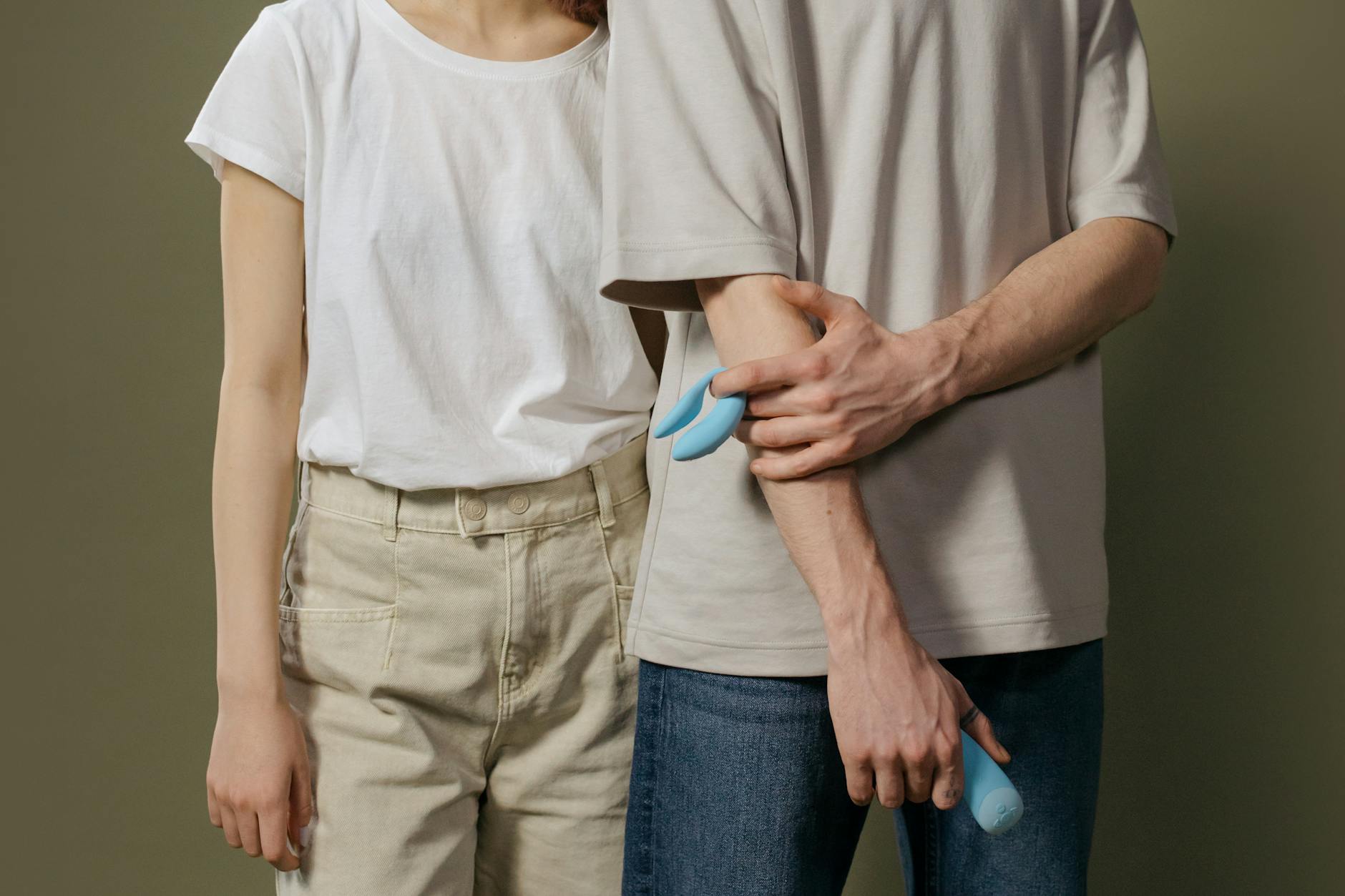
Your vibrator isn't broken. Your cycle is doing its thing.
Let's be real: you've probably noticed that your lemon vibrator feels wildly different depending on when you use it. Some weeks it hits like a revelation. Other weeks it feels almost numb, no matter which pattern you pick. You're not imagining it, and it's not a sign that your toy is faulty or that something's wrong with you. It's hormones. And understanding the pattern means you can work with your cycle instead of against it.
Your arousal cycle isn't just about desire. It affects nerve sensitivity, blood flow to genital tissue, lubrication, and how your brain processes stimulation. When you know what's happening, you can adjust your approach, choose better moments, or simply give yourself permission to have a lower-sensation week without shame.
The hormonal driver: how estrogen shifts your sensation
Estrogen fluctuates across your cycle, and it directly affects how responsive your clitoris is. During the follicular phase (menstruation through ovulation), estrogen climbs steadily. Higher estrogen increases blood flow to the vulva and makes nerve endings more sensitive. Your lemon clitoral vibrator will likely feel sharper, more distinct, easier to locate. This is the phase where intensity feels right.
After ovulation, estrogen dips, and progesterone rises during the luteal phase. Progesterone is a downer hormone. It calms your nervous system, which sounds great until you realize that a calmer nervous system also feels less stimulation. Blood flow to genital tissue decreases. Sensitivity dulls. That same pattern on your lemon vibrator that felt electric two weeks ago now feels like background noise.
Right before your period, both hormones drop sharply. Some people report a spike in sensation just before menstruation starts. Others feel almost nothing. This unpredictability is completely normal.
What this means for your lemon vibrator experience
During your follicular phase (days 1-14 roughly), your clitoris is hungry for input. Lemon sexual toys with sharper, higher-frequency patterns tend to feel best. You might even find that lower intensities satisfy you more during this window because your tissue is already primed. You need less amplitude to get the same sensation.
During your luteal phase (days 15-28 roughly), go counterintuitive: try patterns you'd normally skip. Slower, deeper, or more sustained suction often works better than the quick flicks that felt amazing last week. Your lemon vibrator doesn't need to be "louder." It needs to work differently. You might also discover that longer warm-up time is essential. Fifteen minutes of foreplay that worked in your follicular phase might need to stretch to thirty in the luteal phase.
Many people also notice that their orgasms feel different. Follicular-phase orgasms tend to be sharper and faster. Luteal-phase orgasms, when they arrive, often feel deeper and more full-body. Neither is better. They're just different expressions of the same capacity for pleasure.
The blood flow factor most people miss
Sensation isn't just about hormones. It's about blood. Estrogen increases blood vessel reactivity, which means more blood flows to genital tissue when you're aroused. More blood means more engorgement, more sensitivity, more ease with lubrication. Progesterone has the opposite effect. Blood vessels become less reactive. Engorgement is gentler, slower. Lubrication takes longer to arrive, or arrives less abundantly.
This is why one of the biggest mistakes I see is people assuming they need a more intense lemon clitoral vibrator. They don't. They need a different pattern. An air-suction device like the Lem works beautifully here because you can dial in the intensity independently of the pattern. Week one, pattern three at intensity two. Week three, pattern five at intensity three. Same toy, totally different experience.
Sensitivity shifts happen in other ways too
It's not just your clitoris. Your entire vulva changes texture and sensitivity across your cycle. During the follicular phase, skin is often plumper, tissue is more elastic, and external sensation is heightened. During the luteal phase, skin can feel drier, more delicate. This is partly why you might reach for lube more readily in week three than week one, even though both are entirely normal.
Your pelvic floor also behaves differently. Right after ovulation, many people report that their pelvic floor is tighter, more tense. This can make orgasm feel sharper but also more difficult to access. During menstruation, the pelvic floor often relaxes more easily, which changes the arc and intensity of orgasm. This is why some people find that using a lemon vibrator during their period feels completely different than any other time.
There's also the nervous system piece. Your sympathetic nervous system (fight-or-flight) is more dominant during the follicular phase. Your parasympathetic nervous system (rest-and-digest) is more dominant during the luteal phase. A sympathetic-dominant state means faster arousal, quicker orgasm, more alert sensation. A parasympathetic-dominant state means slower arousal, deeper relaxation, more full-body response. Neither state is worse. But they ask different things of your lemon sexual toys and your approach to pleasure.
How to track what works for you
Start noting three things over two months: the date, where you are in your cycle, and how your vibrator felt. Not "good" or "bad." Specific: Did pattern three feel sharp or muted? Did you need more warm-up time? Did you orgasm faster or slower? Did the sensation feel more in your clitoris or more diffuse? After eight weeks, patterns will emerge. You'll know that week two is your sharp-sensation window, and week four needs slowness.
If you're tracking your cycle with an app, even better. The granularity helps. And if your cycle is irregular or you're on hormonal birth control, the patterns might be subtler. But they're usually still there. Hormonal IUDs suppress systemic hormones less than pills do, so cycle-based sensation changes are usually more pronounced. Pills flatten the hormone curve, so you might notice fewer dramatic swings.
The partner conversation
If you have a partner, this is worth explaining ahead of time. "Sometimes I want to use my lemon vibrator this way. Other weeks, this other way. Neither means anything's wrong." Most partners appreciate the clarity. It removes the awkwardness of "Why does she want something different tonight?" and replaces it with knowledge. You're not being finicky. You're being attentive to your own physiology.
What if your cycle doesn't follow the pattern?
Stress, sleep, diet, and exercise all modulate hormones. A week of bad sleep can mimic a luteal-phase dip in sensation. Heavy exercise can shift your cycle slightly. Stress can suppress arousal entirely, regardless of where you are hormonally. If you notice that your sensation patterns don't match the textbook cycle, it's probably because life is getting in the way, not because you're broken. The solution isn't a different vibrator. It's usually sleep, stress relief, or a conversation with yourself about what you need that week.
Some people also find that their cycle is less predictable than the 28-day standard. You might have a 25-day cycle or a 32-day one. Ovulation might not happen at day 14 for you. That's fine. Track your actual experience, not the calendar. Your body's rhythm is the authority here.
When to revisit your lemon vibrator choice
If you find that your clitoral vibrator feels consistently dull or numb across your entire cycle, not just part of it, that's worth investigating. It could be medication side effects (SSRIs and some blood pressure meds can reduce sensation), numbness from overuse, or simply the wrong toy for your anatomy. A lemon clitoral vibrator works through suction and gentle pulsation, which is gentler than high-intensity wand vibrators. If you've been using something much more intense, your nerve endings might need a rest week or two to recalibrate.
You might also explore why lemon vibrator patterns matter more than intensity to dial in what actually works for your body across your cycle.
The bigger picture
Understanding your arousal cycle is one of the most empowering things you can do for your own pleasure. It removes shame ("my body isn't working") and replaces it with science ("my hormones are just doing their job"). It also means you can plan. If you know week two is your peak-sensation window, you can protect that time, prioritize it, maybe try something new. If week four is quieter, you can lean into slowness and depth instead of chasing intensity.
Your lemon vibrator isn't the variable. Your cycle is. Once you understand that, everything shifts.
FAQ
How much does your cycle actually affect sensation?
It varies wildly person to person. For some, the difference between follicular and luteal sensation is dramatic. For others, it's subtle. Hormonal birth control flattens the curve, so if you're on the pill, you might notice almost no difference. If you're cycling naturally, expect noticeable shifts, especially around ovulation and menstruation. The range is normal.
Can you use a lemon vibrator during your period?
Completely safe, yes. Some people find it feels different or better during menstruation because pelvic floor tension shifts. Others prefer to take a break. There's no right answer. Menstrual fluid is not a problem for silicone toys like the Lem. Just rinse it after as you normally would. Avoid penetrative devices if you have an IUD, since the strings can catch (though external clitoral stimulation is fine).
Why does your clitoris feel numb some weeks?
Numbness usually points to a dip in estrogen, blood flow reduction, or nervous system downregulation (progesterone's job). It's temporary. If it persists across all phases of your cycle, check in with medication side effects, stress levels, or whether you've been using intense vibrators too frequently without rest days. Your nerve endings can get desensitized if overstimulated.
Does cycle tracking help if you have irregular periods?
Yes, but differently. Instead of using a calendar, track actual symptoms: cervical mucus changes, temperature, energy, sensation. Irregular cycles still follow a pattern. It's just not always a 28-day one. Apps like Natalist or Inito can help predict ovulation through biomarkers, which is more reliable than counting days if your cycle varies widely.
Should you buy a different lemon vibrator for different cycle phases?
No. One quality lemon clitoral vibrator with multiple patterns and adjustable intensity handles the full spectrum. The Lem gives you range without needing separate toys. You're just shifting how you use it based on where you are in your cycle. That's actually the whole point of understanding these shifts.
What about using lemon sexual toys if you're not cycling (pregnant, postpartum, hormonal birth control)?
Sensation doesn't disappear, but the month-to-month variation does. Many people on hormonal birth control notice flatter sensation overall because estrogen is kept lower. Pregnancy often increases blood flow and sensation, then flattens after birth. Postpartum, especially if breastfeeding, progesterone and prolactin suppress estrogen, which can feel like a perpetual luteal phase. This is temporary. It normalizes once hormones settle. In the meantime, slower patterns and extended warm-up time usually help.