Here's what nobody tells you about mid-life relationship shifts
You don't wake up one day and decide desire is gone. It fades. You stop reaching for your partner. They stop reaching back. Conversations become logistics. Sex becomes something you check off when you remember it exists. By the time you notice the pattern, it's been months, maybe years.
Mid-life is when this happens most. Kids launch, careers stabilize or crumble, bodies change, health scares arrive. The intensity that held you together in your twenties transforms into something quieter. Sometimes that's beautiful. Sometimes it feels like dying from the inside out.
The tricky part: desire doesn't come back through willpower alone. You can't logic your way into wanting someone again. But you can create the conditions for it to return. And that starts with yourself.
Why desire flatlines during mid-life transitions
When life gets heavy, sex becomes one more obligation. Your nervous system is already burned out from managing work, aging parents, adult children with their own crises. Adding another thing to your plate, even a pleasurable thing, registers as a threat.
At the same time, your relationship has shifted. You're no longer performing desire for each other. You've seen the worst versions of yourselves. You know all the ways your partner disappoints you. That kind of intimate knowledge can either deepen connection or bury it. Usually, without active work, it buries it.
Physically, too, things have changed. If you're in perimenopause or menopause, sensitivity has shifted. If your partner is aging, their arousal pattern has changed. Neither of you is responding the way you used to. You interpret this as rejection. They interpret your silence as disinterest. Nobody speaks up. The gap widens.
The thing most couples skip: solo reconnection first
I see couples trying to fix desire together, and I have to slow them down. You can't rebuild something shared if you don't know what desire feels like in your own body anymore. That's not selfish. That's foundational.
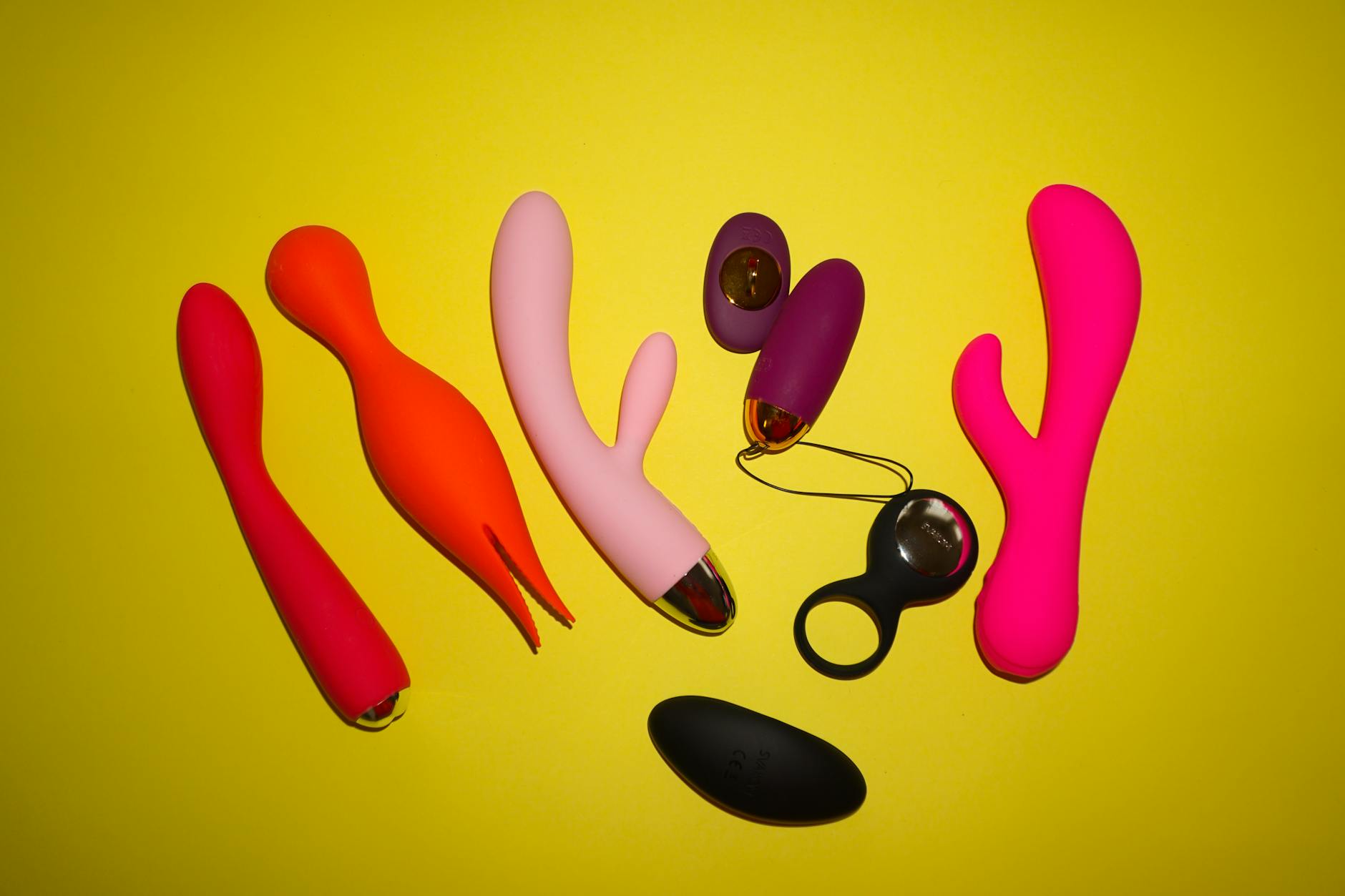
This is where solo exploration with a lemon clitoral vibrator becomes genuinely useful. Not as a band-aid. As a reset. When you use a clitoral vibrator alone, without the pressure of performing or coordinating with someone else, your nervous system gets permission to relax. Pleasure stops being a relationship metric. It becomes about your body, your breath, your reactions.
Lemon vibrators, specifically, work well for this because the suction mechanism feels fundamentally different from traditional vibration. It mimics the sensation of oral stimulation without the intensity of direct pressure. For people whose sensitivity has shifted or flattened during mid-life stress, that difference matters. You're not chasing the same orgasm you had at twenty-five. You're discovering what your body actually wants right now.
How to start the solo piece without shame
Set a time when you won't be interrupted. Not five minutes you squeezed into your lunch break. Real time. Thirty minutes. Make it matter.
Start with no expectation of orgasm. That's the permission slip your brain needs. You're exploring. That's the entire goal. Use the suction pattern to map what feels good. If the first pattern is too strong, dial it back. If it feels distant, try a higher setting. This isn't about speed or outcome. It's about sensation.
Many people skip lube because they think they should need it. But lube isn't a failure. It's a tool. Water-based lube makes everything feel better, especially if your sensitivity has shifted. It lets you focus on pleasure instead of friction.
Do this a few times. Solo. No ulterior motive of eventually using it partnered. Let your body remember what it feels like to prioritize its own sensation.
What this does to your relationship, even before you talk about it
Something shifts in you when you reclaim your own pleasure. You stop waiting for your partner to turn you on. You stop resenting them for not knowing what you need. You stop performing. And paradoxically, that's when desire returns to the relationship.
Your partner will notice. You'll have different energy. You'll be less resentful, more present. You might make eye contact during a regular conversation and feel something. Not obligation. Not performance. Actual interest.
That's the moment to talk. Not before. Not when you're still in the flatline, trying to convince yourself and them that sex matters. After you've remembered that it does, for you, on its own terms.
The conversation that actually matters
Don't lead with "We need to have more sex." That's a metric. That's pressure. Instead, lead with curiosity.
"I've been thinking about us. And I realized I let go of my own pleasure somewhere along the way. I'm starting to explore that again on my own. And I'm wondering if you'd want to rebuild this together. Not the way it was. But something new."
That sentence does three things. It takes responsibility for your own role. It signals you're not blaming them. And it opens a door instead of creating a problem.
Their response matters less than the fact that you're talking. Because now you're building something instead of managing resentment.
How to bring a lemon vibrator into partnered reconnection
If your partner is interested, solo exploration translates pretty directly to partnered use. You can use the lemon vibrator on yourself while they're inside you, watching, present. You can show them the patterns and rhythms that work for your body. You can use it together.
The key is removing the performance aspect. This isn't about proving you can orgasm on their timeline. It's about inviting them into something that already belongs to you. That's a fundamentally different dynamic. Less pressure. More pleasure.
If your partner has a lower desire level than you, or if they're not interested in sexual reconnection right now, that's different information. And it's important information that changes how you move forward. But you can't get that information without asking.
What actually heals mid-life desire flatness
It's not a magic toy. It's not a date night. It's not talking it through once and being done. It's you deciding that your pleasure matters enough to prioritize, even when everything else is chaos. It's your partner showing up to the conversation. It's both of you being willing to rebuild instead of just accepting flatness as inevitable.
The lemon vibrator is just the tool that makes the first part possible. A way to give yourself permission to feel again when mid-life has numbed you to almost everything.
Start there. Reconnect with your own body first. Everything else follows.
People also ask
How long does it take to feel desire return after a mid-life relationship shift?
There's no timeline. Some people feel a shift in weeks after they start prioritizing solo pleasure again. Others need months of solo exploration before they feel ready to have the conversation with their partner. The key is consistency, not speed. You're rewiring your nervous system's association between pleasure and stress. That takes repetition. Show up for yourself regularly, and your body will remember how to respond.
Can I use a lemon vibrator if I'm on antidepressants that affect my sensation?
Absolutely. In fact, if medication has muted your sensation, the suction mechanism of a lemon clitoral vibrator often works better than traditional vibration because it creates a different kind of stimulation. That said, if sensation has completely flattened, a conversation with your prescriber is worth having. Sometimes adjusting timing or switching medications can help without losing the mental health benefits you're getting. Check our guide on sensation shifts with antidepressants for more specifics.
What if my partner doesn't want to use toys during sex?
Then solo use stays solo, and that's completely valid. Your pleasure doesn't require their participation. Using a lemon vibrator on your own is just as valuable as partnered use. It's not a stepping stone to something else. It's its own complete experience. Your partner's comfort matters, and your pleasure matters. You find the overlap where both are true.
Is it normal that I feel guilty about exploring with a toy when I have a partner?
Yes. And it's worth examining why. Sometimes that guilt comes from old cultural messaging that your pleasure should belong only to your partner. Sometimes it comes from resentment. Sometimes it comes from a real need to reconnect. Those are three different problems with three different solutions. If guilt is keeping you from exploring, read more about solo pleasure when you have a partner. The shame dissipates faster when you name it.
How do I know if my relationship is fixable or if the desire flatness means we've grown apart?
Desire flatness and growing apart are not the same thing. You can grow apart and feel plenty of desire. You can stay deeply connected and have desire flatline. One is about the quality of connection. One is about nervous system state and life circumstance. Start by addressing the desire piece on your own. It won't solve a fundamental compatibility problem, but it will clarify whether there's actually a problem or just a phase. Once you're reconnected to your own body, you'll have clarity about your partner too.
Can rebuilding desire after mid-life shift happen without toys?
Yes, but it's harder. Toys aren't required for any of this. But they do something specific. They interrupt the pattern. They create novelty. They signal to your body that you're taking this seriously. You can rebuild desire through conversation, scheduling, date nights, and embodied presence. Many couples do. Adding a tool like a lemon vibrator just tends to speed up the nervous system reset. Do what works for you.
Final word
Mid-life doesn't have to mean the end of desire. Usually it just means the beginning of a different kind. Less urgent. Deeper. More intentional. But it only happens if you're willing to show up for yourself first. A lemon vibrator is just permission made physical. Use it that way. Then watch what comes next.
Ready to start? Reach out if you want to talk through your specific situation. Contact Lemon Toy for personalized guidance on rebuilding intimacy in your relationship.