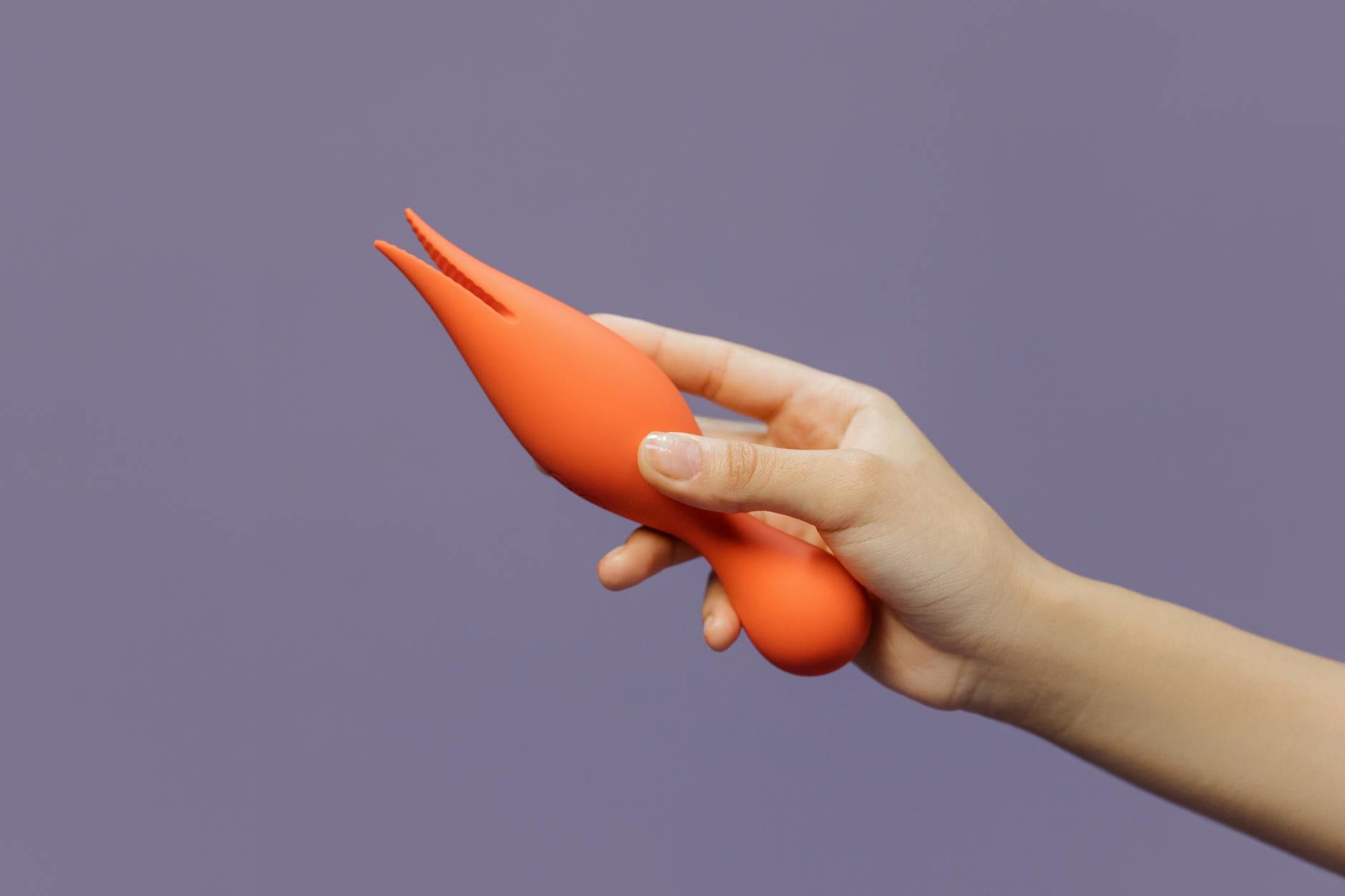
Let's talk nerve endings
Here's the thing nobody really explains: vibration and suction don't feel the same because they don't work the same. They're activating your clitoris through two totally different mechanisms. One sends rapid pulses through tissue. The other creates a seal and gently draws tissue inward. Your sensitivity level determines which one your nervous system will respond to more reliably.
I work with couples navigating pleasure, and one of the most common frustrations I hear is "I bought a toy that my friend loved and it does nothing for me." That's not a you problem. It's a mismatch between your nerve sensitivity and the type of stimulation.
How vibration works on the clitoris
Vibration is mechanical motion. Lemon vibrators create rapid pulsing patterns that travel through the clitoral tissue, activating nerve endings through frequency and intensity. Think of it like Morse code sent directly to your nerves.
The clitoris has two kinds of nerve fiber endings: slow-adapting (pressure-sensitive) and fast-adapting (movement-sensitive). Vibration primarily targets the fast-adapting nerves. These nerves light up in response to movement and change. Higher frequencies (measured in Hz) typically create sharper, more localized sensations. Lower frequencies feel broader and deeper.
For people with baseline clitoral sensitivity, vibration works fast. The stimulation builds quickly because you're sending continuous signals to movement-responsive nerves. You don't need much warm-up time. Patterns shift the sensation so your nerves don't habituate (get used to the same feeling and stop responding).
But here's the catch: if your slow-adapting (pressure) nerves are more dominant, pure vibration can feel thin or even uncomfortable. It's like trying to write with a ballpoint pen when you need a brush.
How suction works on the clitoris
Suction is a different animal entirely. It creates negative pressure that gently engorges the clitoral tissue, then releases. This mimics the sensation of oral sex more closely than vibration does.
Suction activates slow-adapting nerve fibers. These nerves respond to sustained pressure and the sensation of tissue being stimulated across a broader area. The clitoral complex has internal structures that extend deeper than most people realize, and suction activates those deeper nerve bundles more effectively than localized vibration.
Suction toys also have a unique advantage: they work well when arousal is slow to build. Because you're creating an engorgement effect (tissue is filling with blood and expanding), you're working with your body's natural arousal process rather than against it. There's no jarring stimulation, just a steady, building sensation.
The downside is that suction typically takes longer to reach orgasm than vibration does. You're building arousal gradually rather than jumping to high intensity.
When you have low baseline clitoral sensitivity
If you've noticed that you need stronger or longer stimulation to orgasm, or if sensation feels muted compared to what you used to experience, you're probably working with lower baseline sensitivity.
This happens for lots of reasons: hormonal changes, medications that dull sensation, anxiety, or just your neurology. The good news is that low sensitivity actually responds really well to vibration, especially at higher frequencies and with pattern variety.
Lemon clitoral vibrators, which use suction-and-vibration hybrid technology, work particularly well here because you get both mechanisms at once. The suction helps engage the deep nerve tissue while the vibration pattern adds the high-frequency stimulation your movement-responsive nerves need. Start at lower patterns and build up rather than jumping to the highest intensity immediately.
One thing I tell clients: intensity isn't the same as power. A toy can be powerful without being intense. Lemon vibrators offer nuance because of their pattern variety. You can stay at moderate power and shift patterns to keep your nerves engaged.
When you have high clitoral sensitivity
If you orgasm quickly from minimal touch, or if many toys feel overwhelming, you have high baseline sensitivity. Your nerves are firing readily, which is amazing, but it also means you need to avoid overstimulation.
For you, suction-based toys are often the better starting point. They offer sustained sensation without the jarring quality that can push you over into discomfort. You're also less likely to habituate because suction creates a more varied sensation profile naturally.
If you do use vibration, keep the frequency lower and the pattern more subtle. Lemon vibrators offer gentler patterns that won't overshoot your threshold. Test at pattern 1 or 2 rather than assuming you can handle full intensity.
Honestly, high sensitivity is underrated. It means you have access to pleasure others have to work harder for. The strategy is just choosing tools that honor that responsiveness rather than bombard it.
When your sensitivity shifts during arousal
Here's something that trips people up: your clitoral sensitivity isn't static. It changes as you get more aroused. Early in arousal, when tissue is still relatively flat and blood flow is building, many people feel more sensation from suction. As arousal deepens and the clitoris engorges, vibration often becomes more noticeable.
This is why starting with suction-based stimulation, then transitioning to vibration, works really well for a lot of people. You're matching the stimulation type to your arousal stage.
How Lemon Clitoral Vibrators Improve Sensation After Hormonal Changes goes deeper into how your sensitivity changes throughout your cycle. If you're noticing that what worked last month doesn't work now, that's not a toy problem. That's your body shifting.
Medication, hormones, and sensitivity
Anxiety medications, antidepressants, birth control, and hormonal fluctuations all influence clitoral sensitivity. Your baseline isn't fixed. It moves based on what's happening in your body.
If you're on medication that dulls sensation, vibration at higher frequencies is typically more effective than suction because you need that intense nerve activation. If hormonal changes have made you more sensitive, suction becomes more useful.
This is also why How to Use a Lemon Vibrator When Medication Dulls Your Sensation matters. If your sensitivity baseline has shifted, your toy strategy shifts too. There's no shame in needing different tools at different times.
The partner factor: shared sensitivity levels
If you share pleasure with a partner, you've probably noticed that what gets them excited might feel totally different on your body. That's because your clitoral sensitivity levels don't have to match.
Honestly, this is where a lot of couples get frustrated. One person loves intense vibration, the other needs gentle suction. You start assuming one toy is "better," when really they're just designed for different nervous systems.
The solution isn't buying one magic toy. It's understanding that you might need separate tools, or choosing a hybrid device (like Lemon vibrators) that offers enough pattern range to work for both of you. Talk about sensitivity levels openly. It's not criticism. It's data.
Testing your sensitivity: a practical approach
If you're not sure where you fall on the sensitivity spectrum, here's how to figure it out.
Start with vibration at the lowest pattern. Notice how quickly you feel it, how localized the sensation is, and whether it feels pleasant or too intense. Move up through patterns slowly. Then try a suction toy (if you have access to one) and notice where you naturally want the pressure to be.
You're not looking for what feels "best." You're noticing what your body responds to. High sensitivity might feel like quick arousal and the need to dial intensity down. Low sensitivity might feel like needing longer warm-up and stronger patterns.
Neither is better. They're just different nervous system types. Once you know yours, choosing between vibration and suction becomes simple. You're not shopping blindly anymore.
FAQ
Can I use vibration and suction toys together in the same session?
Absolutely. Many people start with suction to build arousal, then switch to vibration for faster intensity as they get closer to orgasm. This works because your sensitivity profile changes as blood flow increases. You're meeting your nervous system where it is in each moment.
Do Lemon vibrators use pure vibration or a combination?
Lemon vibrators use suction-based stimulation paired with gentle pulsing, which is technically different from traditional vibration. This hybrid approach works well for people who need something between pure vibration and pure suction. The suction draws tissue while the pulsing adds movement-based stimulation.
What if one type of toy always feels uncomfortable?
Sensitivity isn't always the issue. Sometimes it's positioning, pressure level, or material preference. Make sure you're using water-based lubricant, starting at the lowest intensity, and giving yourself permission to stop if something feels off. If discomfort continues, that's worth mentioning to a partner or a healthcare provider.
Does sensitivity change with age?
Yes, significantly. Hormonal shifts through perimenopause and menopause change clitoral tissue thickness and blood flow, which affects sensitivity. Sensitivity can actually increase or decrease depending on the person. What worked at 35 might feel completely different at 50. That's normal.
Can anxiety affect which toy works for me?
Completely. Anxiety constricts blood flow and mutes sensation. If you're anxious, you might need more intense stimulation just to feel anything. Once anxiety decreases, your baseline sensitivity increases. So your "perfect toy" might change based on stress levels. This is why creating calm conditions matters as much as the toy itself.
How do I know if I should switch toys or change my technique?
If a toy has never worked for you, switching toys makes sense. If a toy used to work and suddenly doesn't, your sensitivity probably shifted. Try different patterns, different speeds, more warm-up time, or a different type of stimulation entirely. Often it's not the toy. It's the timing or approach.