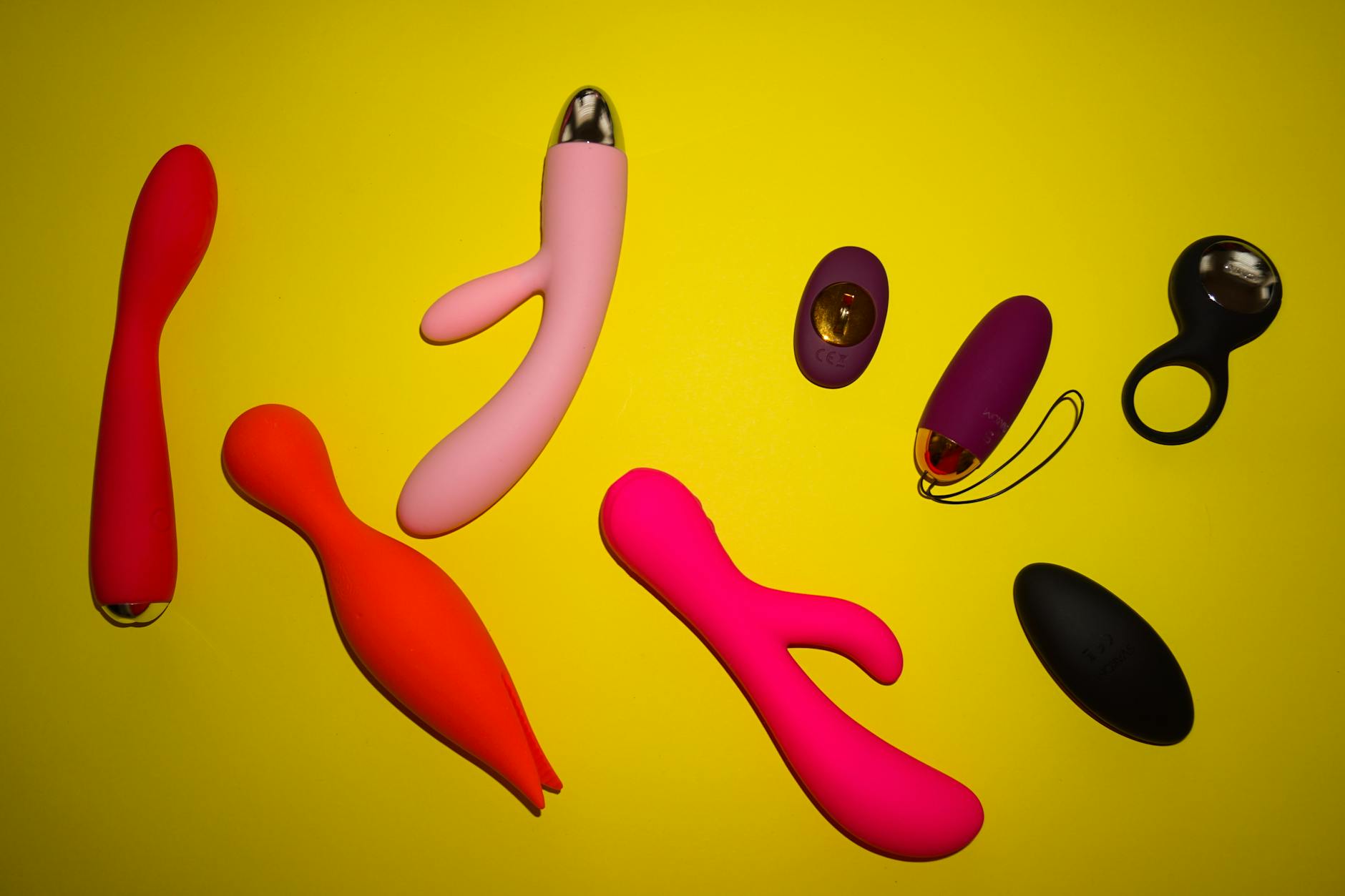
Here's the thing about hormones and pleasure
Your body doesn't just carry hormones. Hormones carry your nervous system, your arousal response, and your capacity to feel sensation. When they shift—whether from birth control, perimenopause, thyroid changes, or hormone therapy—pleasure doesn't disappear, but it does get quieter. The problem is that most people blame themselves instead of understanding what's actually happening.
I've worked with hundreds of clients navigating this exact transition. The pattern is always the same. Someone tries their old toy, feels nothing, and assumes they're broken. They're not. Their sensory threshold just changed, and a standard vibrator wasn't designed to meet tissue that now requires a completely different kind of input.
What hormonal shifts actually do to sensation
Estrogen, progesterone, and testosterone all affect clitoral tissue thickness, blood flow, and nerve sensitivity. When levels drop or fluctuate, the clitoris becomes slightly less engorged during arousal. The tissue thins slightly. Blood flow takes longer to peak. Your nervous system's sensitivity to standard vibrational frequency can shift dramatically.
This isn't permanent damage. It's a recalibration.
The confusing part is that different hormonal changes create different sensory profiles. Someone on hormonal birth control often experiences reduced sensation because synthetic hormones don't trigger the same blood-flow response as your body's natural cycle. Someone in perimenopause might feel hypersensitive one week and completely numb the next. Someone on hormone replacement therapy might need weeks to adjust to their body's new baseline.
Add to that the fact that most clitoral vibrators use rotational or linear vibration patterns. Those patterns work fine when your tissue has baseline sensitivity. They don't work as well when your nervous system needs stronger, more sustained stimulation to register pleasure.
Why air-suction technology changes everything
Lemon clitoral vibrators use air-suction technology instead of direct mechanical vibration. Here's why that matters when hormones have shifted your sensitivity.
Air-suction creates gentle rhythmic pressure and release around the clitoris without friction. It's not pushing or buzzing at a fixed frequency. It's creating a pattern of suction and release that stimulates nerve endings in a way that works even when tissue sensitivity has changed.
Clients who've tried how lemon vibrators feel different when you use hormonal birth control consistently report the same thing: the suction registers as pleasure even when they can't feel standard vibration at all. The sensation feels less like a toy vibrating against you and more like an actual physical response.
The mechanism here is neural, not mechanical. Air-suction stimulates a different set of nerve pathways than vibration does. When hormones have altered your response to one pathway, the other one often still works beautifully. It's not a workaround. It's actually a better match for how your body processes pleasure right now.
How to use a lemon vibrator after hormonal changes
Timing and technique matter more than you'd think when you're relearning your pleasure response.
Start with the lowest suction setting. If you've been using standard vibrators, you might assume you need high intensity to feel anything. You don't. Air-suction is more efficient at stimulation than vibration, which means lower settings do more work. Begin at pattern one and stay there for a full minute. Let your body register what's happening before you turn anything up.
Give yourself 15 to 20 minutes of warm-up time. Hormonal shifts usually slow down arousal onset. You're not losing capacity for pleasure. Arousal just needs more time to build. That's not a problem. It's useful information. Many clients report that longer warm-up time actually leads to more intense orgasms because arousal has time to fully develop.
Experiment with pattern sequences, not intensity jumps. Most lemon vibrators have multiple patterns beyond just "strong." When sensation feels muted, changing the pattern often works better than increasing intensity. Your nervous system responds to novelty, and pattern variation keeps stimulation interesting even at lower power levels.
Use water-based lubricant. Hormonal changes often affect natural lubrication. Adding external lubrication isn't a sign something's wrong. It's smart anatomy. It also changes how air-suction interacts with your tissue, often making the sensation more intense and more pleasurable.
Why sensation might still feel delayed even with the right toy
Lemon clitoral vibrators are genuinely more effective at creating sensation after hormonal shifts, but "more effective" doesn't mean "instant." You might still experience delayed arousal response. That's because the hormone shift affects multiple systems at once—not just tissue sensitivity, but also blood flow timing and neural signaling speed.
This is actually where relationship context matters enormously. If you're with a partner, they need to understand that delayed sensation doesn't mean you're not interested. It means your body operates on a different timeline right now. Partners who interpret slow arousal as lack of desire create pressure, which makes actual arousal even slower. Partners who understand it as a temporary recalibration stay patient, and patience itself often shortens the warm-up time.
If you're exploring pleasure solo, how to use a lemon vibrator when arousal feels slow or inconsistent is worth reading. The strategies for solo exploration are different from partnered ones, and knowing the distinction saves frustration.
When hormonal changes also bring sensitivity shifts
Some hormonal shifts create the opposite problem: hypersensitivity. Everything feels too intense. Standard vibrators become painful. Even light touch feels overwhelming.
This happens more often than people realize, especially in early perimenopause or during certain phases of hormonal birth control adjustment. The clitoris becomes more engorged than usual, the tissue becomes thinner and more reactive, and even gentle stimulation registers as too much.
Lemon air-suction vibrators still help here because you have complete control over suction intensity and pattern. You're not stuck with vibration frequency. You can use the lowest pattern setting and create a rhythm that feels soothing rather than overwhelming. Many clients with sensitivity-driven numbness actually shift to using their vibrator more gently and more frequently, which paradoxically reduces overall sensitivity over time.
The recovery timeline is slower than you think it should be
Here's something nobody tells you: hormonal recalibration takes months, not weeks. If you've switched birth control or entered perimenopause, your sensory baseline might not stabilize for three to six months. Your nervous system isn't fast at adapting to hormonal change. Patience is genuinely useful information, not just nice advice.
The good news is that having a tool designed for your current sensory state makes that waiting period infinitely less frustrating. You're not stuck waiting for sensation to return. You're actively exploring how pleasure works in your body right now. That's a different experience entirely.
FAQ: Hormonal changes and clitoral pleasure
Can hormonal birth control permanently change how I experience orgasms?
No, but it can change your experience while you're on it. Synthetic hormones create a different sensory profile than your body's natural cycle does. Some people experience reduced sensation, some experience more sensitivity, and some notice no change at all. If you stop using hormonal birth control, your baseline sensation usually returns within two to three months. If you switch types of birth control, the adjustment period is usually shorter. A lemon clitoral vibrator works well during transition because it doesn't depend on your natural arousal response to be functional.
Will my sensation improve if I switch from hormonal to non-hormonal birth control?
Often, yes, but not immediately. Hormones stay in your system for weeks after you stop, and then your natural cycle needs time to re-establish its rhythm. Most people report noticeable sensation shifts within one to two months of switching, with full recalibration taking three to six months. Using an air-suction vibrator during that transition gives you reliable pleasure while your body adjusts.
If I'm on hormone replacement therapy, will an air-suction vibrator feel different than it would have before?
Yes. HRT changes your sensory baseline, just like any hormone shift does. The way you experience suction stimulation might feel slightly different than before, but that doesn't mean it's worse. Many clients find that HRT actually improves sensation because it restores tissue thickness and blood flow. If sensation feels muted on HRT, that usually points to a dosing conversation with your provider, not a vibrator problem.
Why do some people feel more pleasure after their hormone levels shift even though sensation technically decreased?
This happens because pleasure isn't just about sensation intensity. It's also about mental clarity, permission, and anticipation. When hormonal noise clears—when you're no longer cycling through hormonal peaks and valleys every month—your brain often engages more fully with physical sensation. Lower sensation plus higher mental presence sometimes equals more pleasure overall.
Can using a lemon vibrator help speed up my sensory recovery after hormonal changes?
Not directly, but it helps indirectly. Regular pleasure exploration keeps your nervous system engaged and responsive. It also provides reliable feedback about how your sensory baseline is changing. Some clients notice their sensory recovery accelerates because they're using a tool that actually works with their current baseline, which removes the frustration of ineffective stimulation. The pleasure itself might be what speeds recovery, not the vibrator.
Should I try a different toy if air-suction doesn't immediately feel amazing after hormonal shifts?
Wait at least two weeks before switching. Your nervous system needs time to learn what the new sensation pattern feels like. The first few times you use an air-suction vibrator after hormonal change, your body is essentially learning a new language. Give it time to feel fluent before deciding it's not working.
What comes next
Hormonal shifts don't end your pleasure. They reshape it. Understanding what's changed, using a tool designed for your current sensory state, and giving yourself permission to explore pleasure differently right now transforms a frustrating transition into genuine discovery.
Your sensory response is happening exactly as your body intends. A lemon clitoral vibrator is designed to work with that reality, not against it.
If you'd like to explore this further with personalized guidance, reach out here. I work with clients navigating exactly this kind of transition, and there's always something useful to discover about how your pleasure works in this season of your life.