Let's start with the real conversation
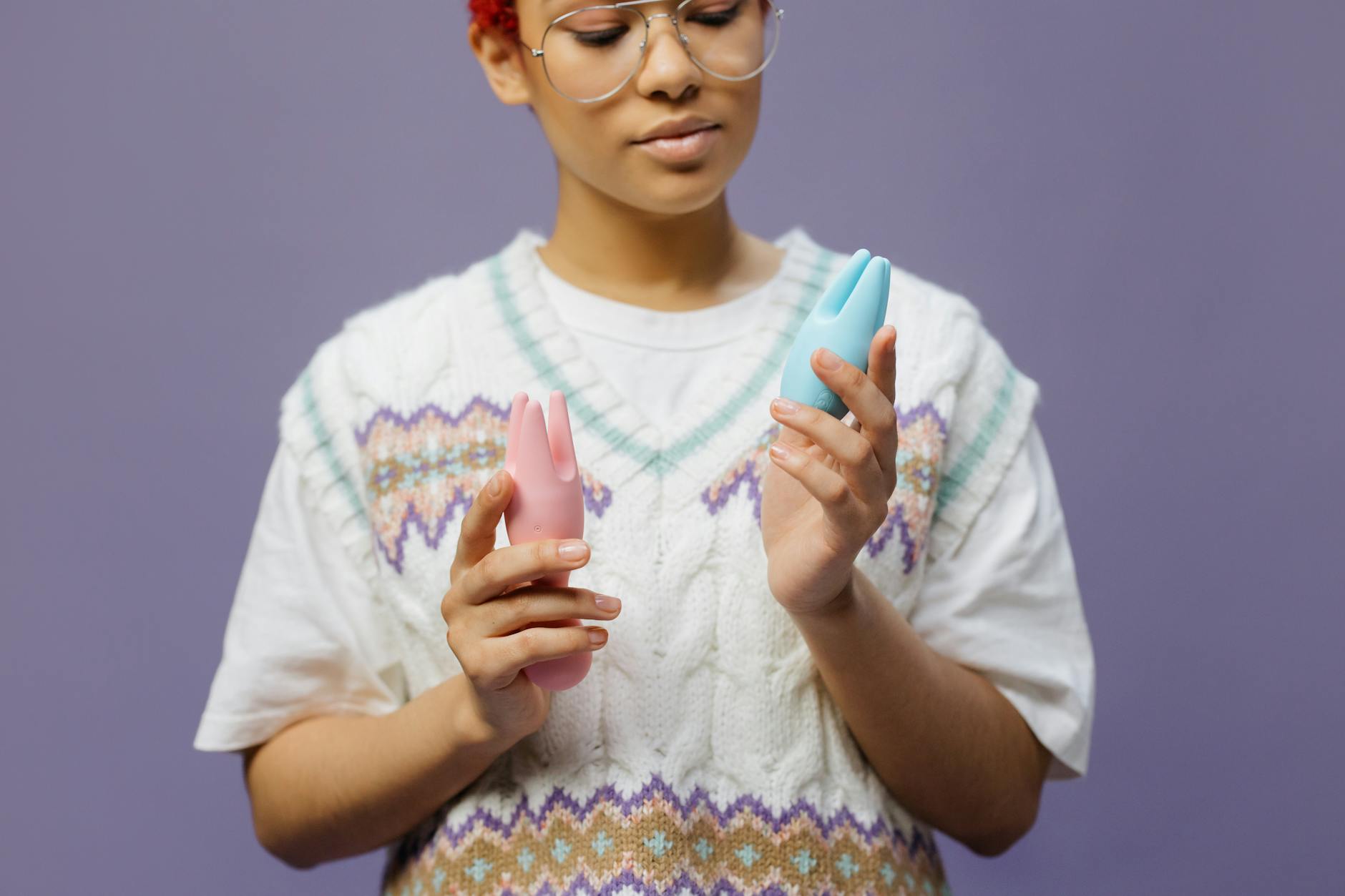
If you've been using hormonal birth control for a while and suddenly noticed that your lemon clitoral vibrator feels different, you're not imagining it. The hormones in most birth control pills, patches, and IUDs actively reshape how your nervous system and tissues respond to touch. That's not a failure. That's your body being exactly as advertised.
The tricky part is that nobody really talks about this shift in a practical way. You notice sensation feels muted, or arousal takes longer, or the patterns on your Lem that used to work don't hit the same anymore. So you wonder if it's you, if it's the toy, or if something's broken. It's none of those things. Your hormonal landscape has changed, and your pleasure response changed with it.
Here's what's actually happening physiologically, and more importantly, what to do about it.
How hormonal birth control reshapes sensation
Hormonal contraceptives work by suppressing the natural rise and fall of estrogen and progesterone throughout your cycle. Most pills use synthetic progestin, sometimes with added ethinyl estradiol (a synthetic estrogen). This flattened hormone profile does several things to your body:
Your clitoral tissue gets less blood flow. Estrogen helps maintain tissue elasticity and vascular responsiveness. When estrogen is consistently lower or synthetic, the clitoris receives less engorgement during arousal. This means it takes longer for the tissue to swell and become hypersensitive to touch. On the lemon vibrator, this often feels like needing to start at a higher intensity than you used to, or needing longer warm-up time before the sensation feels strong enough.
Vaginal lubrication changes. This is probably the most commonly reported shift. Some people using hormonal contraceptives produce less natural lubrication, or the viscosity is different. That's not dryness in the medical sense, but it changes how your tissues feel against the soft silicone of a lemon sucker or vibrator. The glide is different. Friction increases. Some users describe it as needing more external support.
Nerve sensitivity shifts. Your nervous system isn't just responding to touch through your clitoris. Hormones influence the neurons themselves. Progestin can dampen certain nerve responses, which is actually part of how birth control helps with menstrual pain or cramping. But it also means orgasmic sensation can feel more diffuse, less intense, or slower to build.
Libido itself gets quieter. Progestin actively suppresses the androgenic hormones (testosterone and related compounds) that drive sexual desire in people with vulvas. So not only does pleasure feel physically different. You might have less drive to pursue it in the first place.
Why this happens (and why it matters)
Birth control is doing its job perfectly. The hormones are preventing ovulation, which is the point. That flattened hormone profile that prevents pregnancy also creates these side effects. For many people, the trade-off is worth it. For others, it's a genuine loss of sensation and desire that deserves acknowledgment and problem-solving.
The kicker is that this isn't universal. Some people barely notice a shift. Others find their sensation drops dramatically. A lot depends on the type of contraceptive, the dose, how long you've been using it, and your individual hormone receptor sensitivity. Someone on a low-dose pill might have minimal changes. Someone on a higher-dose formulation or using an IUD with systemic hormone release might notice everything.
How your lemon vibrator experience changes
If you already own a Lem or another lemon clitoral vibrator, here's what to expect and how to adjust:
Warm-up takes longer. Budget 15 to 25 minutes instead of 5 to 10. Start at patterns 1 or 2 instead of jumping to pattern 3 or 4. This isn't laziness. Your tissue needs time to engorgize when the hormonal support for that engorgement is lower. Think of it like dimmer lighting. You're still reaching the same destination, just more gradually.
The most intense patterns might feel less intense. If you used to rely on pattern 8 or the highest suction mode, you might find yourself reaching for pattern 6 or 7 now just to feel the same effect. That's normal. It's not that the toy is weaker. It's that your tissue is responding less dramatically to stimulation.
Mid-range patterns often become your sweet spot. Many people on hormonal birth control find that patterns 3 through 6 become their go-to range, where the sensation is strong enough to build arousal without feeling overwhelming. The narrow middle of the spectrum is suddenly the perfect place to live.
Consistency matters more. When sensation takes longer to build, varying the pattern mid-session can actually derail your arousal instead of enhancing it. A lot of people find that staying on one pattern for longer stretches, rather than switching around, helps them actually reach orgasm. Patience beats novelty here.
Lubrication becomes a real tool, not an afterthought. Water-based lube isn't just nice-to-have anymore. It's part of the setup. It makes the toy glide better, reduces friction that can feel unpleasant instead of pleasurable, and actually helps stimulation feel more intense because you're not fighting resistance.
What doesn't change (this is important)
Your capacity to orgasm is still there. Your pleasure is still real. Your clitoris hasn't lost its nerve density or its fundamental wiring. You're not broken, and you're not permanently altered. You're working with a different neurochemical landscape, but the equipment is still functional.
Many people also find that after a few weeks of adjusting their technique to match their new hormonal reality, they stop noticing the difference. Adaptation is real. Your brain calibrates to the new baseline, and sensation feels normal again. Not necessarily as intense as before, but normal and satisfying.
The options you actually have
If the shift in sensation bothers you enough to consider making a change, here are real paths forward.
Switch to a lower-dose formulation. If you're on a standard 35-microgram pill, your doctor might be willing to try a 20- or 24-microgram version. Lower hormonal load sometimes means less suppression of sensation. This isn't a fix for everyone, but it's worth a conversation.
Consider a non-hormonal option. Copper IUDs, condoms, diaphragms, and fertility tracking don't carry the same sensation-suppressing effects. Some people switch specifically to preserve their arousal and pleasure response.
Adjust your expectations and your technique. Honestly, this is where most people land, and it works. You're not fighting your body. You're working with how it's actually built right now. That lemon vibrator is still going to help you reach orgasm. It just might take a slightly different path to get there.
Talk to your prescriber. If sensation loss is severe, or if it's coupled with completely absent libido, mention it. Some people benefit from taking a break from hormonal contraception periodically, or from exploring whether a different formulation matches their pleasure profile better. Your doctor can help troubleshoot.
The real thing worth knowing
Hormonal birth control isn't your enemy, and neither is your changed response to pleasure. Both are just facts of the system you're in right now. A lemon clitoral vibrator is a brilliant tool for working with this reality, not fighting it. With a little adjustment to your timing and technique, you'll likely find your pleasure is still absolutely within reach. Different doesn't mean diminished. It just means worth understanding on its own terms.
People also ask
Does hormonal birth control permanently change sensation?
No. When you stop taking hormonal contraception, your natural hormone cycle typically returns within a few months. Sensation usually bounces back to your baseline as estrogen and progesterone resume their natural rhythm. Some people notice the shift back almost immediately; others take several cycles to fully reorient. The changes are real but reversible.
Can I use my lemon vibrator the same way on birth control as I did before?
You might be able to, but most people find their technique needs at least some tweaking. Starting at a lower intensity, building warmup time, and using lube more consistently are the most common adjustments. Every body responds differently, so experimentation is fair game. What works for someone else might not be your answer.
Why do some people lose interest in sex on birth control?
The progestin in most hormonal contraceptives suppresses the hormones that drive sexual desire, particularly testosterone and related androgens. This is intentional in a way; lower androgens can mean lower libido, which sometimes helps with birth control compliance from a marketing standpoint. But it's a real side effect that deserves recognition. If you've noticed your desire for sexual activity has dropped significantly, that's legitimate, and it might be worth discussing with your doctor.
Does a different type of birth control affect sensation differently?
Yes, significantly. Low-dose pills have less impact than standard-dose pills. IUDs with hormones can hit harder because they bypass your digestive system. The copper IUD doesn't affect sensation at all because it's non-hormonal. Implants, patches, and the ring all have their own profiles. If sensation loss is a dealbreaker for you, the type of contraception you choose actually matters.
Should I switch contraceptives if birth control affects my pleasure?
That depends on how much the sensation change bothers you and what other factors matter in your contraceptive choice. If pleasure is a priority and the shift is dramatic, exploring other options with your doctor makes sense. If you're happy with your birth control for other reasons and can adjust your technique, staying put is equally valid. There's no single right answer.
How long does it take to adjust to sensation changes from birth control?
Most people adapt their expectations and find a comfortable new baseline within 4 to 8 weeks. Your nervous system recalibrates pretty quickly. If it's been months and sensation is still feeling off or actively unpleasant, that's worth checking in with your prescriber about, because it might indicate that particular formulation isn't the right fit for your body.
The takeaway
Hormonal birth control and pleasure aren't natural enemies. They're just systems that need to coexist thoughtfully. Your lemon vibrator, with a little patience and adjustment, is still the tool that helps you reach orgasm and feel good. Understanding why sensation shifted is half the battle. The other half is trusting that your body, even on hormones, still knows how to feel good when given the right conditions.