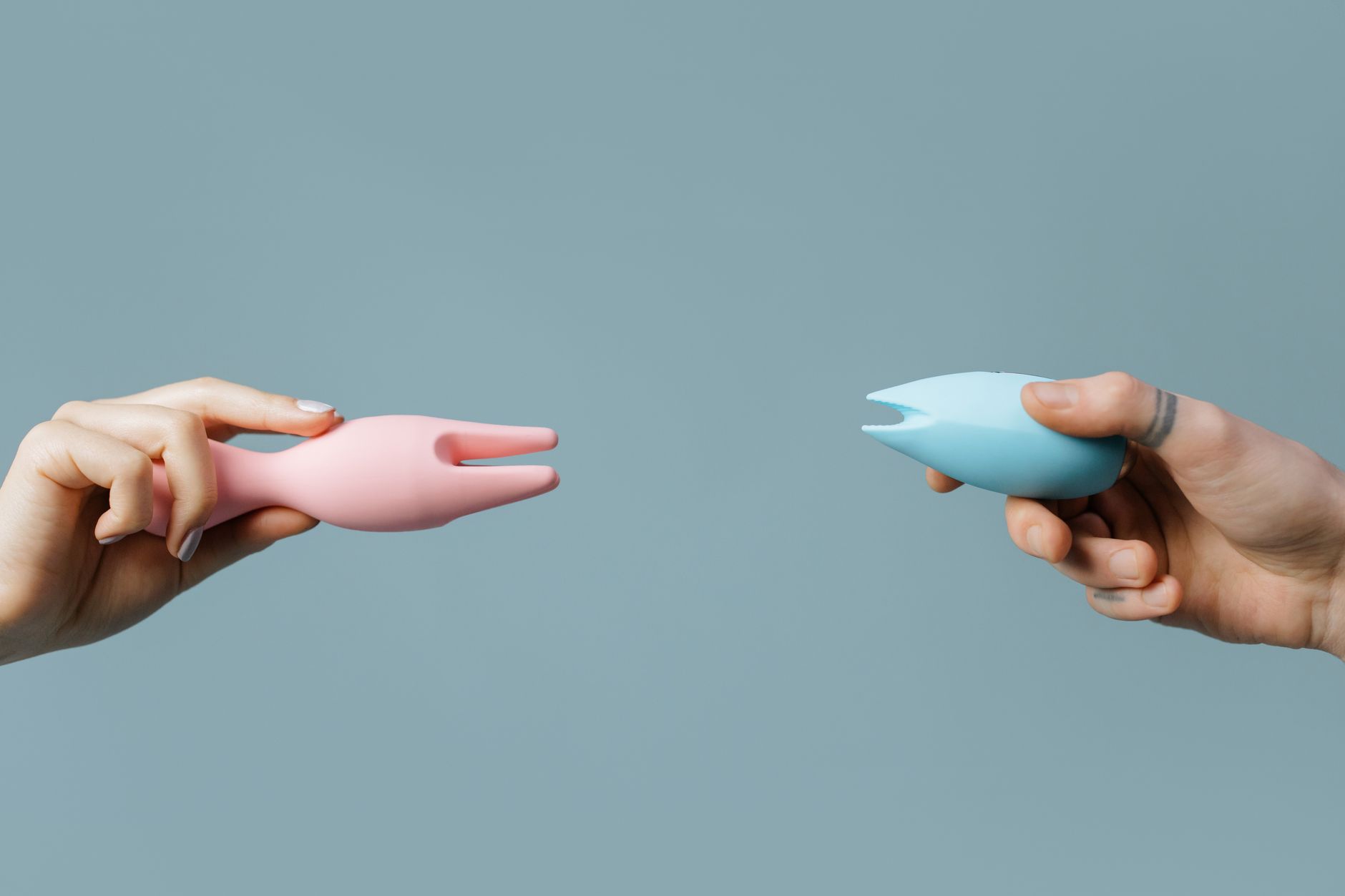
Let's be honest about the awkward part
When you're newly single after years in a relationship, your body doesn't immediately remember how to be alone with itself. You've spent so long navigating pleasure in tandem, calibrating around someone else's rhythm, managing someone else's expectations. Solo pleasure can feel foreign, even a little scary. Some people skip it altogether for months.
I see this all the time in my practice. People come out of long relationships knowing intellectually that masturbation is normal and fine, but their hands shake a little. They feel self-conscious. Or their body just doesn't respond the way it used to because pleasure got so wired up with partnership dynamics that it needs retraining.
Lemon vibrators are one of the gentlest ways to restart this conversation with yourself.
Why your body feels different post-breakup
Three things shift simultaneously when a long relationship ends. First, the physical routine disappears. Your body had a rhythm, a schedule, expectations about when and how pleasure happened. Suddenly that's gone, and everything feels either urgent or pointless depending on the day.
Second, the cognitive load changes. During a relationship, you're managing arousal against a backdrop of relational dynamics. Is your partner in the mood? Are they stressed? Did you have a fight? Will this be about them or you? Solo pleasure removes all that noise, which sounds liberating but can actually feel disorienting. Your brain isn't used to desire existing purely for itself.
Third, shame often creeps in. You might feel lonely using a toy alone. Or guilty. Or weirdly embarrassed by your own body in a way you weren't before. These feelings are incredibly common and not reflections of anything wrong with you.
Why lemon clitoral vibrators make this easier
Lemon vibrators work well for people starting solo pleasure again for a specific reason. They're externally focused, which means zero pressure for penetration or internal engagement. Rebuilding pleasure solo often works better when you can keep things simple, focused on clitoral stimulation without the mental load of performance or partnering.
Lemon's pattern range is also genuinely helpful here. You're not just switching between on and off. You have variations to explore, which gives your brain something to investigate rather than spiraling into self-consciousness. When you're actively experimenting with a pattern, your nervous system stays grounded in sensation instead of floating into doubt.
The design is also deeply non-threatening. Lemon vibrators are compact, elegant, less clinical-feeling than a lot of toys. They look like something you'd confidently own rather than something you're hiding. This matters more than you'd think when you're rebuilding confidence.
Starting from zero: the first solo session after breakup
Put your phone somewhere you can't see it. Close the door. You're not doing this during stolen moments. This is intentional time for you.
Start with pattern one. Don't aim for anything. Don't expect an orgasm. Your only job is to notice what feels good. This might take ten minutes. It might take thirty. Neither is wrong. Some people feel nothing the first time. That's fine too. Your body isn't broken. It's just remembering.
Many people find it helpful to set a timer for fifteen minutes, knowing you won't go past it. This weird little boundary actually helps you relax because you're not disappearing into a session indefinitely. You're checking in, exploring, and then moving on with your day. Low stakes helps.
Don't force narrative or fantasy. If nothing arrives, nothing arrives. The point isn't arousal on demand. The point is gentle, curious reconnection.
The pleasure spiral: getting past the awkwardness
Once you've done this a few times, you start noticing patterns. Maybe pattern three works better than one. Maybe you need fifteen minutes of warmup before you pick up the toy at all. Maybe you only want this on certain days.
This is you learning yourself again. It's genuinely detective work.
Many people find that the second or third solo session feels easier than the first because now there's precedent. Your body has a reference point. It knows what's coming, and knowing helps.
Some clients tell me that using a lemon vibrator actually made them feel more capable, more in control of their own pleasure. After a breakup, especially if the relationship ended badly, that sense of agency matters more than you'd guess. You're saying to yourself: I know what I want, I can make my body feel good, I don't need anyone else for this.
That's not selfish. That's foundation building.
When shame shows up (and how to move through it)
If you find yourself feeling guilty or embarrassed during solo play, pause and breathe. This is your nervous system still in breakup mode. You might be hearing an ex's voice, or your family's voice, or just the general cultural message that solo pleasure is something to be quiet about.
I usually recommend reframing this moment. You're not doing anything wrong. You're rebuilding your relationship with your own body after it's been in partnership mode. This is genuinely healthy. It's not selfish or weird. It's basic self-care, as boring as that sounds.
If shame is persistent and intrusive, it might be worth talking to a therapist about what's underneath it. Sometimes it's breakup grief disguised as shame. Sometimes it's older stories you're carrying about bodies and pleasure. Both are valid. Both are worth examining.
Moving from solo exploration to pleasure with intention
After a few weeks of experimenting alone, you might start feeling actually interested in pleasure again, not just mechanically practicing it. This is progress. This is your desire waking back up.
Some newly single people find that consistent solo play actually helps them make better decisions if they start dating again. You remember what your body likes, what patterns work, what rhythm feels good. You're not entering a new partnership from a place of scarcity or eagerness to make someone else happy. You're coming in knowing yourself.
The Lemon vibrator becomes useful here too. If you eventually share toys with a partner, you already have the vocabulary around this one. You know what it does. You can show someone rather than trying to explain.
But honestly, plenty of people find that solo play with their Lemon vibrator becomes a regular part of their life, partnered or not. It's not a stepping stone to something else. It's just something you do for yourself.
The timeline nobody talks about
If you're wondering how long this process takes, the honest answer is it varies wildly. Some people feel reconnected after a few weeks. Others need three months. Some take longer.
Your previous relationship's length and how it ended both matter. A decade-long relationship needs more rebooting time than a three-year one. A breakup where you were surprised needs different processing than one you saw coming.
The kind thing to do for yourself is let it take whatever time it needs. You're not trying to be ready. You're just gradually becoming more comfortable in your own skin again.
FAQ: Newly Single and Exploring Solo Pleasure
Is it weird to feel self-conscious using a vibrator alone?
Not weird at all. Most people who've been partnered for years feel a little strange during early solo sessions. You're recalibrating something fundamental. That awkwardness usually fades within a few tries as your nervous system recognizes there's nothing to be anxious about.
How often should I use a lemon vibrator when I'm newly single?
There's no right frequency. Some people do it weekly, some multiple times a week, some sporadically. The goal is what feels good for you, not establishing a habit. If it starts feeling like an obligation or something you're forcing, dial it back. Pleasure should feel voluntary.
Can using a vibrator solo help me get over a breakup faster?
It can help you feel more embodied and less stuck, which indirectly supports healing. But it's not a breakup cure. It's part of the process, not the whole thing. Talking to people, moving your body, time, and sometimes therapy matter too. Think of solo play as one supportive piece, not the answer.
What if I still don't feel anything after several tries?
This is worth exploring gently. Sometimes numbness after breakup is emotional numbing that will lift naturally. Sometimes it's grief sitting on your pleasure center. If it persists beyond a month or two, talking to a therapist can help you understand what's underneath it. Your body isn't broken. It's just responding to something real.
Should I tell a new partner that I use a lemon vibrator solo?
There's no obligation. It's your private pleasure practice. But many people find that mentioning it casually to a new partner actually eases communication around desire. It signals that you have your own sexuality independent of them, which a lot of people find attractive. It's not a required conversation, just an option if it feels right.
How do I know when I'm ready to explore pleasure with a partner again?
You'll feel less scared. You'll have reconnected enough with your own desires that partnered pleasure feels like an addition rather than a replacement. There's no external timeline. It might be weeks, it might be months. Your body will tell you when it's ready.
The bottom line
Breakups disrupt your relationship with your own pleasure. That's real and it's worth taking seriously. Solo exploration with a lemon clitoral vibrator is a gentle, low-pressure way to rebuild that connection. You're not trying to feel amazing immediately. You're just slowly remembering what your body likes when nobody else is in the room. That's enough.
If you want support navigating this transition or other relationship questions, reach out. Sometimes talking through the feelings makes the physical process easier too.