Here's what nobody tells you about your cycle and pleasure
Your body doesn't feel the same every day of your menstrual cycle. That's not a flaw. It's biology, and once you stop fighting it, you can actually use it.
Most people treat their clitoral vibrators like a one-setting tool: pull it out, use the same pattern at the same intensity, move on. But if you menstruate, your sensitivity to vibration, your capacity for orgasm, and how quickly you get aroused all shift across your cycle in predictable ways. Understanding those shifts transforms the experience from "why doesn't this feel as good today" to "okay, today calls for a different approach."
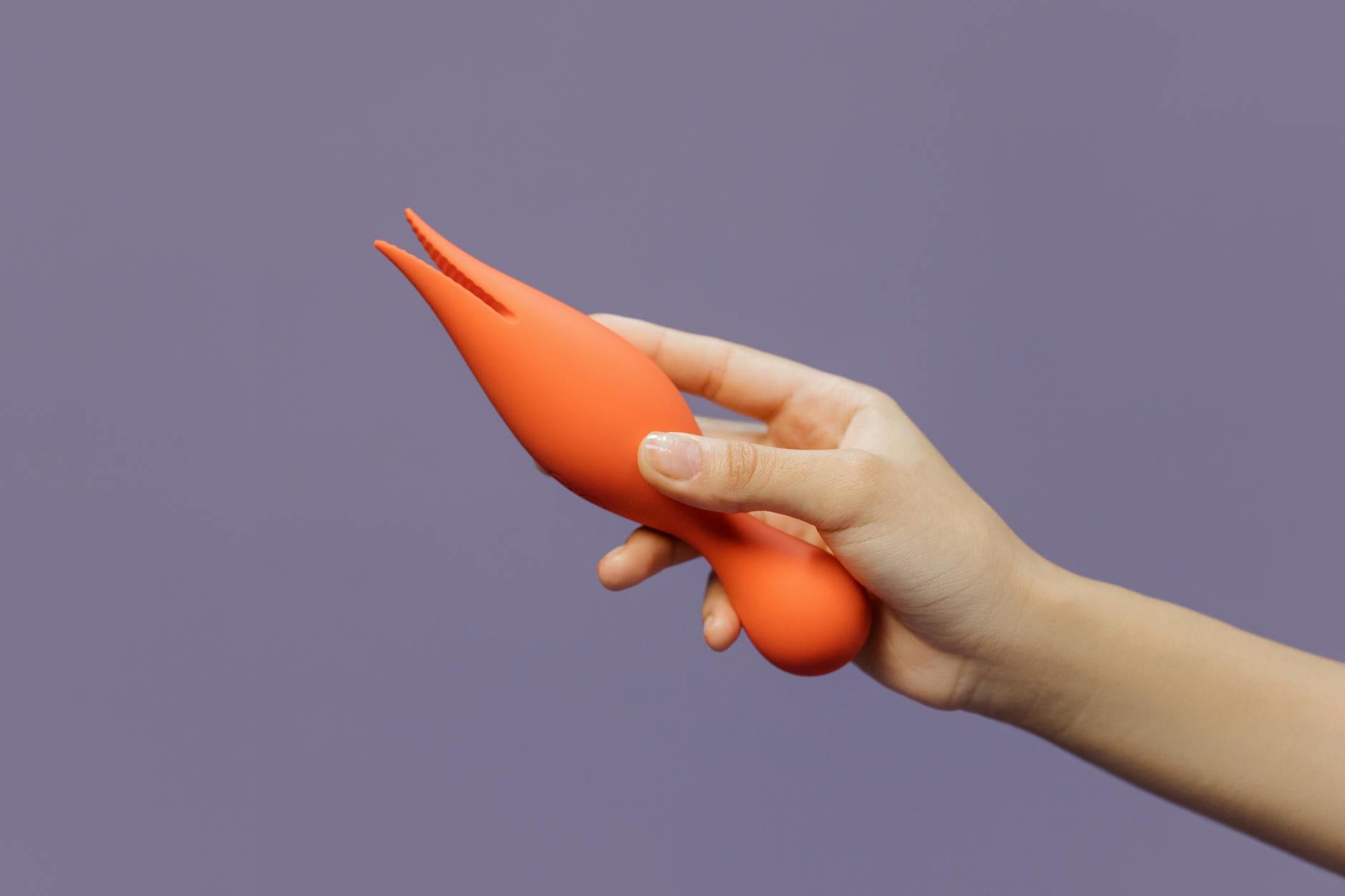
I'm going to walk you through what happens in each phase, and exactly how to use your Lemon vibrator to match what your body actually wants.
The menstrual phase: lower sensitivity, deeper sensation
During your period (typically days 1-5), estrogen and progesterone are both at their lowest. Your clitoris is less engorged. Blood flow is directed elsewhere. Sensation feels duller overall.
This is not the time to push harder or use more intense patterns. Counter-intuitive, I know. Instead, shift toward sustained pressure and longer warm-up.
How to adjust your Lemon vibrator use: Start with the lowest pattern on your lemon clitoral vibrator (pattern 1 or 2) and use it for longer than you would mid-cycle. The suction mechanism works brilliantly here because it creates consistent pressure without the mechanical friction that can feel uncomfortable. Spend 20-30 minutes in exploration mode rather than rushing to orgasm. Your nervous system is already processing cramps and flow. Pleasure should be gentle and patient.
Some people skip this phase entirely. That's fine. Others find that a slower, deeper orgasm actually helps with cramping. The key is not forcing intensity you don't feel.
The follicular phase: rising sensitivity and faster response
After your period, as you move into the follicular phase (roughly days 6-13), estrogen climbs steadily. Your clitoris becomes more engorged. Sensation sharpens. Arousal builds faster.
This is when many people naturally reach for intensity. Your body wants it.
How to adjust your Lemon vibrator use: This is the phase where you can escalate pattern intensity without it feeling like too much. Move from pattern 3-5 mid-follicular, and if you want to experiment with faster patterns closer to ovulation, you have the neurological capacity for it. Your orgasms may come faster, which is fine. Some people have multiple orgasms in this phase, which is also fine. Warm-up time naturally shortens. Honor that. You might only need 10-15 minutes of foreplay before using your lemon clitoral vibrator.
This is also when exploring different sensation patterns works best. Try the more intense patterns. Experiment with angles. Your body is literally begging for stimulation.
The ovulatory phase: peak arousal and fastest response
Right around ovulation (typically day 14), testosterone spikes alongside a final surge of estrogen. This is the peak arousal phase, and I mean that literally.
Clitoral blood flow is at its maximum. Orgasms often feel more intense. You may feel more confident, more playful, more interested in sensation.
How to adjust your Lemon vibrator use: This is when you have the most flexibility. Your clitoris can handle higher intensities without discomfort. Some people use the strongest patterns. Some people try longer sessions and notice they can sustain arousal longer than any other phase. Others feel confident using their Lemon vibrator with a partner present, or trying something they've been uncertain about, because the neural feedback is so clearly pleasurable.
One note: if you use a Lemon toy during ovulation, you may set a baseline expectation for "good" sensation that isn't available mid-luteal. That's worth knowing going in. Ovulation sets the high bar. The luteal phase is different.
The luteal phase, part 1: The shift inward
After ovulation, progesterone rises steadily while estrogen dips. You enter the luteal phase (roughly days 15-21), and your body literally changes how it processes stimulation.
Clitoral sensitivity actually decreases. You may need longer warm-up. Your orgasms might feel more focused in the lower abdomen rather than sharp and localized. Some people feel less interested in sensation altogether. Others feel very interested but need a completely different approach.
How to adjust your Lemon vibrator use: If you felt great on strong patterns during ovulation, this is when going lower-intensity earlier actually helps. Pattern 2-4 often feels more naturally aligned with luteal arousal. Slow down again. Increase warm-up time back to 20-25 minutes. Use your lemon clitoral vibrator not as a path to fast orgasm, but as part of a longer, more meditative experience.
Some luteal phase people actually prefer exploring sensation solo, without partner presence or external expectations. The nervous system wants calm and control. Your Lemon vibrator can be that calm, focused tool.
The luteal phase, part 2: Deeper orgasm, different satisfaction
In the final 5-7 days before your period (the premenstrual window), progesterone is high and falling, and estrogen is low. This is often when people feel depleted, bloated, irritable, or disengaged from pleasure.
But here's the thing nobody mentions: some people have the deepest, most full-body orgasms of their cycle right now. The sensation is less sharp and more resonant. It registers differently in the body.
How to adjust your Lemon vibrator use: Use lower intensities. Expect longer warm-up. But notice the quality of sensation, not just the speed. Many people find that in this phase, the suction mechanism of a Lemon vibrator creates a deeper, more meditative orgasm than the sharp sensation they get mid-follicular. You're not chasing intensity. You're chasing depth. That's a completely valid goal, and it's often more satisfying long-term than the quick, sharp hit.
Tracking your own cycle patterns
Here's the reality: you're not a textbook. These phases are real, but they express differently in every person.
The most useful thing you can do is track what actually happens in your body across three cycles. Note your energy, your arousal speed, the pattern intensity that felt best, how long warm-up took, and what kind of orgasm satisfied you most. Your Lemon vibrator becomes data collection equipment, not just a tool.
After three months, patterns emerge. You'll know your week of peak sensitivity. You'll know which phase benefits from longer sessions. You'll know when to reach for your vibrator and when to let pleasure rest.
This isn't complicated. It's just paying attention.
What changes if you're on hormonal birth control
If you take hormonal contraceptives, your cycle looks completely different. Hormone levels stay relatively flat. You don't get ovulation spikes. Your clitoral sensitivity is more consistent throughout the month, which is actually simpler in some ways.
That said, some people on hormonal birth control still notice subtle shifts in arousal and sensation. You might have a "good week" where everything feels easier, even if it's not physiologically tied to your cycle. Pay attention anyway. Your body is still speaking. Just listen for quieter signals.
If you're wondering whether changing your contraception might affect how your lemon clitoral vibrator feels, yes, it definitely can. That's worth a conversation with your gynecologist, not just your partner.
Pairing cycle awareness with your partner
If you share pleasure with a partner, cycle awareness actually deepens things instead of complicating them.
Instead of "I'm not in the mood" feeling like rejection, it becomes "My body is in a different phase, and here's what actually works right now." Your partner learns that using a Lemon vibrator during your follicular phase might be a 15-minute experience, and during your luteal phase it might be 35 minutes with lower intensity. Not better or worse. Just different.
Communication becomes more specific. "I want intensity tonight" tells them something. "I want to go slow" tells them something else. Your vibrator becomes part of that conversation, not a workaround for it.
When cycle tracking stops working
If you suddenly notice that your patterns change in major ways, that's worth checking in about. Significant stress, new medication, thyroid issues, or just life shifts can alter your cycle and your pleasure response.
That's not a sign that cycle awareness doesn't work. It's a sign that your body changed. Adjust. Track again. Notice the new pattern.
FAQ
Can I use my Lemon vibrator every day of my cycle?
Yes. The question isn't whether you should, it's how you should. Adjust intensity, duration, and approach based on what your body actually wants. Some phases call for longer sessions at lower intensity. Others call for quick, high-intensity play. Neither is "better."
Does cycle tracking work if my period is irregular?
It depends on how irregular. If you have a rough pattern (even if it's 28 days one month and 35 the next), you can still track and notice phases. If your cycle is unpredictable, you might notice arousal and sensation shifts independent of where you think you are in your cycle. Pay attention to your body's signals rather than the calendar.
Will my Lemon vibrator feel different during the luteal phase, or will I just want to use it less?
Both can happen. Some people experience genuine changes in sensation. Others maintain similar sensation but lose interest or need a different context for arousal. Neither means something is wrong.
What if my cycle doesn't match the typical 28-day model?
Then you're normal. Cycles range from 21-35 days. The phases still exist and still follow the same hormone progression. Just track your actual timeline instead of assuming a 28-day split.
Should I tell my partner about cycle-based changes in pleasure?
If you share pleasure with a partner, yes. Not as an apology for your body being different, but as information. "My sensitivity shifts across my cycle, and here's what I've noticed" is useful data. It deepens intimacy because you're inviting them into how your body actually works.
Can cycle awareness help if I have trouble reaching orgasm?
Yes, sometimes significantly. If orgasm feels impossible during your luteal phase but easy mid-follicular, knowing that removes shame from one phase and amplifies confidence in the other. You can adjust your expectations and your approach based on what's actually possible for your nervous system right now.
The takeaway
Your menstrual cycle isn't an obstacle to pleasure. It's information. Your clitoris, your arousal speed, your orgasm intensity, and your desire all shift in predictable ways. Once you stop treating pleasure like it should feel the same every single day, and start asking "what does my body actually want right now," everything changes.
Your Lemon vibrator isn't a one-size-fits-all tool. It's a tool that works best when you're attuned to what your body is asking for. Track your cycle. Notice the patterns. Adjust. That's the whole practice.
Want to dig deeper into how your body responds to pleasure across different phases? Get in touch and let's talk about what you're noticing.