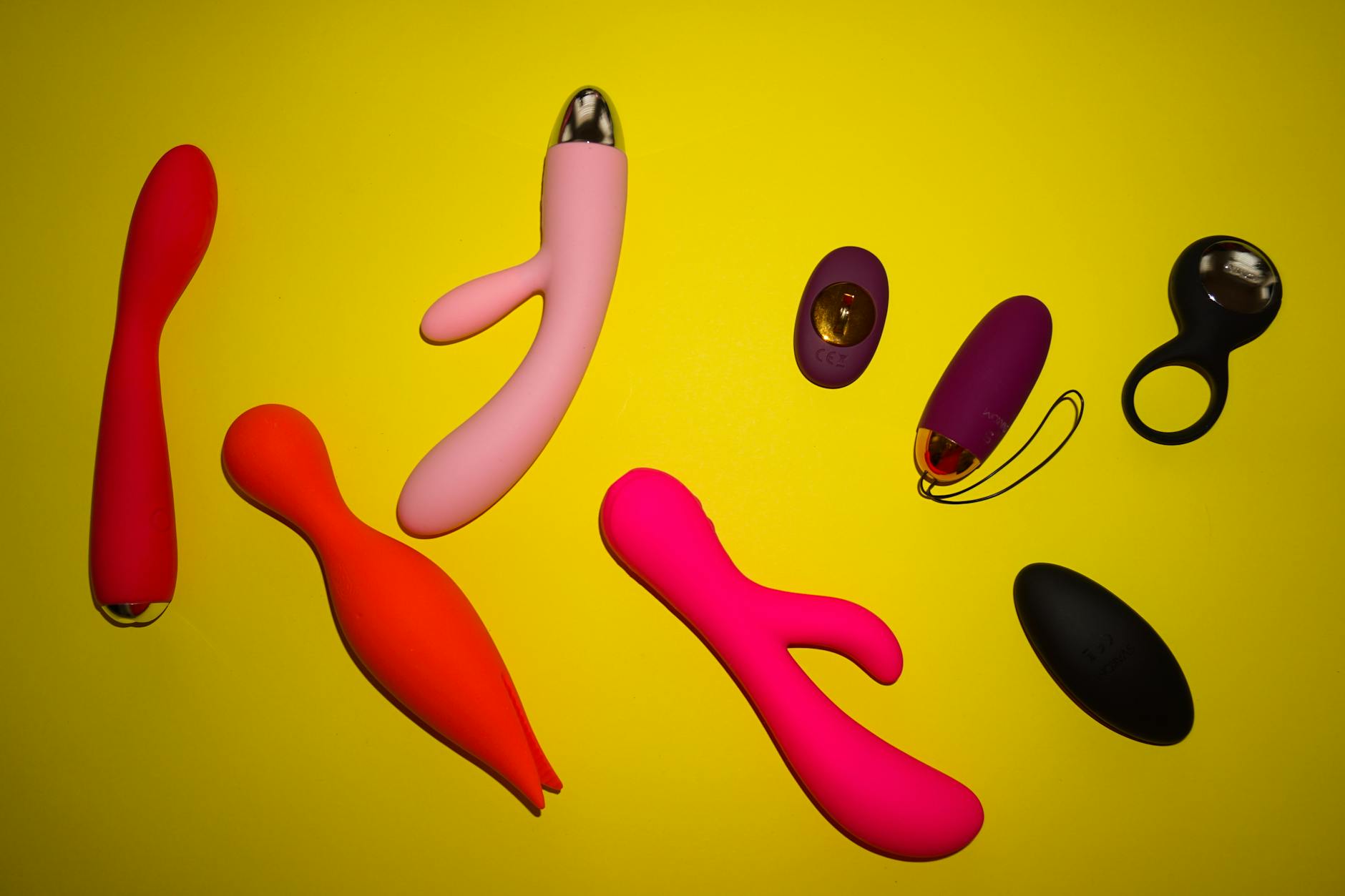
The shame trap is real, and it's not your fault
Let's be honest. A lot of us grew up with the message that wanting pleasure was selfish, unfeminine, or just plain wrong. You internalized it so well that now when you try to touch yourself, there's this voice in your head that says you're being indulgent. Or gross. Or taking something that should belong to someone else.
That voice isn't you. It's inherited noise, and it shuts down arousal before it even starts.
Here's what happens neurologically: shame activates your threat response system. Your body reads self-judgment as danger and literally cannot relax into pleasure at the same time. You can't be in fight-or-flight and in receptive desire simultaneously. Your nervous system won't allow it. So the vibrator sits there, buzzing, and nothing happens because part of you is still arguing about whether you deserve this.
Why self-consciousness kills sensation more than anything else
People often think low sensation comes from numbness or hormonal changes. Sometimes it does. But more often than not, when someone says "I just don't feel anything," what's actually happening is they're mentally present in shame, not physically present in their body.
This is the difference between physical numbness (a real medical thing) and psychological dissociation (a protection mechanism). When you're dissociating from shame, your nervous system is actually protecting you. It's saying: "I won't let you feel pleasure because pleasure feels dangerous."
You can have perfect sensation in your clitoris and still feel nothing during stimulation if your mind is occupied by guilt. The Lem vibrator, or any lemon clitoral vibrator, is genuinely excellent technology. But technology can't override your nervous system's threat detection. That part has to come first.
What actually changes when shame lifts
Three things happen simultaneously:
Attention returns to your body. Instead of monitoring yourself from outside ("Am I doing this right? Does this look weird?"), your focus narrows to physical sensation. Your brain stops editing and starts experiencing.
Arousal builds faster. When you're not fighting your own desire, blood flow increases, tissue sensitivity sharpens, and the whole system speeds up. People often report that once shame lifts, they can reach arousal and orgasm in half the time it used to take.
Pleasure feels different. Not stronger, necessarily. Cleaner. Less complicated. You're not bracing against your own judgment anymore, so the sensation lands fully. This is why people say they've never actually had good orgasms until they dealt with the shame. The pleasure was always possible. The safety to feel it wasn't.
Building permission in small increments
You can't think shame away. You have to practice your way past it, and that practice looks deliberately unglamorous.
Start here: alone, clothes off, no vibrator. Just notice what happens when you look at your body without immediately trying to fix or optimize it. Can you be curious about what you see without judgment? That's harder than it sounds. Most people in their heads are running a criticism track. "Too soft here, too marked there." Just notice that track. You don't have to believe it.
Then: touch yourself in neutral ways. Rub your arm. Feel the texture of your own skin. Shame often lives in our genitals specifically because that's where we were told to be quiet. Your forearm deserves the same gentleness you'd give a partner, and it doesn't carry the same loaded history. Practice the gesture first where it doesn't trigger shame.
Then: bring a lemon sexual toy into the space without expectation. Not to use it. Just to have it present. Let yourself get familiar with seeing it. Some people put it on their nightstand for a few days just to exist in the room together. This sounds silly. It's not. You're rewiring the association from "vibrator equals I'm being bad" to "vibrator equals I'm taking care of myself."
Then: use it on the lowest setting, in complete privacy, with zero goal except to notice whether anything feels good. Not "Does this give me an orgasm?" but "Does this feel nice?" There's a massive difference.
How clitoral vibrators change the equation when shame is present
Lemon vibrators and other suction-based clitoral toys work differently than traditional vibration. Suction technology is gentler in a specific way: it doesn't require you to be as physically aroused to feel sensation. A traditional vibrator sometimes needs your tissue to be engorged and ready. Suction stimulates the nerve tissue differently.
This matters when shame is in the picture because you don't need to be as "ready." You can start smaller and build. The Lem, specifically, has patterns that let you begin at a whisper and increase from there. You're not locked into one intensity. You can stay in the gentle range as long as you need while your nervous system learns that pleasure is safe.
Some people find that suction-based toys feel less "/look/ performative" than traditional vibrators. That's partly psychological, but it's real. If part of your shame is around how things look or feel, a different tool can sometimes bypass that association.
The mental work that actually moves the needle
Here's the conversation you might have with yourself before using any lemon clitoral vibrator: "I'm touching myself because I deserve to feel good. This isn't selfish. This isn't for anyone else. This is mine. My pleasure matters as much as anyone else's."
That's not affirmation nonsense. That's deprogramming. You're replacing the old message (pleasure is wrong) with a factually true one (my pleasure has value). Your nervous system needs to hear this repeatedly before it believes you.
If the shame spirals come back mid-session, which they will sometimes, here's what works: pause, breathe, and name what you're feeling without judgment. "I notice shame is here. That's okay. It's just a feeling, not a fact." Then redirect your attention to one specific physical sensation. The warmth of the toy. The texture of the sheets. The feeling of your breath. You're training your nervous system to stay present instead of absent.
When shame has deep roots, you might need help
If self-consciousness during pleasure is tied to trauma, or if it's so intense that you can't override it on your own, a therapist trained in sexual health (especially someone who understands somatic work) can be genuinely transformative. <a href="/blog/how-lemon-vibrators-help-rebuild-physical-trust-after-sexual-trauma">Rebuilding trust with your body after trauma</a> is specific work that benefits from professional support.
You can also loop a partner in, if you have one. Some couples find that talking about the shame first, before any touching happens, makes the physical work feel less loaded. "I want to explore my own pleasure, and part of me feels weird about it. Can you just know that?" Often the relief of being witnessed changes everything.
The permission slip you're actually waiting for
You already know that self-pleasure is normal and healthy. Your brain does. But your nervous system might not have gotten the memo yet, because somewhere along the way it learned to associate pleasure with danger.
Using a lemon vibrator when shame is present isn't about the tool. It's about giving your body permission to feel good in a way that overrides the old programming. Every time you use it, you're sending a message: "It's safe to feel this. It's safe to want this. I deserve this."
That message, repeated consistently, eventually becomes what your nervous system believes. And once your nervous system knows you're safe, pleasure becomes not just possible but inevitable.
FAQ
How long does it take for shame to stop blocking sensation?
It depends on how deeply the shame is wired, but most people notice a shift within 2-4 weeks of consistent, gentle practice. You don't need to use a vibrator daily. Even 2-3 times per week, with the intention of building safety rather than chasing outcomes, moves the needle. Some people report changes in days; others take months. Your timeline is the right timeline.
Can shame come back after I've worked through it?
Yes, and that's normal. Life stress, relationship conflict, or hormonal shifts can reactivate shame even after you've moved past it. The difference is you now know how to move through it again. It gets faster the second time because your body remembers that it's survivable.
What if I can't use a vibrator alone without my partner being around?
Start in a room where you have a lock. Or wait until they're genuinely occupied and far enough away that interruption is unlikely. Build your own private experience first, without an audience, even an imagined one. Your relationship to your own pleasure needs to exist independently of anyone else's presence.
Does using a lemon sexual toy make me more likely to orgasm if shame is the main block?
Not automatically. The tool helps, but the nervous system work is what actually changes the outcome. That said, many people find that once shame lifts even slightly, sensation returns so quickly that a good clitoral vibrator becomes the key that unlocks it. <a href="/blog/how-to-use-lemon-vibrators-for-better-orgasms-when-you-have-trouble-reaching-climax">Some research suggests suction toys help accelerate orgasm consistency</a> once the psychological barriers come down.
Is self-consciousness about pleasure something a partner can help with?
Partner support helps, but only if you're also doing the solo work. A partner cannot give you permission that you don't believe you deserve. They can reinforce it, but the core belief has to come from you first. If you're trying to fix shame through partnership, you'll stay stuck. Fix it through your own body first.
How do I know if what I'm feeling is shame or just low arousal?
Low arousal is a flat, neutral absence of sensation. Shame is active resistance, often with physical symptoms like tension in your chest, difficulty breathing, or a feeling of smallness. You'll know shame when you feel it. It's not quiet. Once you learn to recognize the feeling, you can interrupt it before it fully blocks sensation.
Moving forward
Your pleasure isn't indulgent. It isn't selfish. It isn't wrong. And it isn't something you have to earn or deserve beyond the simple fact that you exist and your body is capable of feeling good.
Using a lemon vibrator is a physical act, but what it actually does is give you permission to reclaim something that was always yours. Start small, stay consistent, and trust that your nervous system will eventually believe you when you tell it that safety and pleasure can coexist. They can. And you deserve both.