Here's what nobody tells you about shame and sex
Self-consciousness isn't just an emotional thing. It's a physiological block. When you feel self-conscious about pleasure, your nervous system stays in a low-level fight-or-flight state. Your body can't relax enough to build arousal. You're literally fighting yourself.
The irony? The harder you try to feel sexy despite the shame, the more locked down you become.
Where pleasure guilt actually comes from
Most of us grew up absorbing the message that female pleasure was either dangerous, selfish, or shameful. Maybe it was explicit (a parent's tone, a religious message, a partner's reaction). Maybe it was just the background radiation of a culture that treats women's desire as something to manage rather than celebrate.
Then somewhere along the way you internalized it. Not as a belief you consciously hold, but as a somatic response. Your body tenses up. You apologize mid-pleasure. You feel like you're being "too much."
This isn't a character flaw. It's a nervous system pattern that's been trained for years.
Why lemon vibrators change the equation
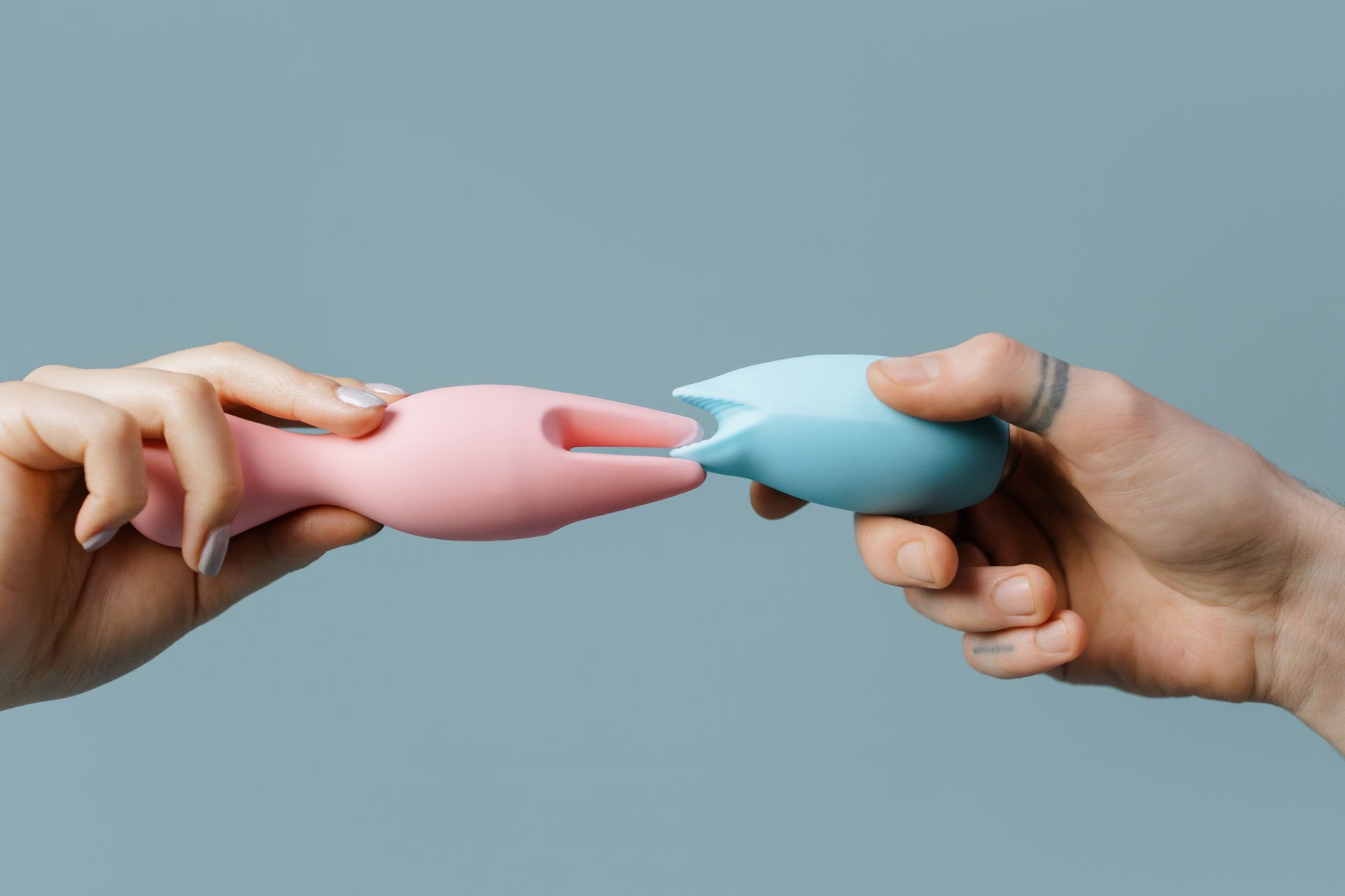
Lemon clitoral vibrators work differently than fingers or even other toys because they create a kind of sensory redirect. The precision of the stimulation, the specific air-suction pattern, the way it focuses sensation narrowly rather than broadly — all of that gives your brain permission to stop monitoring and judging.
Here's what I mean: when you're using your hand, you're in constant micro-decisions. "Is this right? Am I doing it wrong? Should I be going faster?" Your brain stays engaged in evaluation mode. With a lemon vibrator, especially one like the Lemon Clitoral Vibrator, the sensation is so specific and different from anything you can self-generate that your mind actually steps back. It's like the difference between driving a familiar route on autopilot and arriving somewhere completely new — you have to pay attention, which paradoxically means you stop judging.
The air-suction mechanism also creates distance from the intensity of direct touch. That distance can feel like permission. It's not "me doing this to myself," which carries the full weight of agency and shame. It's a device doing this. Somehow, that split makes the guilt lighter.
The permission experiment
Let's reframe what you're actually testing here. This isn't about having an orgasm. It's about noticing what happens to your nervous system when you remove the element of self-judgment.
Start small. Choose a time when you're alone, unhurried, and you won't be interrupted. Maybe a weekend afternoon or a quiet evening. Not when you're exhausted or resentful. Your nervous system needs actual permission, not just a toy.
Begin with the lowest pattern on your lemon vibrator. Don't aim for arousal yet. Just notice: what happens to your breathing? Does your jaw clench or soften? Where do you feel tension? This is information, not a test you can fail.
Here's the key part: if shame shows up, name it. Don't fight it. "I notice I'm feeling self-conscious right now." That naming is different from acting it out. You're observing the pattern rather than being controlled by it.
Many people find that the first time they experience pleasure without the shame narrative running in parallel, something shifts. Not permanently, necessarily. But enough to know it's possible.
The partner conversation (if you have one)
If you're in a relationship, shame often doubles when a partner is involved. You're managing their reaction, their pace, whether they're judging you. That's exhausting and it kills arousal.
If your partner is open to it, this is worth saying: "I want to use a lemon vibrator, and I want you to know that this isn't about you or what we have. This is about me learning to feel less self-conscious about my own pleasure. The less shame I carry, the more present I can be with you."
The best partners recognize that your solo exploration with something like a lemon sucker actually benefits the relationship. Less shame means more genuine desire. More genuine desire means better sex together.
If your partner responds negatively, that's a different conversation. And it's worth having with clear boundaries: your pleasure matters. Full stop.
Building the muscle
This isn't one experience and done. Undoing years of conditioning takes repetition. Think of it like exposure therapy. Each time you use a lemon clitoral vibrator without the shame narrative, you're rewiring the neural pathway a tiny bit.
Week one might feel awkward or guilty. Week three, you might notice you're less tense. Week six, maybe you're actually enjoying it. That progression is normal and real.
Honestly though, sometimes shame gets louder before it gets quieter. You might feel uncomfortable, weepy, angry. That's the pattern releasing. It doesn't mean you're doing it wrong.
What changes when you really let yourself feel it
When shame releases, three things shift. First, your orgasms often feel fuller. Not necessarily more intense, but less fragmented. You're not splitting your attention between sensation and judgment, so the whole experience lands in your body instead of half in your head.
Second, you start to want pleasure for its own sake, not as something you're performing. That's different. That's actually you.
Third, and this matters in relationships, your partner gets to know the real you. Not the you who's apologizing for wanting. The you who's allowed to want.
When to slow down or get support
If using a lemon vibrator triggers intense shame spirals, panic, or shame that doesn't ease after a few sessions, that's worth talking about with a therapist. Shame can sometimes be tied to trauma, religious conditioning, or other patterns that need more support than a tool alone can provide.
A good therapist, especially one trained in somatic work or sex-positive therapy, can help you understand where the shame is anchored and give you actual tools to release it. That's not a failure. That's using the right resource.
The actual permission you need
Here's what I want to be really clear about: your pleasure doesn't need to be justified. You don't need to be in a relationship for it to count. You don't need to perform it for anyone. You don't need to earn it.
Using a lemon vibrator, whether it's a Lemon Clitoral Vibrator or any of the other lemon sexual toys out there, is just you deciding that what feels good to you matters. That's the whole thing.
Start there.
FAQ
Is it normal to feel guilty when using lemon vibrators the first time?
Completely normal. Guilt and shame are learned responses, which means they're reflexive. They show up automatically, especially the first time you're giving yourself permission to feel something you've been trained to suppress. The fact that you notice the guilt means you're already building awareness. That's the first step to changing the pattern.
Can lemon clitoral vibrators actually help reduce shame over time?
Yes, but not by magic. What they do is create an opportunity. Each time you use a lemon vibrator without the shame narrative running, you're literally rewiring neural pathways. You're building new evidence that pleasure doesn't make you bad. Repetition matters though. It's not about one perfect experience. It's about showing up consistently.
What if my partner finds out I'm using lemon sexual toys and gets upset?
That's actually important information about your relationship, not about your toy. Your pleasure is yours. If a partner responds to that with judgment or anger, that's a relationship issue to address separately, ideally with a couples therapist. A partner who supports your autonomy will eventually support this too.
Should I use a lemon vibrator alone before using one with a partner?
Yes, I'd recommend it. Using it solo first gives you the space to explore without managing someone else's reactions. You get to find what you actually like without performance pressure. Then if you decide to include a partner later, you're coming from a place of knowing, not discovering.
How long does it take for shame to stop showing up when I use lemon vibrators?
It varies. Some people notice a shift in two weeks. Others take two months. The pace depends on how deep the conditioning goes and how consistently you're practicing. The key is consistency, not intensity. Using it three times a week matters more than one marathon session.
What if I still feel self-conscious even with a lemon sucker?
First, check if you're alone and actually have permission (not rushing, not half-expecting interruption). Shame thrives on scarcity and anxiety. Second, talk to a therapist. Sometimes shame is tied to something deeper than just cultural conditioning. Third, remember that shame doesn't mean something's wrong with you. It means you've been taught something false, and you're in the process of learning better.