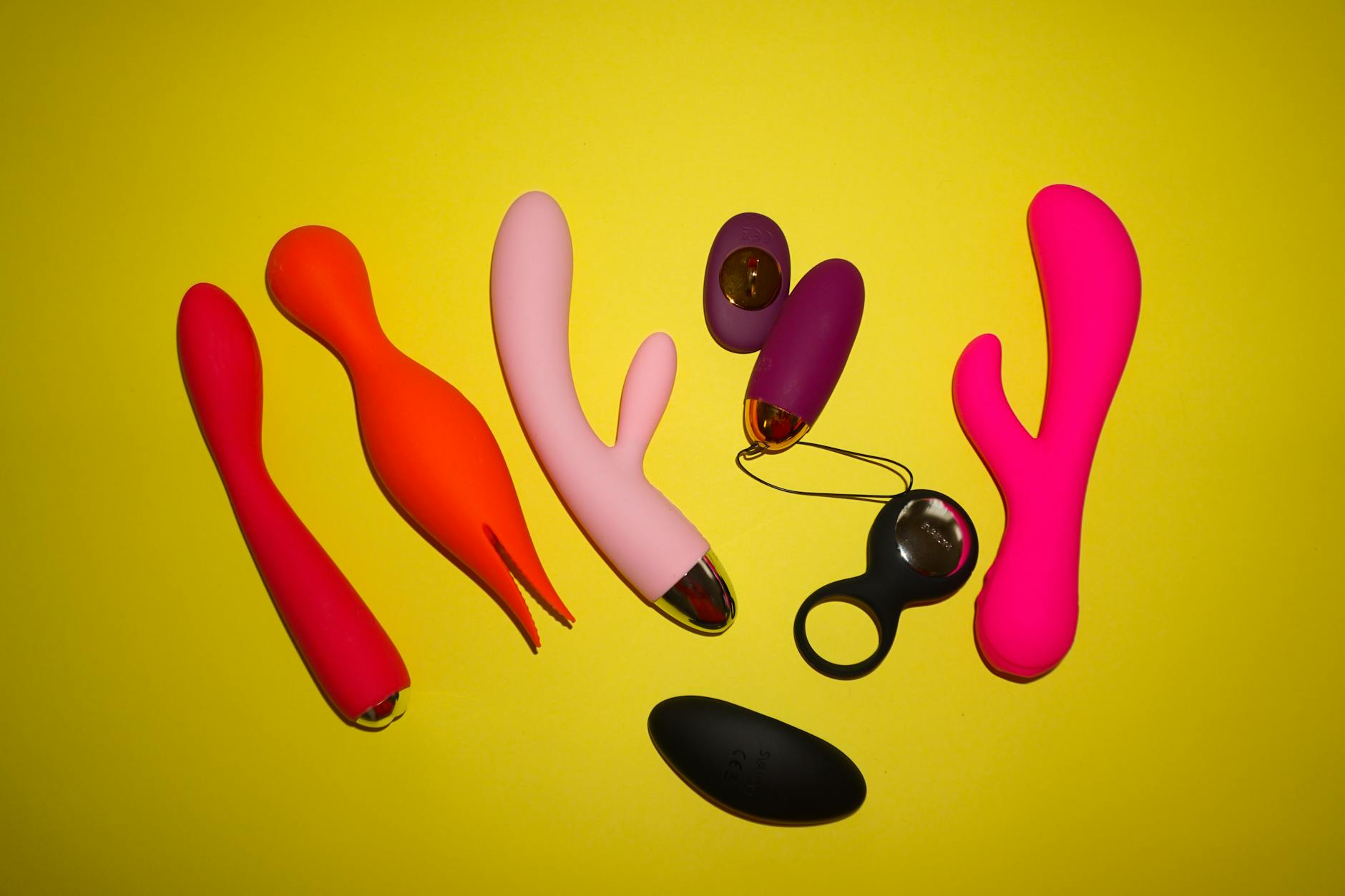
Let's talk about the elephant in the bedroom
One of you gets overwhelmed by direct touch. The other one needs serious pressure to feel much of anything. You're not broken. You're not incompatible. You're just neurologically wired differently, and that's wildly common.
The problem is that most conversations about sexual mismatch focus on desire levels or frequency. Nobody talks about sensation sensitivity. Mismatched sensitivity is actually easier to solve than mismatched libido because it's a problem of tools, not timing.
What sensitivity mismatch actually looks like
Hypersensitivity and reduced sensation can show up in completely different ways. Someone with heightened sensitivity might experience overstimulation fast, need breaks between sessions, or feel texture differences acutely. Someone with reduced sensation might need sustained pressure, stronger intensity, or specific patterns to register pleasure at all.
This isn't about one person being "too sensitive" or the other being "broken." It's about variation in nerve density, blood flow patterns, and how the nervous system processes touch. Hormones, medications, stress, age, and even caffeine intake shift sensitivity week to week.
The real problem happens when one partner assumes the other person can just "get used to it" or should try harder. That's where resentment builds. A lemon clitoral vibrator isn't about fixing anyone. It's about giving you both the stimulation you actually need without negotiating.
Why intensity settings are the game-changer
Most partnered sex involves one person's sensitivity as the reference point. Either you avoid the hypersensitive partner's threshold and the other person doesn't get enough, or you push toward what the lower-sensitivity partner needs and cause the other pain.
Lemon vibrators solve this by letting each person control their own input. If you're using a device together, the person experiencing it can adjust the intensity in real-time. Pattern 1 might be almost nothing for one partner and plenty for another. Pattern 5 might be too much for one and just right for the other.
The beauty of a lemon clitoral vibrator is that it provides consistent, adjustable stimulation independent of hand fatigue or variation. You're not guessing how hard to touch. The device handles the physical work while you both focus on connection.
Practical setups for sensitivity mismatch
Setup One: Solo use during partnered sex. If one partner gets overwhelmed by direct partner touch but wants to climax together, they can use a Lemon vibrator on themselves while their partner provides other types of stimulation. Hand-holding, kissing, being inside them if that's part of your routine. The hypersensitive partner controls their own clitoral input while experiencing everything else from their partner.
Setup Two: The lower-sensitivity partner uses the device while the other provides secondary touch. If one person needs significant clitoral stimulation to orgasm while their partner is more easily aroused, the lower-sensitivity partner takes the Lemon vibrator on a higher intensity while their partner focuses on other zones. Neck, breasts, inner thighs. Everyone's nervous system is working in their comfort zone.
Setup Three: Alternating focus. You spend the first half of your time together on whatever the hypersensitive partner needs, often at gentler intensity. Then shift. The other partner takes their turn with stronger stimulation. Not taking turns is performative fairness. Actual fairness is both people getting satisfied.
Setup Four: External contact only. Some people with heightened sensitivity find that internal stimulation is fine but direct clitoral contact feels raw. A Lemon vibrator applied over cotton underwear, a thin fabric, or held at a distance gives the nerve stimulation without the intensity. The person with reduced sensation might use it directly. Same device, completely different experience.
What sensitivity mismatch reveals about your relationship
Honestly, sensitivity differences are actually a forcing function for good communication. You have to talk about what you need because you can't default to "whatever feels good for my body." You have to articulate it.
That conversation is worth having because it teaches you both to ask for what you want in other contexts. If you can say "I need it gentler on the left side" or "I need more intensity," you're practicing advocating for yourself everywhere.
The couples I work with who navigate sensitivity mismatch well have one thing in common. They stop framing it as a problem with one person's body and start framing it as a puzzle to solve together. That shift alone changes the whole experience from something frustrating into something collaborative.
Managing the emotional layer
Sensitivity differences sometimes carry shame. The hypersensitive partner worries they're "too much" or broken. The lower-sensitivity partner worries they're not attracted enough or something's wrong with their response. Neither is true.
What helps is separating the sensation from the emotion. "I experience touch differently than you do" is a fact. "This means you don't love me" or "You're rejecting me" is a story you're adding on top.
When you use tools like Lemon vibrators, you're essentially saying: your pleasure matters enough that we're going to figure out how to both have it. That's not a workaround. That's a love language.
The intensity conversation you need to have first
Before you bring a lemon clitoral vibrator into partnered sex, actually talk about sensitivity. Not during sex. Before.
One of you describes what heightened sensitivity feels like. Is it overwhelming? Is there a sweet spot that works? Does sensitivity change throughout your cycle or based on stress? The other person describes what reduced sensation feels like. Is it numbness? Does certain pattern or intensity cut through it?
Then you talk about what each person wants to try. Maybe the lower-sensitivity partner uses the vibrator during partnered sex. Maybe you both use devices simultaneously. Maybe you take turns. No script is wrong.
The Lemon vibrator's intensity range (typically 5-7 distinct patterns) gives you enough variation that there's usually a setting each person can find workable. Start lower than you think you need. You can always increase. You can't un-feel something intense.
Timing and positioning matter more than you think
Sensitivity isn't static. It shifts based on arousal level, stress, hormones, hydration, and how long you've been at it. Someone who's hypersensitive when they're cold and stressed might have totally different tolerance when they're already aroused and relaxed.
Start with longer warm-up. When the lower-sensitivity partner has time to actually get aroused before clitoral stimulation begins, their sensitivity often increases naturally. Same for the hypersensitive partner. Rushing to intensity makes them feel overwhelmed fast. Build it.
Positioning also changes sensation. Lying on your back with a partner touching feels different than lying on your side. Direct contact feels different from the vibrator held at an angle. You're not looking for one "right" position. You're mapping what works for both of you.
When to bring in professional support
If someone's sensitivity is so extreme that almost nothing works without pain, or if there's numbness that's not connected to medication or hormones, that's worth mentioning to a doctor. Rarely, extreme sensitivity differences signal a neurological variation that benefits from specific guidance.
More often, sensitivity mismatch is just biology. But if it's causing real distress or one person has completely shut down, a sex therapist or relationship counselor can help you move past the shame and into actual problem-solving.
The bigger picture
Mismatched sensitivity in partnerships isn't a flaw in your relationship. It's an opportunity to stop assuming your pleasure works the same way and start actually learning how your partner's body responds. That knowledge, that attention, is what deepens intimacy.
A Lemon vibrator is just a tool. But it's a tool that says: I want you to feel good the way your body actually feels good, not the way I think it should. That's the whole point.
People also ask
Can both partners use a Lemon vibrator at the same time during sex?
Yes. If you both want clitoral stimulation during partnered sex, you can absolutely each use your own device or take turns with one. Some partners prefer this because they maintain full control of their own sensation while staying connected to their partner in other ways. It takes the pressure off one person to provide exactly the right touch and lets you both focus on what feels good to you individually.
What if my partner thinks using a vibrator means I'm not attracted to them?
That's a conversation worth having outside the bedroom. A Lemon vibrator isn't a replacement for your partner. It's a tool for your own nervous system. You can be wildly attracted to someone and still have a body that responds differently than theirs. Using a device during partnered sex is actually a way of saying: I want to experience pleasure with you, and this is how my body gets there. That's intimate, not a rejection.
Does intensity always equal better sensation for someone with reduced sensitivity?
Not always. Sometimes what matters more is the pattern rather than how strong it is. The waves, the pulses, the rhythm. A lower-intensity pattern that changes can register better than sustained high intensity. That's why trying different settings on a Lemon vibrator matters. You might find that patterns 2 and 4 work better than pattern 7, even though 7 is "stronger."
Is there a way to help the hypersensitive partner get used to more intensity over time?
Sometimes, but don't force it. Sensitivity can shift with hormones, stress levels, and how turned-on someone is. Instead of "getting used to it," focus on finding the sweet spot where your partner feels good. That might be pattern 1 or pattern 3, and that's completely valid. Your partner isn't being difficult. Their nervous system is just wired to need less input.
How do we communicate about sensitivity without it feeling like criticism?
Frame it as preference, not problem. "I like it gentler" sounds different from "You always touch too hard." One is about what you need. One sounds like blame. Use "I" statements. Appreciate what your partner does well ("I love when you kiss my neck like that") and then add what you want to explore ("I'd like to try using a vibrator together because I think we'd both enjoy it").
Can sensitivity mismatch affect orgasm timing as well?
Yes, often. Someone who's hypersensitive might climax faster because their nervous system reaches threshold quicker. Someone with reduced sensation might take longer. This is a separate issue from sensitivity level itself, though they sometimes overlap. Using a Lemon clitoral vibrator can actually help sync your timing because it shortens the gap for the person who needs more stimulation, giving you both more time together during climax rather than one person finishing far ahead of the other.