
The thing nobody tells you about antidepressants and sex
Your medication is working. You're sleeping better, your anxiety isn't spiraling, and you're not crying in the shower before work. That's real. That's important. And yes, your orgasms have also disappeared, flattened, or become weirdly difficult to reach. Both things can be true at the same time.
Antidepressants—especially SSRIs like sertraline, fluoxetine, and paroxetine—alter serotonin in ways that improve your mood but can delay or reduce sexual response. For about 60% of people taking these medications, pleasure gets quieter. The signals that usually fire automatically now need help. That's not a personal failure. It's pharmacology. And it's entirely fixable.
How antidepressants actually change your body's pleasure response
Here's what's happening at the nerve level. SSRIs increase available serotonin by preventing reuptake in your brain. That's why you feel steadier emotionally. But serotonin also regulates dopamine and norepinephrine—both critical for sexual arousal and orgasm. The medication balances mood at the expense of sensitivity.
This shows up in three main ways:
Delayed arousal. What used to happen in 5 minutes now takes 15 or 20. Your body isn't broken; the cascade is just slower.
Reduced sensation intensity. Touch that used to feel electric now feels muted. The nerves are firing, but the signal is quieter.
Difficulty reaching orgasm. You can get aroused. You can get close. But crossing the finish line becomes effortful in a way it wasn't before.
The good news: these changes are not permanent. They're not even your baseline anymore. They're a side effect of medication at a specific dose. And lemon clitoral vibrators address them directly because they work around the delay, amplify the muted signals, and build intensity in ways your body alone can't generate right now.
Why air-suction vibrators work better than traditional vibration
Most vibrators use rapid oscillation to stimulate nerve endings. They're efficient and work well for many people. But when your serotonin levels are flattening sensation, rapid vibration sometimes feels numbing instead of arousing. You're getting stimulation but not necessarily feeling it build.
Air-suction lemon vibrators—like the Lem vibrator—work differently. Instead of vibrating against tissue, they create gentle pulsing suction that mimics the sensation of oral stimulation. This engages a different set of nerve pathways and tends to feel more intense and responsive when sensation is dampened by medication.
Here's the practical difference: a traditional vibrator might give you 30% of the sensation you had pre-medication. A lemon clitoral vibrator using air-suction technology often restores 70-80% because it's working with your body's actual sensitivity, not fighting against it.
How to start using lemon vibrators after antidepressant-related numbness
Three rules for this transition.
Rule 1: Start at the lowest setting. This is not about "easing in." It's about calibration. Your nerve endings have been quiet. Pattern 1 or 2 on a lemon vibrator will feel different than it would have before medication. Spend time here. Let your body relearn responsiveness. You're not testing the toy; you're rebuilding sensation.
Rule 2: Extend your warm-up time. Budget 20-30 minutes instead of 10. Your arousal is slower now, and that's okay. Use this time to reconnect with your body without performance pressure. Touch your whole self. Breathe. Your body will respond; it just needs the time.
Rule 3: Separate pleasure sessions from performance sessions. If you're using a lemon clitoral vibrator, don't use it only when you're trying to finish. Use it in low-stakes moments—morning, alone, no goal except feeling something good. This rewires your nervous system to associate the toy with pleasure, not with frustration or obligation.
The psychological piece that makes the physical difference
Medication changes your body. Antidepressants also change how you feel about your body. You might feel: disconnected, frustrated that your body isn't responding like it used to, embarrassed that your partner has to wait while you try to finish, or resentful that the price of mental health is sexual numbness.
All of those feelings are legitimate. They're also in the way.
Here's what I tell my clients: your sexuality doesn't live in your medication level. It lives in your willingness to explore what works now. That's different from before. It's not worse—it's different. Using a lemon vibrator isn't a workaround for a broken body. It's a tool for discovering what your body needs at this moment in your life.
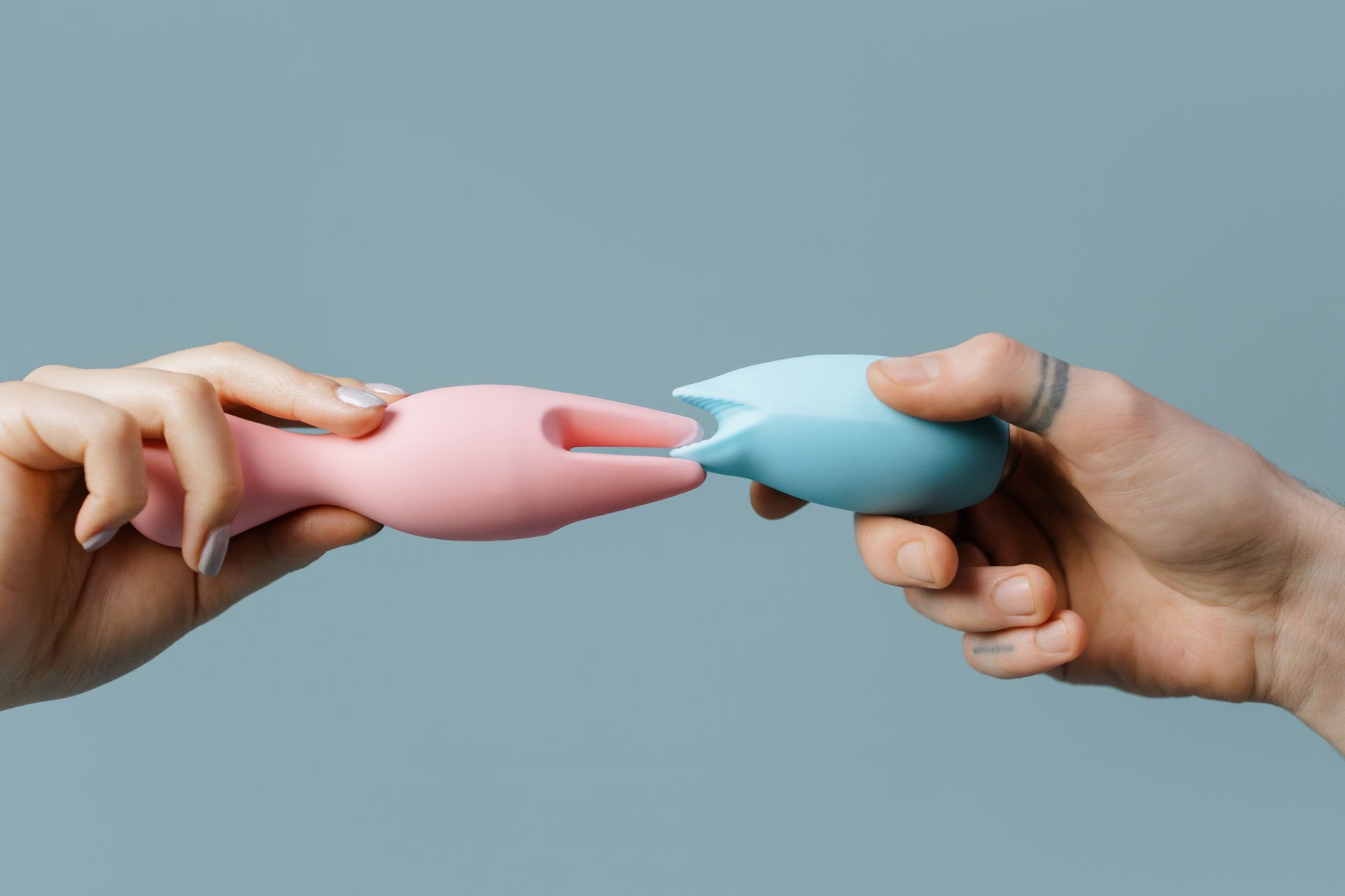
Photo by cottonbro studio on Pexels
When to talk to your doctor about adjusting medication
If your antidepressant is working for your mental health, don't stop taking it because of sexual side effects. That's not the answer. But it's absolutely worth discussing options with your prescriber.
Three conversations worth having:
Timing. Some people take their medication at night instead of morning, or shift the dose to earlier in the day. This doesn't reduce effectiveness for mood but can reduce the sexual impact. It takes 2-3 weeks to see the difference.
Dose adjustment. Sometimes a slightly lower dose (if your mental health is stable) reduces sexual side effects without compromising mood improvement. This is collaborative and requires monitoring, but it's a real option.
Different medication. Some SSRIs have lower sexual side effect profiles. Sertraline and fluoxetine tend to flatten pleasure more than others. If you've been on the same medication for a year and sexual numbness hasn't improved, asking about alternatives is fair.
Using a lemon clitoral vibrator isn't a substitute for this conversation. It's a complement to it. Work with your doctor and your body at the same time.
Building confidence and sensation together
When antidepressants dull your pleasure, confidence erodes. You start doubting whether you can still orgasm, whether your body still works right, whether your partner still finds you attractive. A lemon vibrator addresses the physical problem, but it also addresses the psychological one.
Here's how: successful orgasms rebuild belief. The first time you reach orgasm after months of flatness—using a tool that's specifically designed for muted sensation—something shifts. Your body isn't broken. Your medication has a side effect, and you've found a way around it. That's knowledge. That's power.
Start alone. Use your lemon vibrator without pressure or timeline. Build sessions where the goal is sensation, not orgasm. Most people find that within 2-3 weeks of consistent, low-pressure play, orgasms become easier. Sensation rebounds. Confidence follows.
If you're in a relationship
Your partner might feel rejected, confused, or worried that antidepressants mean the end of sexual intimacy. They might also feel relieved that you're finally addressing the problem instead of white-knuckling through it.
The conversation is simple: "My medication is working for my mental health. It's also flattening my sexual response. I'm using tools—like a lemon vibrator—to rebuild sensation. This isn't about you or your attractiveness. It's about my nervous system needing different kinds of stimulation right now. I want your support, and I'd like you to understand that this is temporary and fixable."
Then show them. Let them see that you're engaging with pleasure again, that your body is waking up, that sexual intimacy isn't gone—it's just taking a different shape. Many partners find it easier to support a solution than to navigate silent frustration.
The timeline for pleasure recovery
Honestly? It varies. Some people notice sensation returning within 2-3 weeks of consistent use. Others take 2-3 months. It depends on:
- How long you've been on the medication
- Your baseline sensitivity before medication
- How frequently you're using tools like lemon vibrators
- Whether your dose is stable
- Your stress level and sleep quality
Don't use the timeline to measure progress. Use how your body feels. Are sessions becoming easier? Is sensation slightly more present? Are you reaching orgasm closer to 30 minutes instead of "maybe never"? That's progress.
The bigger picture
Antidepressants save lives. They ease the weight of depression and anxiety. They're not perfect, and sexual side effects are real. But they're also not permanent, and they're not a reason to suffer in silence or stop your medication. Your pleasure matters. Your mental health matters. Both things can improve together with the right information, the right tools, and the right support.
Frequently asked questions
How long does it take for antidepressant sexual side effects to improve with a lemon vibrator?
Most people notice shifts within 2-4 weeks of regular use, though it varies widely. Your nervous system is relearning responsiveness, and that takes time. The key is consistency without pressure—use it because it feels good, not because you're waiting for a deadline. If you haven't seen any improvement after 8 weeks, that's worth discussing with your prescriber; it might signal that a medication adjustment is needed.
Is using a lemon clitoral vibrator the same as "just trying harder" to have an orgasm?
Not at all. "Trying harder" increases tension and anxiety, which makes antidepressant-related numbness worse. A lemon vibrator removes the need to try harder. It provides consistent, calibrated stimulation that your body can build on. The goal isn't effort; it's creating conditions where pleasure can happen without strain.
Will using a lemon vibrator make it harder for my partner to stimulate me during sex?
No. In fact, the opposite often happens. As you rebuild sensation with a vibrator, your nervous system becomes more responsive overall—not just to the toy. Many people find that once they've recovered sensation using a lemon clitoral vibrator, partnered sex becomes easier because their baseline responsiveness has improved. Plus, you've learned what works for your body now, and you can share that knowledge with your partner.
Can I use a lemon vibrator if I've tried other vibrators and nothing worked?
Maybe. If you've tried traditional vibrators and felt nothing, it's worth trying air-suction technology like the Lem vibrator because it engages different nerve pathways. But there's also a possibility that your antidepressant dose is too high for your particular body, or that the medication itself isn't the right fit. A lemon vibrator is a useful tool, but if it's not helping after 4-6 weeks of regular use, that's a sign to talk to your doctor about adjusting your prescription rather than buying more toys.
Is it normal to feel guilty about needing a vibrator after antidepressants?
Completely normal, and also worth examining. The guilt often comes from internalized ideas that pleasure "should" be spontaneous or that needing tools means something's wrong with you. Here's the truth: needing a tool for pleasure after medication is the same as needing glasses for vision after your eyesight changes. It's adaptation, not failure. Your body has been altered by medication that saved your life. Using a lemon vibrator to restore pleasure is intelligent self-care, not weakness.
Can I use a lemon clitoral vibrator if I'm also taking other medications that affect sexual function?
Possibly, though some medication combinations create compounding effects on sexual response. Antidepressants aren't the only culprits—blood pressure meds, hormonal birth control, and others can also dull sensation. A lemon vibrator can help, but with multiple medications involved, it's worth talking to your prescriber about the full picture. They might adjust timing, dose, or type of medication to reduce the combined sexual impact.
What if antidepressants work great for my mental health but I still can't reach orgasm even with a lemon vibrator?
That's a sign that something else is happening—either the dose is too high for your particular body, the medication isn't the right fit, or there's an additional factor (stress, relationship dynamics, other medications) at play. Some people do need to try different SSRIs or non-SSRI antidepressants to find the balance between mental health and sexual function. A lemon vibrator can help, but it's not a substitute for working with your doctor to find the right medication solution.
Your mental health and your sexual pleasure aren't in competition. They're connected. With the right information and the right tools, both can improve. A lemon vibrator isn't a band-aid. It's a bridge—a way to rebuild sensation and confidence while you and your doctor figure out the right medication balance. Start slow, be patient with your body, and know that flatness isn't your new baseline. It's just where you are right now, and it's changeable.