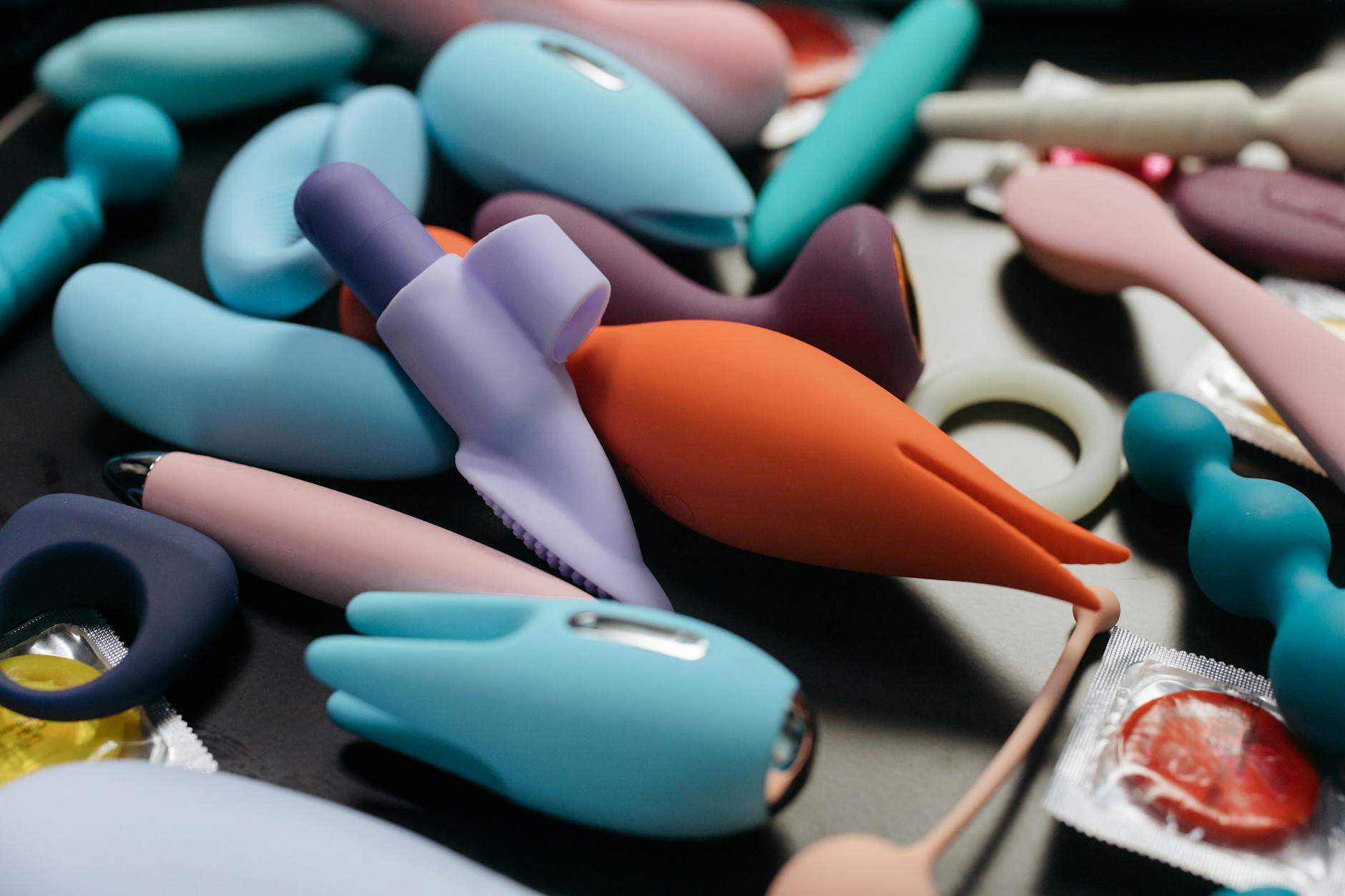
Here's the thing most people don't realize about pleasure and your cycle
Your body is not a static object. It's a living system responding to hormonal tides that shift every week. That means the way your clitoral vibrator works for you right now is different from how it'll work in five days. And most people just use the same pattern, same intensity, same technique year after year, wondering why results feel flat sometimes.
Once you sync your lemon vibrator use with your actual cycle, pleasure gets measurably better. Not in a mystical way. In a physiological, "oh, that's why that worked so well" kind of way.
How hormones reshape what feels good
Your cycle creates four distinct windows. In each one, estrogen and progesterone are doing different things. This changes blood flow to your clitoris, your nerve sensitivity, your arousal speed, and how easily you orgasm.
During your follicular phase (menstruation through ovulation), estrogen is rising. Blood flow to your genitals increases. Your clitoris becomes more engorged, more reactive. That's why so many people find that intense vibrator patterns feel incredible right after their period ends.
During ovulation itself, estrogen peaks. Your libido spikes. Your body's tolerance for stimulation goes up. This is when you might naturally gravitate toward higher intensities and longer sessions.
Then comes the luteal phase (after ovulation until your period). Progesterone rises. Everything that was energized in the follicular phase starts to quiet down. Your clitoris is less engorged. Your sensitivity is more localized. Touch that felt amazing a week ago might feel too intense now.
And finally, the menstrual phase itself brings low estrogen and progesterone. Some people find pleasure is harder to access. Others find that the pelvic congestion from menstruation makes deeper internal sensations more pronounced.
Menstrual phase: gentleness over intensity
During your actual bleed, many people experience lower arousal and higher sensitivity simultaneously. Your pelvic region is already engorged and tender. This is not the week to jump to pattern 5 on your lemon vibrator.
Instead, focus on lower-frequency patterns. Patterns 1 through 3 on a clitoral vibrator like the Lem work beautifully here. They deliver consistent stimulation without the jarring intensity that can feel overwhelming when your tissues are already swollen.
Warm up longer. Menstrual bleeding reduces natural lubrication, so budget 20 minutes before even reaching for your vibrator. Use water-based lubricant generously. The blood flow to your genital region is already there, but arousal takes time to build.
If you have a partner, many people find that shorter sessions (10-15 minutes rather than 30-40) feel more aligned with what their body wants during bleeding. There's no rule about this. You're reading your body's actual signals, not following dogma.
Follicular phase: this is your power window
About three to five days after your period ends, estrogen climbs. Blood flow to your clitoris increases noticeably. Your vulva becomes plumper. Arousal builds faster. Your body tolerates higher intensities beautifully.
This is the phase where you can experiment. Try patterns you've been curious about. Go higher on the intensity scale than usual. Extend sessions to 30-45 minutes if you want. Your body is literally designed for this right now.
Many people report that this is when they achieve their strongest orgasms. Not because lemon vibrators work differently. Because your body's own physiology is peaked for pleasure.
If you've been wanting to explore different vibrator patterns but weren't sure where to start, the follicular phase is actually your laboratory. Your nervous system is most forgiving. Your arousal threshold is lower. You can discover what genuinely works for you without the frustration of fighting against your own hormones.
Ovulation: go there
Ovulation itself lasts 12-24 hours (not the entire "ovulation window" you've heard about). Your estrogen spikes at its absolute peak. Your testosterone levels rise too (yes, people with ovaries produce testosterone). Your libido hits hardest.
This is when vibrator sessions can feel most electric. Your body is primed for the strongest sensations. This is when longer durations and more aggressive patterns feel natural rather than forced.
The luteal phase hasn't started yet, so you still have the engorged, responsive tissues of the follicular phase plus the hormonal surge of ovulation. It's a narrow window, neurologically speaking. Orgasms tend to arrive faster and feel more intense.
If you've ever wondered why some weeks your lemon vibrator feels mediocre and other weeks it feels like it was designed specifically for you, ovulation is probably that week.
Luteal phase: precision over power
After ovulation, progesterone rises. Estrogen tides back. The vascular engorgement you felt in the follicular phase slowly decreases. Your clitoris becomes less swollen. Your sensitivity sharpens, which sounds good but actually means more localized sensation and less full-body responsiveness.
Here, intensity is actually your enemy. Patterns that felt perfect two weeks ago now feel overwhelming. Your arousal takes longer to build. Your body is more likely to experience overstimulation if you jump straight to high-frequency patterns.
Instead, dial back to patterns 2-4. Focus on sustained, rhythmic stimulation rather than rapid variation. Many people find that this phase benefits from a longer lead-in. Thirty to forty minutes of foreplay before even touching your vibrator. Slow, full-body attention.
If you have a partner, this is when many couples report that collaborative play works better than solo intensity. The slower, more connected approach aligns with what your hormones are already signaling.
Here's a counterintuitive detail: even though your arousal is lower during the luteal phase, many people report that their most profound, emotional orgasms happen now. Not because intensity is higher. Because attention is deeper.
Tracking what actually works for you
Here's the practical part. For one full cycle (28 days or however long yours is), jot down three things.
First: what pattern did you use and how long was the session? Second: how did your body respond? Third: how long did it take to reach orgasm, and how did it feel compared to other sessions? You don't need an app or elaborate notes. Three sentences per session is enough.
After one cycle, patterns emerge. You'll see that certain intensities work during certain weeks. You'll notice that arousal time is actually predictable. You'll stop blaming yourself for "not being in the mood" and start realizing your mood is riding your hormonal schedule.
This is not about forcing pleasure on a timetable. It's about working with your actual biology instead of against it. When you know that the luteal phase naturally requires more warm-up, you can stop feeling like something is broken about you.
Why lemon adult toys excel at cycle-syncing
Clitoral suction vibrators like Hello Nancy's lemon toys work beautifully across all cycle phases because they're gentler and more variable than traditional vibrators. You can start at pattern 1 during your bleed and progress to pattern 7 during ovulation, and the same device meets your body where it is.
Wand vibrators require more pressure. Penetrative toys don't account for sensitivity shifts the same way. Lemon clitoral vibrators bridge both: responsive enough for the follicular phase, precise enough for the luteal phase, gentle enough for menstruation.
The emotional piece matters too
Synchronizing pleasure with your cycle isn't purely physical. Knowing that your arousal is lower during the luteal phase can actually restore sexual confidence. You stop interpreting it as rejection or brokenness. You start seeing it as information.
Many people report that once they understand cycle-based pleasure, conversations with partners shift too. "I want longer foreplay next week" becomes specific instead of vague. "My body needs gentleness right now" becomes something you know, not something you're apologizing for.
People also ask
Does cycle syncing with vibrators actually improve pleasure or is it just placebo?
It's measurable. Estrogen and progesterone objectively change tissue engorgement, lubrication, and nerve sensitivity. These aren't subtle. A clitoris during the follicular phase is literally more swollen than during the luteal phase. This isn't about mindset. It's vascular physiology. When you adjust vibrator intensity to match your body's actual state, you're removing friction. Better results follow.
Can I use my lemon vibrator during my period safely?
Completely safely. Menstrual blood is not toxic to your vulva. Your body is already managing bleeding. Using a vibrator during menstruation won't disrupt anything or cause damage. The only real consideration is comfort. Many people prefer shorter sessions or lower intensities because bleeding increases baseline sensitivity. Use a water-based lube, start gently, and stop if anything feels painful (not just intense, but actually painful).
What if my cycle is irregular or I'm on hormonal contraception?
Hormonal birth control flattens the hormone curve. You won't have the same dramatic peaks and valleys as someone cycling naturally. That means the dramatic pleasure shifts won't be as pronounced. However, many people on hormonal contraception still notice subtle week-to-week variations. The tracking method still works. It'll just be more nuanced. If your cycle is irregular, tracking becomes even more useful because you'll actually see the pattern that your body is following, rather than assuming the textbook 28-day rhythm.
If I'm in the luteal phase and don't feel like using my vibrator, should I push through?
No. Your lower arousal during the luteal phase is not a problem to fix. It's information. Your body might genuinely need rest or different kinds of connection that week. Some weeks you're being called toward solo pleasure. Other weeks you're being called toward sleep or intimacy that has nothing to do with orgasm. Listen instead of overriding. Pleasure is not a daily quota.
Does this apply if I have PCOS, endometriosis, or other hormonal conditions?
Yes, with caveats. People with PCOS have different hormone curves. People with endometriosis sometimes experience pain that makes certain cycle phases inaccessible. The principle remains: work with your actual physiology, not the textbook. The tracking method is even more valuable for you because it shows you what your specific body is doing, rather than assuming the average. If you have pain during any part of your cycle, see a specialist before increasing intensity.
Can I sync vibrator use with my partner's cycle too if we're both cycling?
Yes, though it requires communication. Many couples discover that if they're both cycling, their arousal and desire don't peak at the same time. Instead of seeing that as a mismatch, you can see it as two separate opportunities to explore desire. Your partner's follicular phase might be their peak pleasure week. Your luteal phase might be when you crave deeper connection. Knowing this prevents misinterpretation. "You're not interested in me" becomes "Our bodies are on different schedules." That's usually easier to navigate.
The bottom line
Your menstrual cycle is not a bug in your sexuality. It's architecture. Once you understand how your hormones reshape pleasure week by week, you stop fighting your body and start collaborating with it. Your lemon clitoral vibrator becomes a tool that adapts to you, not something you force yourself to adapt to. The pleasure gets better. The frustration gets quieter. And you actually know yourself.
If you're curious about deepening your pleasure across the cycle and want more personalized guidance, let's talk.