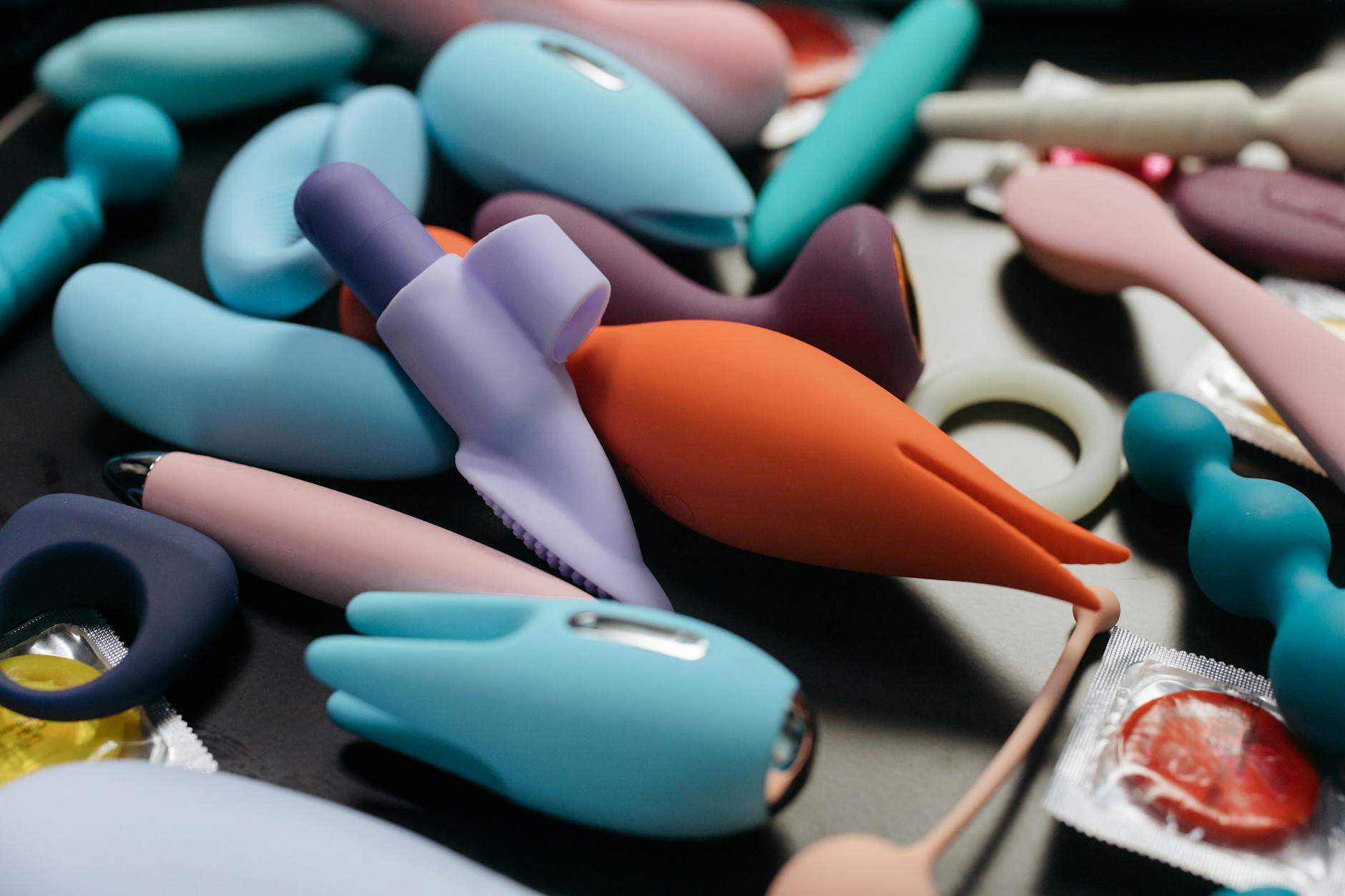
Let's talk about the real barrier
It's not about the toy itself. It's about the story you're telling yourself about what introducing a Lemon vibrator means to your new partner. He might think you're not satisfied. She might worry she's not enough. They might feel like you've been hiding something. None of that is actually true, but the silence between you and the device makes plenty of room for the lie to grow.
Here's what I know from years of couples work: the hardest part isn't the conversation. It's getting to the point where you decide the conversation matters more than the discomfort of having it.
Why new relationships make this harder
Early-stage dating lives in a specific kind of anxiety. You're still proving yourself. You're still figuring out what's safe to reveal. The power dynamic hasn't settled yet. That's actually the exact moment many people hide their pleasure preferences, because admitting them feels riskier than it might later.
Add a sex toy into that mix, and suddenly you're not just saying "I like this sensation." Your brain translates it as "I'm complicated" or "I've always needed this" or "You're not doing it right." The toy becomes shorthand for insecurity on both sides.
But here's the twist: partners who respond badly to a vibrator conversation were probably always going to struggle with your pleasure. The toy didn't create that problem. It just revealed it earlier than it might have otherwise.
The timing piece nobody gets right
Don't bring this up mid-sex. Don't bring it up when you're frustrated. Don't bring it up at 11 p.m. when you're both winding down and someone's phone is buzzing.
Bring it up when you have actual time, somewhere private, and when you're both feeling okay about the relationship. Ideally not right after a good sexual experience, because your partner might think you were unsatisfied. Not right after a difficult one either, because defensiveness will be high.
The best window is usually a regular Tuesday, sitting on the couch, maybe with coffee, when neither of you has anywhere to be. Boring timing makes this a regular conversation, not a charged one.
The language that actually works
Start with yourself, not the toy. "I've been thinking about my pleasure lately, and I realized there's something I'd like to explore" is infinitely better than "I want to get a vibrator." The first one is about you and your body. The second one is about acquiring something, which sounds like a problem-solving move.
Be specific about what you're actually asking for. "I want us to use this together sometimes" is different from "I want to use this alone" is different from "I want to incorporate this during partnered sex." Each one has a different emotional meaning for your partner. Know which one you want before the conversation starts.
Use "I" language relentlessly. "I've noticed my body responds really well to this kind of sensation" beats "You're not stimulating me the right way." Same fact, completely different emotional payload.
If your partner is worried, address it directly instead of dancing around it. "I know this might feel like I'm not satisfied, but that's not what this is. My body just works this way, and I'm trying to honor that." Then stop talking. Let them respond.
What to do if they say no
First, listen for what they're actually rejecting. "I don't like that idea" might mean "I'm threatened" or "I don't understand" or "I'm worried it means something about us." Each one needs a different response.
If it's threat: "This isn't about replacing you. It's about me getting to know my body better, which actually helps us." That's true. People who understand their own pleasure are better partners.
If it's confusion: explain without selling. You're not trying to convince them to love the idea. You're trying to help them understand it. "My body sometimes needs this level of stimulation to get there. It's not a reflection of you." Then give them time to sit with it.
If it's worry about the relationship: be honest about what you need. "I'm not asking for your permission. I'm asking for your understanding. And eventually, I hope you might be interested in exploring this together." Sometimes that lands. Sometimes it doesn't. If it consistently doesn't, that's information about compatibility.
The introduction itself
Don't make it theatrical. You're not unveiling a secret. You're just showing them a tool. "This is a Lemon clitoral vibrator. I want to use it, and I'm hoping you'll be okay with that" or "I'm hoping we could explore using this together sometimes."
Let them hold it if they want to. Let them ask questions. Expect weird questions. People ask weird questions about things they don't understand, and that's fine. Answer straightforwardly. "Does it hurt?" No. "Is it loud?" Depends on the pattern. "How long does the battery last?" Usually hours.
If they want to be involved from the start, that's great. Show them how it works. Tell them what sensations feel good. Make it collaborative if they're interested. If they'd rather not be involved yet, that's also fine. You can use it alone first, then explore partnered use later.
When to use it with them
Don't try to integrate a Lemon vibrator into partnered sex right away unless that was the original plan. Let everyone adjust to the idea first. Most people feel less threatened once they see it's real and not a fantasy.
When you do use it together, foreplay is your friend. Use it on yourself while they watch, or while they're touching you elsewhere. This keeps them involved without making it about them not being enough. Many partners actually find it really hot once the anxiety settles.
Some people love incorporating it during penetration. Some people prefer it during oral. Some people use it as foreplay and then set it aside. There's no right answer. The only rule is that both of you get to consent to how it's used.
The conversation nobody talks about
If introducing a clitoral vibrator becomes a referendum on your entire sex life, that's worth paying attention to. Partners who get defensive about toys often struggle with other pleasure-related conversations too. That's not a reason to avoid the conversation. It's a reason to have it, because now you know what you're working with.
I had a client once who introduced a lemon vibrator to her new partner, and he was weirdly resistant. Months later, it turned out he had shame around sex in general, which was affecting everything. The vibrator conversation wasn't the problem. It was the first honest signal that something needed attention.
Don't skip the conversation because it's hard. Have it early, have it clearly, and pay attention to how your partner responds. That response tells you a lot.
The long view
Partners who get it, get it quickly. "Oh, that makes sense. Want to figure this out together?" If that's your partner, you've got something solid. The ones who struggle need time and sometimes a reframe. "This isn't about you. This is about me knowing what my body needs."
And the ones who fundamentally reject your pleasure? They're telling you something important about how they'll show up in other areas of your life too. A vibrator is just the first honest test.
Your pleasure matters. Not eventually. Not after you prove yourself. Now. A partner worth keeping wants to be part of honoring that.
FAQ: The questions that actually come up
What if my new partner thinks I've used toys before and that bothers them?
Your sexual history is yours. You don't owe a full inventory of every experience you've had, especially early on. If you're introducing a vibrator for the first time with this partner, you can absolutely say that: "I've never actually used one, but I want to explore this with you." If you have used toys before, you can set that boundary: "I'm not going to detail my past relationships, but this is something I want to explore with you now." Firm, not defensive.
Should I ask permission or just tell them I'm going to use one?
That depends on your dynamic and what you're asking. If you want to use a Lemon vibrator solo, you don't need permission. You're an adult. But if you want to integrate it into partnered sex, yes, ask. Not "Can I?" but "I'd like to try this together. How do you feel about that?" It frames it as collaborative without making yourself small.
What if they want to use it on me but that feels weird?
It's okay to have boundaries about that too. Some people love the idea of a partner using a clitoral vibrator on them. Some people want to use it themselves while a partner does something else. Some people want total control. All of those are legitimate. "I'd like to be the one controlling the vibrator, but I love having you involved in other ways" is a complete sentence.
How do I bring this up if we've already been together for a while and I'm nervous it'll seem like I'm unhappy?
Lead with that exact concern. "I've been thinking about bringing something up, and I'm a little nervous about how it lands. I want to be clear that this isn't about being unsatisfied with you or us. It's about me getting curious about my body." Naming the fear often diffuses it.
Is it normal to feel embarrassed introducing a toy to a new partner?
Completely. You're revealing something about your sexuality in a relationship that's still forming. That's vulnerable. The embarrassment doesn't mean something's wrong. It just means you're being brave about your pleasure. Do it anyway.
What if the conversation goes badly and we don't recover?
Then you've learned something important about this person's capacity to honor your body and your autonomy. That's painful, but it's also useful information. Some relationships aren't built to contain your whole self. Better to find out now than after five years.
The real thing
Introducing a Lemon vibrator to a new partner isn't really about the vibrator. It's a test of whether this person can handle you asking for what you need. Some will pass immediately. Some will struggle and then come around. Some will fail, and that's information.
Your pleasure isn't negotiable. The method for communicating about it can be refined, but the bottom line is fixed: you deserve to feel good in your body, and you deserve a partner who gets excited about that rather than threatened by it.
Start the conversation. Pick a regular Tuesday. Use clear language. And then listen to what your partner reveals about themselves through their response.
If you want support navigating this conversation with a specific partner dynamic, reach out to us. We're here for the conversations that matter.