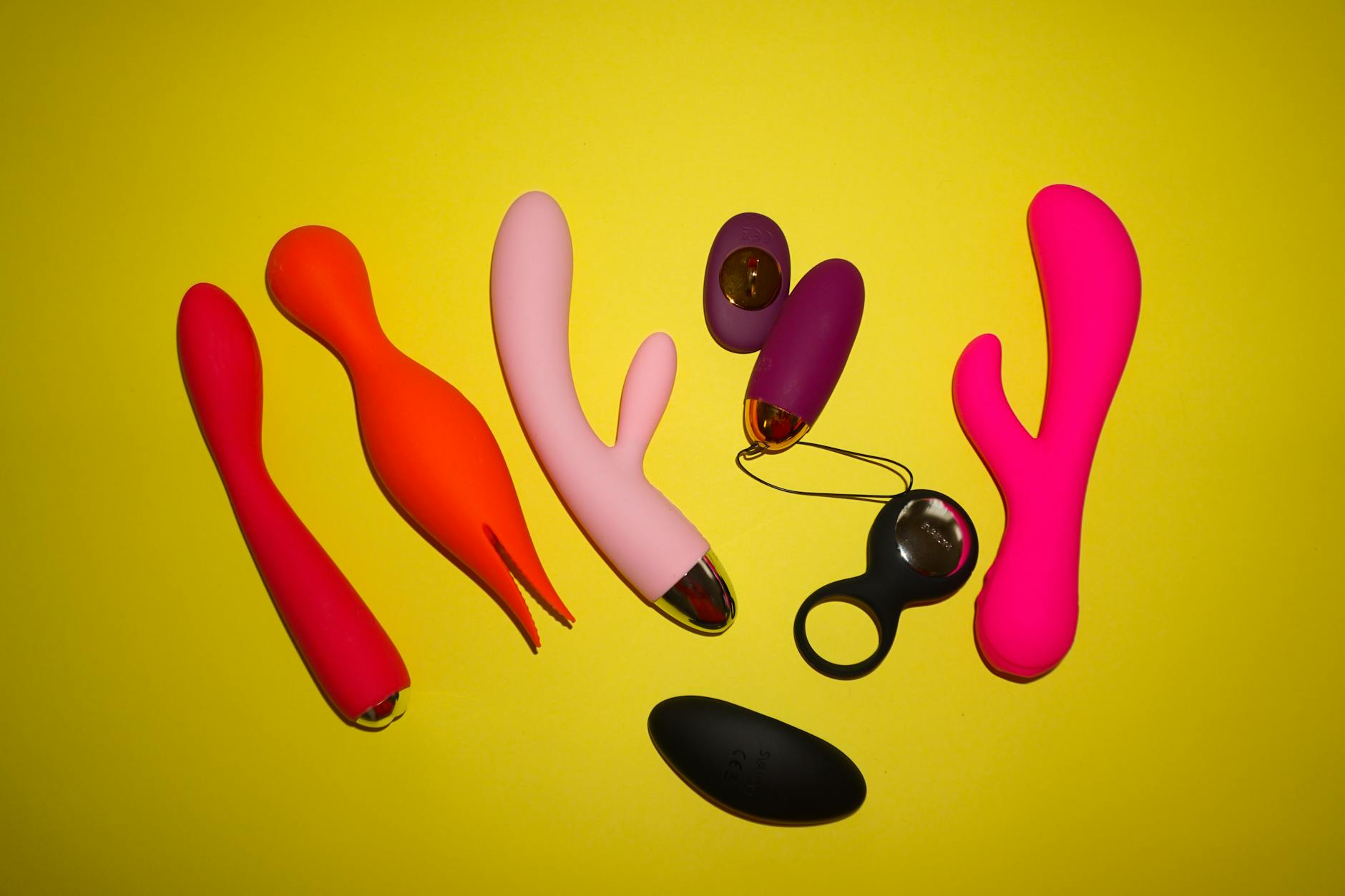
Here's what nobody talks about clearly
Sometimes you want to have sex. Your partner is willing. Nothing is technically wrong. But your body feels like it belongs to someone else.
This is disconnection. And it kills pleasure faster than almost anything else.
Disconnection shows up differently depending on what's underneath. Stress fragments your attention. Relationship conflict puts your nervous system on guard. Grief, burnout, even just chronic scrolling can create a strange numbness where sensation reaches your skin but doesn't register anywhere meaningful. You can touch yourself and feel it physically. But the experience doesn't land emotionally. It's like watching a movie about your own body instead of inhabiting it.
Most advice about this skips the real problem. It jumps straight to "relax" or "focus on sensation" or "communicate with your partner." All useful eventually. But first, you have to do something harder: you have to rebuild the bridge between what your body is doing and what your nervous system is paying attention to.
That's where a lemon clitoral vibrator changes things.
Why disconnection feels like numbness
Disconnection and numbness aren't the same thing physiologically, but they create the same sexual experience: you're present but not really there.
When you're chronically stressed, your nervous system stays in fight-or-flight mode. Blood is diverted to major muscle groups, away from your genitals. Your brain is scanning for threats, not registering pleasure. Sex becomes just another task on a list that's already too long. You might be having an orgasm and simultaneously thinking about an email you forgot to send.
When you're in conflict with a partner (even unresolved tension that feels minor), your body registers danger at a primitive level. Arousal requires vulnerability. Your nervous system won't allow it if it senses you're not safe with this person. So you go through the motions. Nothing feels wrong. But nothing feels right either.
Grief, loss, and major transitions create a different flavor of disconnection. Your capacity for pleasure temporarily shrinks. Not because something is broken, but because your emotional resources are deployed elsewhere. You're protecting yourself. This is adaptive. It's also lonely.
Why air-suction vibrators work differently here
A traditional vibrator works through direct friction. You build sensation gradually. If your body is already numb, you end up chasing a feeling that isn't arriving. You increase intensity. You change angles. You keep trying. And now you're in your head, frustrated, which pushes you further away from your body.
A lemon sucker works differently. Air-pulse technology creates a sensation that's distinct enough to break through numbness. It doesn't require you to already be aroused. It doesn't rely on friction building over time. The suction creates a feedback loop that your nervous system notices. Suddenly there's a signal strong enough to reach your brain. Something is happening that demands attention.
This matters because reconnection doesn't start with pleasure. It starts with noticing. With your body becoming interesting again instead of just a thing you're performing with.
The three-layer approach to rebuilding connection
Using a lemon vibrator when you're disconnected isn't about chasing an orgasm. It's about three separate goals stacked on top of each other.
Layer 1: Nervous System Reset
Before you even turn anything on, create conditions that feel safe. This sounds basic. It's not.
Safe means: alone. No performance. No timeline. No one waiting for you to finish. If you have a partner, this often means solo exploration first. Your body needs to remember that pleasure is possible without anyone watching or waiting.
Safe also means: privacy from your own brain. Phone in another room. Explicit permission to stop if you feel nothing. No goals. This runs counter to how we approach most health improvements, but it's necessary. The moment you're trying to "fix" your disconnection, you've just created more distance from your body.
Once you have genuine privacy and time, your nervous system begins shifting out of threat mode. This takes longer than you'd think. Thirty minutes is a real minimum.
Layer 2: Attention Without Judgment
When you use the Lem (or any lemon clitoral vibrator), start at the lowest setting. The goal is not to chase an orgasm. The goal is to notice what you actually feel.
This is weirdly difficult when you're numb. Your brain wants to jump to "is this working?" or "am I feeling anything yet?" That's judgment. That's pressure. That's the same dynamic that created disconnection in the first place.
Instead, narrate internally without judgment. "My skin is warm." "The sensation is focused here." "That feels more intense now." "I'm noticing my breathing changed." These are observations, not evaluations. You're teaching your brain and body to communicate again.
Most people report that after 10-15 minutes of this kind of attention, something shifts. Sensation that felt flat becomes localized. Areas that felt numb start reporting information again. This isn't necessarily arousal yet. It's reconnection.
Layer 3: Gradual Reengagement
Once you're feeling your body again, arousal can build more naturally. You might find yourself wanting more intensity. You might notice thoughts changing from "is this working?" to actual fantasy or desire. Your partner might have permission to join, or you might stay solo for a while longer.
The key is letting this unfold at your own pace, not at the pace that feels normal or expected.
What reconnection actually looks like
Honestly, it's messier than peak pleasure. Reconnection often involves moments where you feel something, then lose it, then find it again. You might have a partial orgasm that feels strange because you're not used to being present for it. You might cry. You might feel bored and that's fine. You might need multiple sessions before the bridge really feels solid.
I've worked with partners through this, and the common thread is patience with yourself. Not in an abstract, spiritual way. But in a concrete "I'm going to give myself permission to need time for this" way.
If you have a partner, sharing what's happening (without making it their job to fix) changes everything. "I'm working on reconnecting with my body. I might need solo time for a while." That's information. That's not rejection. Partners who understand this often feel relief, because the real issue wasn't them. It was distance between you and yourself.
When disconnection points to something bigger
If disconnection appeared suddenly after a specific event (surgery, assault, major loss), reconnection might need support beyond solo pleasure. A trauma-informed therapist matters here. Lemon vibrators help. But they're not a replacement for processing what happened.
If disconnection has been chronic and pervasive, it's worth asking what else is true. Are you in a relationship where you don't feel safe? Are you working too much? Are you depressed or dealing with an undiagnosed condition? Disconnection often points to something systemic that pleasure tools can't fix alone.
But here's what they can do: they can remind you that your body is capable of sensation and response. They can interrupt the pattern of numbness long enough for you to notice something's shifted. They create a bridge back to yourself, and from there, deeper healing becomes possible.
FAQ
Why does my body feel disconnected during sex even though I want to be there?
Disconnection usually signals that your nervous system doesn't feel safe. This can happen during sex even when you consciously want it. Unresolved conflict with your partner, stress from other areas of life, or past trauma can all create this. Your body might be protecting you from vulnerability. This is adaptive, even if it's frustrating. Reconnecting requires creating actual safety first, not just trying harder during sex.
Can a lemon vibrator help if I feel numb even when I'm alone?
Yes, often. Numbness when you're alone usually points to stress, dissociation, or chronic disconnection from your body. Air-suction vibrators like the Lem create sensation distinct enough to interrupt numbness and help your nervous system notice what's happening. But if numbness is widespread (affecting non-sexual touch, too), it's worth checking in with a doctor or therapist about what's driving it.
Should I use a lemon clitoral vibrator if I'm in a disconnected relationship?
It depends. If disconnection is about the relationship itself (you don't feel safe, heard, or valued), solo pleasure might feel necessary first. Using a vibrator won't fix the relationship. But reconnecting with your own body gives you clarity about what you actually want and need. That clarity often leads to better conversations with your partner, or clearer decisions about whether the relationship is worth investing in.
How long does it take to feel reconnected again?
It varies widely. Some people notice shifts in a few sessions. Others take weeks. The timeline depends on what created disconnection and how deep it goes. The helpful metric isn't speed. It's whether you're gradually noticing your body again and feeling a little more present. Progress isn't linear.
Is it normal to feel frustrated or emotional while using a lemon vibrator if I'm disconnected?
Completely normal. Reconnection can bring up all kinds of feelings. Frustration that you're numb. Grief about lost connection. Even joy when sensation returns. You might cry. You might feel angry. These aren't signs something's wrong. They're signs your nervous system is waking up. Let them move through you.
What if I'm disconnected because of medication or hormonal changes?
That's a separate conversation with your doctor, because the fix might be different. But while you're exploring options with your provider, a lemon vibrator can help you maintain connection to your body. You might need to adjust intensity, timing, or approach. Start gentle and slow. Your body will tell you what it needs.
The actual beginning
Disconnection feels permanent when you're inside it. Your body feels like it's not yours. Pleasure feels impossible. But reconnection is possible, and it often starts smaller than you'd expect.
It starts with privacy. Time. Attention without judgment. A tool that helps you notice sensation again. Then patience with the process of rebuilding the bridge between what your body experiences and what your brain registers.
Your body remembers how to feel. You just have to give it the conditions and tools to do so. A lemon clitoral vibrator can be part of that. So can patience, safety, and willingness to let reconnection unfold at its own pace.
If you're struggling with persistent disconnection or dissociation, reach out. We're here to help you think through what reconnection might look like for you specifically.